


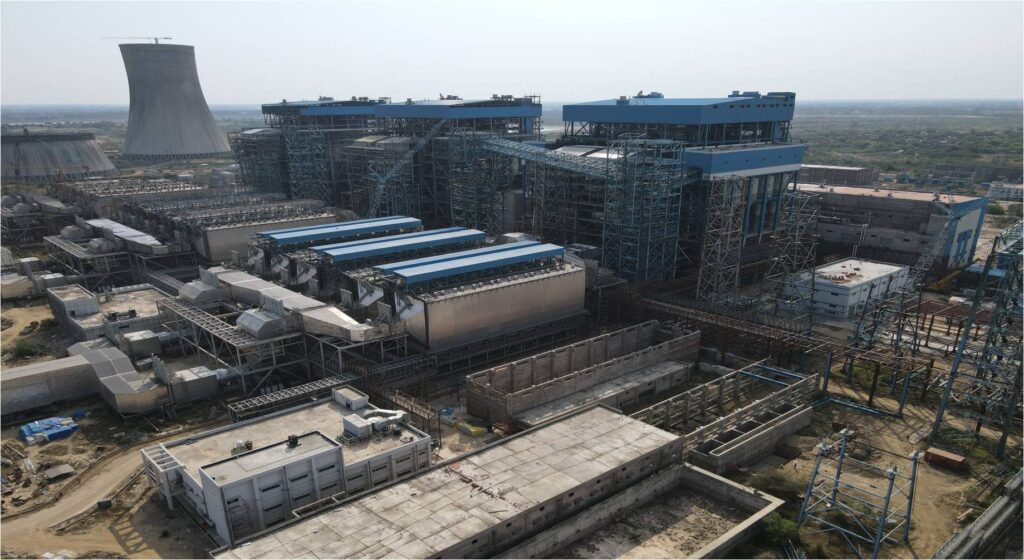
In the Kanpur area, a brand-new thermal power plant is going to begin operating. The project’s development, which will generate 1,980 MW of power yearly, has picked up speed in recent years. After construction is finished, a total of three 660 MW units will operate in concert. It is being constructed on a 1,013 hectare plot of land in the state, of which 832 hectares are being utilized for the township and plant, and the remaining portion for the construction of the railway siding.
Neyveli Uttar Pradesh Power Ltd (NUPPL), a joint venture between Uttar Pradesh Rajya Vidyut Utpadan Nigam Ltd. and Neyveli Lignite Corporation India Ltd (NLCIL), is building the supercritical thermal power plant. NLCIL is a central government-run public sector enterprise. The project was first approved by the Center in 2016, with a target completion date of 64 months and an original budget of Rs 17,237 crore. The project’s budget has nevertheless grown to around Rs 19,406 crore.
Chief Executive Officer (CEO) of NUPPL Santhosh CS discusses how the new power plant would increase energy supply, the efforts taken to limit emissions, the cost of the project, and the anticipated schedule for commencing production in an exclusive conversation with Outlook Business.
Abridged Extracts:
In the last seven years, how has it been managing a joint venture with Uttar Pradesh Rajya Vidyut Utpadan Nigam?
Due to the JV’s strong backing from the Center and the UP government, there has been a particularly positive synergy between the two organizations. The UP government supported us to create our first factory in the state by resolving local land acquisition concerns, and the Center assisted us in obtaining the essential project clearances. Overall, I would conclude that the initiative benefited from the two governments’ backing.
When do you anticipate that activities at the factory will begin?
Prior to this, we had scheduled the first unit’s commissioning for July, but it may now take another two to three months. By the conclusion of current fiscal year, we only anticipate that all three units of the factory will be operational.
The plant’s construction is now behind schedule from when it was originally planned. What factors contributed to the delay?
Our first unit was intended to be put into service in 2020, however the project was delayed for a number of reasons. At first, there were union and farmer strikes, which took about six months to end. Then the Covid-19 epidemic came, the repercussions of which are still being felt today. In the middle of all of this, one of our suppliers had issues that required some time to fix. But the most of the problems have been solved, and the job is moving along well.
What power supply system has been decided upon for when the units begin to operate?
In accordance with our power purchase agreements (PPAs), we would provide Uttar Pradesh 75% of our total production while giving Assam the remaining 25%. Last month, we signed the contract with Assam.
In recent years, the government has promoted “make in India” and the usage of locally produced equipment. What effect has it had on the building of this plant?
I can confidently state that our efforts to employ locally produced materials and equipment have allowed us to save at least Rs 500 crore on this project. The boiler and turbine for the plant are being built with assistance from L&T and GE, two suppliers. They have purchased their equipment from local suppliers, which has reduced the cost of imports. Therefore, the effort to “make in India” has immensely benefited us.
Additionally, there is a lot of discussion about green energy and reducing emissions internationally. Has the environment been considered, given that it is a thermal power plant?
The fact that it is a supercritical thermal power plant, as opposed to a subcritical one, assists to improve efficiency and emissions. At our facility, we are also implementing flu gas desulfurization technology in addition to the usage of a selective catalyst reactor, all of which will significantly aid in reducing emissions. Additionally, we are making sure that no water will be wasted at our facility.
In addition to this, we will build a 792 MW solar power plant on a 1,267 acre plot of land over the next several years, as recently ordered by the federal government.