


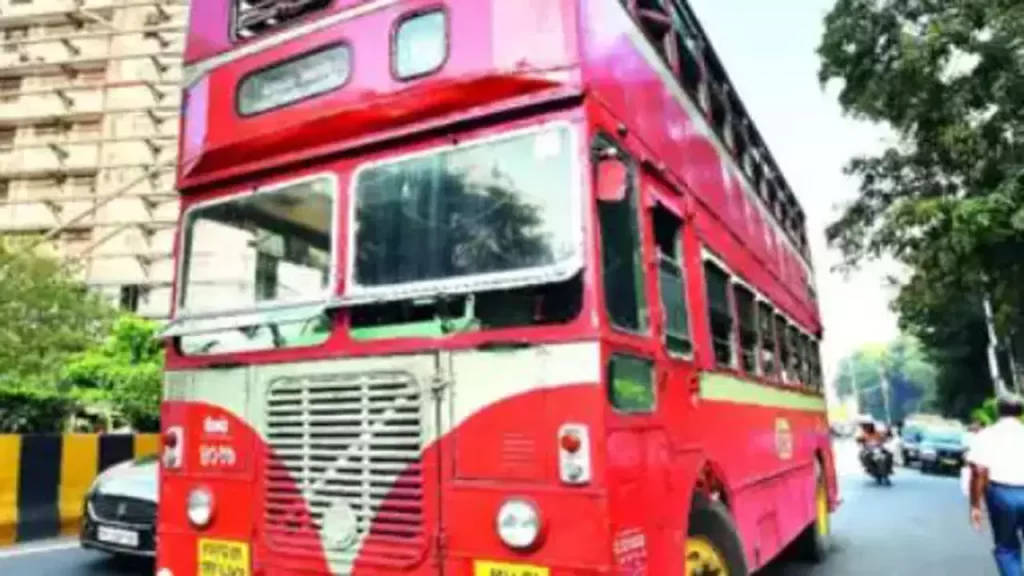
After eight decades, Mumbai’s recognizable red double-decker buses will depart this week.
This revelation, which signals the end of an era in Mumbai’s history of public transportation, has been grudgingly confirmed by the Brihanmumbai Electricity Supply and Transport (BEST) Undertaking.
In the first week of October, these famous open-deck double-decker buses will make their last trip through Mumbai’s busy streets after more than eight decades of service. Since the 1990s, these buses have functioned as both a source of transportation and an attraction for those looking for a distinctive view of the city.
Commuter organizations and die-hard bus aficionados have banded together to preserve these legendary buses’ memories as they are ready to say their last goodbye. At least two of these vintage cars have been requested to be preserved by BEST at their museum at the Anik depot. A portion of Mumbai’s soul has been begged to be saved in letters to the BEST administration, the tourism minister, and the chief minister of Maharashtra.
Only seven double-decker buses, including three open-deck types, are still in the BEST fleet at this time. After 15 years, these vehicles have reached the end of their useful lives; the double-decker buses will go on September 15 and their open-deck counterparts will depart on October 5 respectively, according to a BEST representative.
In 1937, the distinctive red double-decker buses first appeared on the streets of Mumbai. Since then, they have come to symbolize the energy of the city and have even appeared in Bollywood songs about Mumbai. BEST had a fleet of around 900 double-decker buses when they were at the height of their power in the early 1990s. Sadly, from the mid-1990s, their numbers started to decline, mostly because of the high operational expenses.
The 2008 ban on the introduction of double-decker buses exacerbated their demise even further. However, BEST started making plans to swap out these storied buses beginning in February of this year with contemporary, leased battery-powered red and black double-decker vehicles. About 25 of these buses have already been put into operation.
Although the transition to environmentally friendly alternatives is admirable, some passengers contend that the new battery-powered buses, although comfortable, don’t have the same allure as their older counterparts.
The commuter organization ‘Aapli BEST Aaplyasathi’ has made an emotional appeal to important leaders in the government and BEST management to save the double-decker buses from disappearing forever.
They appeal to the BEST’s general manager as well as Chief Minister Eknath Shinde, BMC Director Iqbal Singh Chahal, Deputy Chief Ministers Devendra Fadnavis and Ajit Pawar, to step in and save the remaining two red double-decker buses. The BEST’s museum would then become the new home for these buses, where visitors and future generations may enjoy them.