


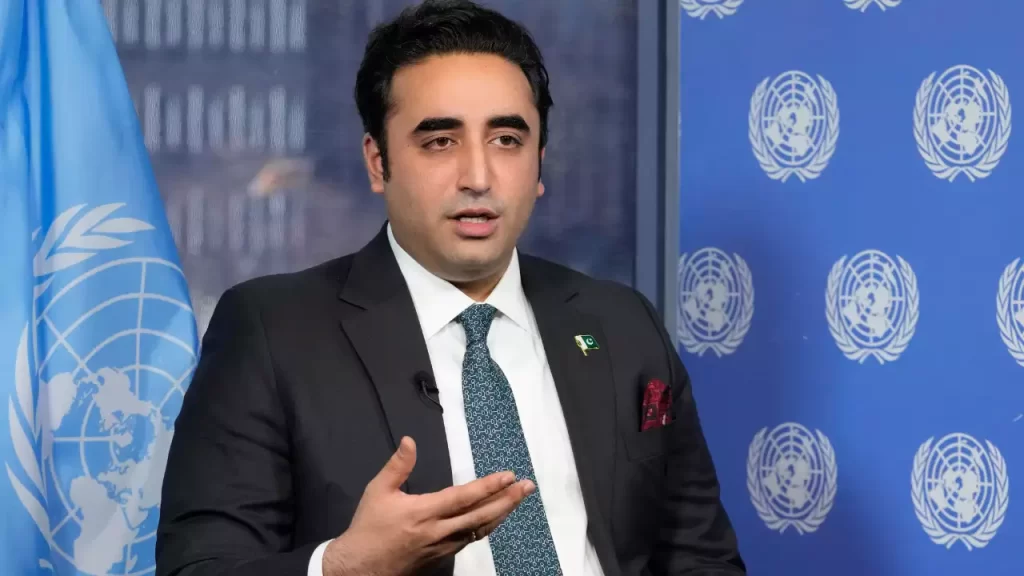
People familiar with the situation said that the Shehbaz Sharif-led administration chose to send Foreign Minister Bilawal Bhutto Zardari to Goa for the Council of Foreign Ministers (CFM) conclave rather than skip it as Pakistan battles hyperinflation and an economic crisis.
Bilawal Bhutto Zardari will come in Goa conveying a message of peace, expanding commerce and regional connectivity, while Pakistan waits for the staff-level agreement with the International Monetary Fund (IMF) to be finalized, which would enable friendly countries to provide it economic help.
People with knowledge of the situation said that no bilateral issues will be discussed at the upcoming SCO CFM meeting, not even on the margins. The meeting’s only purpose will be to discuss issues of shared interest and concern on a regional and global scale.
In addition, Bilawal Bhutto Zardari will discuss Pakistan’s issues as a result of the devastation caused by the floods in June of last year. He would also exhort members to improve their commercial relations with Pakistan.
The country’s foreign minister will be in Goa for the conclave as a result of extensive internal talks with all stakeholders, including the security establishment of Pakistan, which led to the decision that the country should not miss the multilateral summit in India.
It should be emphasized that the Pakistan Army, the country’s security apparatus, manages the business of the foreign office.
People with knowledge of the situation claimed that the foreign office had been instructed to concentrate on matters relating to regional cooperation, trade, and peace for the benefit of Pakistan.
The Pakistani delegation will be led by Bilawal Bhutto Zardari to the CFM of the SCO, which will be held in Goa on May 4 and May 5. Bilawal Bhutto Zardari is anticipated to arrive on Thursday night.
As the SCO’s current president, India has issued invitations to all of the organization’s participants. The member nations’ foreign ministers will talk about a number of significant geopolitical concerns, including regional security and economic cooperation.
The talks are anticipated to be heavily centered on Afghanistan’s condition, especially worries that, under Taliban rule, the nation might turn into a hub for terrorism, as well as the quickly shifting regional security landscape.