


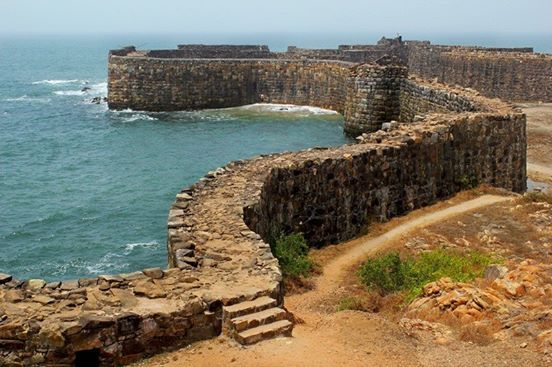
Navy Day celebrations this year will be held at the iconic Sindhudurg Fort off the coast of Maharashtra, built by Maratha ruler Chhatrapati Shivaji Maharaj in the 17th century, officials familiar with the matter said on Thursday. This is in keeping with the new tradition of the tri-services holding their flagship ceremonial events outside the national capital.
On December 4, India observes Navy Day to remember the Indian Navy’s assault on Karachi Harbor during the 1971 war with Pakistan.
Last year, Navy Day was observed outside of New Delhi for the first time at Visakhapatnam. Last year, Bengaluru and Chandigarh hosted the yearly parades for the Indian Army and Indian Air Force, respectively. The Air Force Day parade for this year will take place on October 8 in Prayagraj, Uttar Pradesh.
Last year, the east coast observed Navy Day. The festivities will be planned on the west coast this year. The Sindhudurg Fort was carefully picked as the location because it satisfies the navy’s specifications for conducting an operational display of its frontline capabilities. It also has a lengthy maritime history, according to one of the aforementioned authorities who requested anonymity.
In the 1660s, the Sindhudurg Fort was constructed.
At the INS Vikrant’s launching ceremony last year, Prime Minister Narendra Modi presented the navy’s new ensign, which was modeled after the Maratha king’s seal by omitting the Cross of St. George. The prime minister referred to it as “shedding the weight of a colonial past.”
Since the NDA administration took office nine years ago, significant military conferences, like as the Combined Commanders’ Conference, have also been conducted outside of New Delhi.
At the Combined Commanders’ Conference in Bhopal on April 1, Modi evaluated the operational preparedness of the armed forces against the background of the ongoing border dispute with China, conducted a security assessment, and urged the military to be ready for new and emerging threats.
Prior to that, on March 6, Union Defense Minister Rajnath Singh spoke during the opening session of a top navy meeting aboard India’s first indigenous aircraft carrier, INS Vikrant. This action brought the nation’s efforts to achieve self-reliance in the defense manufacturing sector into sharper relief.
The military has increased its emphasis on localizing both customs and military equipment.
The prime minister asked the three services to get rid of legacy systems and practices that are no longer necessary in March 2021 during the Combined Commanders’ Conference at Kevadia in Gujarat. He made the call for abandoning colonial customs and implementing Indian ways in the armed forces.
He has previously emphasized the need of boosting indigenousness across the national defense system, including theories, practices, and cultures in addition to equipment and weaponry.
One of Modi’s “panch pran,” or five vows, for India to become a developed nation by its 100th year of independence was to eradicate all reminders of colonial enslavement from our habits and attitude. Modi made this commitment in his 2022 Independence Day address.
The navy determined in July that its troops would no longer carry ceremonial batons in accordance with the PM’s larger directives. The provost personnel, who are in charge of policing, vigilance, and the enforcement of discipline, used to carry batons. These individuals included senior officers in leadership capacities, commanding officers of warships, naval bases, and other facilities. The navy said that the colonial history of using such batons as symbols of authority was present.
According to a second official, smart traditional Indian clothing may soon be permitted in the meal areas for navy personnel.
The defence ministry has also started a campaign to rebrand cantonments from the British period as military installations. In order to introduce consistency to the municipal rules regulating these regions and surrounding municipal pockets, it has discussed broad modalities for the planned separation of civilian zones with state governments for 58 cantonments around the nation.
The first cantonment to lose its colonial label and change its name to a military station was Yol in Himachal Pradesh in April 2023. That was the first stage in the campaign to turn the British-era cantonments’ civilian neighborhoods into military bases by combining them with municipal corporations and municipalities.