


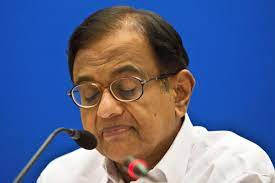
P Chidambaram, a senior member of the Congress, claimed on Saturday that the differing perspectives used by China and India to describe the conversation between President Xi Jinping and Prime Minister Narendra Modi are not “trivial or cosmetic” but rather reveal the “huge gap” between what the government wants the Indian people to believe and the truth.
President Xi told PM Modi that both sides should “bear in mind” the “overall interests” of the relations and “properly” address the border problem, according to a readout of their discussion, which took place earlier this week in Johannesburg.
Indian sources said that there was a “pending request” from the Chinese side for a bilateral meeting, implying that New Delhi has not heeded it, hours after Beijing released a statement on the Modi-Xi chat that claimed it was conducted at the Indian side’s request.
Chidambaram said in a post on ‘X’ that “the difference between India’s statement and China’s statement after the meeting between PM Modi and President Xi is not a trivial or cosmetic difference.” The declarations of the two governments have often diverged, he noted, and this is not the first instance. The former Union minister stated, “The difference is fundamental and reveals the enormous gap between what the GoI wants the Indian people to believe and the reality.”
The sad truth is that China hasn’t changed its stance one bit, and Chinese forces are still occupying Indian land. On the Indian side, the idea of de-escalation and disengagement is all idle rhetoric, according to Chidambaram. He said, “This is extremely regrettable.”
The discussion between Modi and Xi took place on Wednesday in Johannesburg, outside of the BRICS (Brazil, Russia, India, China, South Africa) meeting, while tensions between the two countries remain high due to the ongoing border stalemate in eastern Ladakh.
There was no set agenda for the bilateral discussion. While China has argued that the boundary dispute shouldn’t impede overall relations, India has maintained that there can’t be normalization of relations between the two nations without peace in the border regions.