


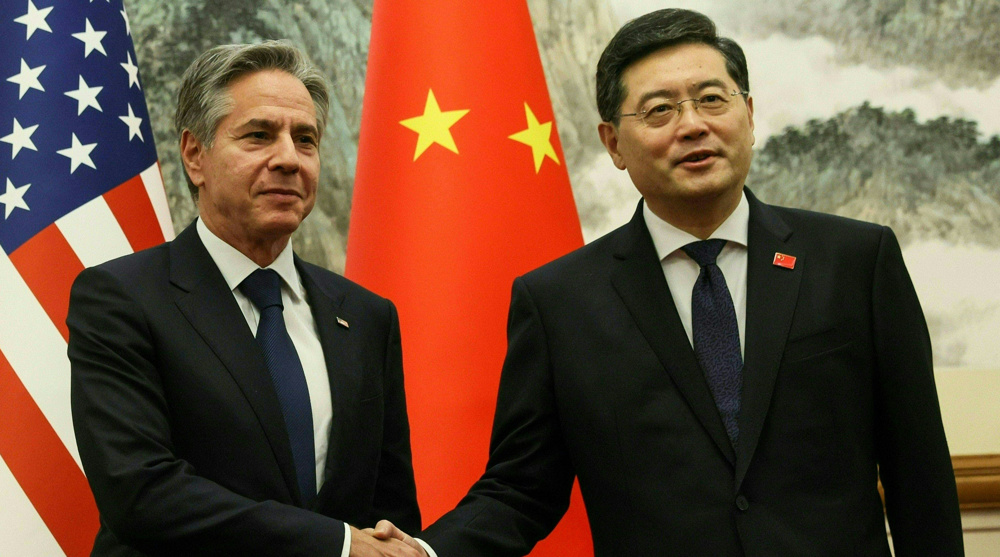
As Secretary of State Antony Blinken made a rare journey to Beijing, he had what authorities described as honest conversations on the escalating tensions. The two countries then decided to widen their communication in an effort to attempt to restore their relations from their record lows.</p> <p>Blinken, the highest-ranking US official to visit Beijing in over five years, had a seven and a half-hour conversation with his Chinese counterpart in an opulent state residence, an hour longer than anticipated, during which they also had a banquet supper. According to the two parties, Foreign Minister Qin Gang promised to visit Washington again at a later time and that the two senior diplomats would cooperate to increase flights between the two biggest economies in the world, which have been kept to a bare minimum ever since the Covid-19 outbreak.</p> <p>According to State Department spokesman Matthew Miller, Blinken underlined “the importance of diplomacy and maintaining open channels of communication across the full range of issues to reduce the risk of misperception and miscalculation.” Miller called the discussions “candid, substantive, and constructive.”</p> <p>On Monday, Blinken will conduct a second day of meetings and speak to the media before departing. On their first day together, he and Qin shook hands at the state guesthouse in front of their respective flags and a mural of rugged mountains and wispy clouds but said nothing.
According to state-run television CCTV, Qin informed Blinken that China-US ties “are at the lowest point since the establishment of diplomatic relations” in a private conversation.</p> <p>During the negotiations in the historic Diaoyutai gardens, Qin said, “This does not conform to the fundamental interests of the two peoples, nor does it meet the common expectations of the international community.”</p> <p>However, he delivered a warning over Taiwan, the self-governing democracy that Beijing claims as its own. Since August, Beijing has twice conducted live-fire military exercises close to the island in retaliation for moves taken by prominent US politicians.</p> <p>The Taiwan problem, which is at the center of China’s primary interests, is also the most significant danger to China-US ties, according to Qin.</p> <p>Under the condition of anonymity, a senior US official said the conversations covered more ground than normal, including Taiwan.</p> <p>He said, “This was a genuine dialogue.</p> <p>Turning the page from the fight</p> <p>Blinken had planned to go in February, but he unexpectedly canceled his trip when the US objected to and then shot down what it claimed to be a Chinese surveillance balloon above its territory.
As Blinken was traveling to China, US President Joe Biden downplayed the balloon incident, saying: “I don’t think the leadership knew where it was, knew what was in it, and knew what was going on.”</p> <p>Biden told reporters on Saturday, “I think it was more embarrassing than it was intentional.”</p> <p>After their extended and very friendly encounter in November in Bali at a Group of 20 conference, where they decided on Biden’s visit, Biden said he wished to see President Xi Jinping again.
In the coming months, Biden added, “I’m hoping to meet with Xi again and talk about legitimate differences we have but also how there are areas we can get along with.”</p> <p>The next G20 meeting will take place in New Delhi in September, and the two presidents are expected to attend. Additionally, Xi has been asked to visit San Francisco in November, when the United States will be hosting the Asia-Pacific Economic Cooperation conference.</p> <p>Biden’s limitations on the transfer of expensive chips to China have particularly infuriated Beijing since the US is concerned about potential military uses and wants to stop the communist country from controlling the newest technology.</p> <p>According to an aide, Blinken is anticipated to pressure China to reduce precursor chemicals supplied to Latin America to create fentanyl, the potent opioid that is the cause of an addiction epidemic that claims tens of thousands of Americans each year.</p> <p>Blinken’s visit is the first by a cabinet member since the United States accused Beijing of committing genocide against the mostly Muslim Uyghur minority. Washington has also criticized China for its treatment of human rights.</p> <p>– REMAINING CLOSE TO ALLIES –</p> <p>Blinken talked on the phone with his South Korean and Japanese colleagues throughout his 20-hour trans-Pacific flight as part of the Biden administration’s emphasis on maintaining good ties with allies. He also had a meeting with Singapore’s foreign minister in Washington before leaving.</p> <p>Jake Sullivan, Biden’s national security adviser, traveled to Tokyo for separate trilateral talks with the Philippines, South Korea, and Japan.</p> <p>The United States and two countries that are strategically near to Taiwan, southern Japan and the northern Philippines, have recently achieved agreements about force deployments.</p> <p>Since Mike Pompeo’s travel to Beijing in 2018, who later advocated for no-holds-barred conflict with China in the closing years of Donald Trump’s administration, Blinken is the highest-ranking US ambassador to make the city his home.</p> <p>In certain areas—most notably with semiconductor sanctions—the Biden administration has gone farther than Trump, but it has continued to be amenable to collaboration in others, including climate change.</p> <p>According to experts, China views Biden as being more predictable than Trump, who is up for reelection in 2018.