


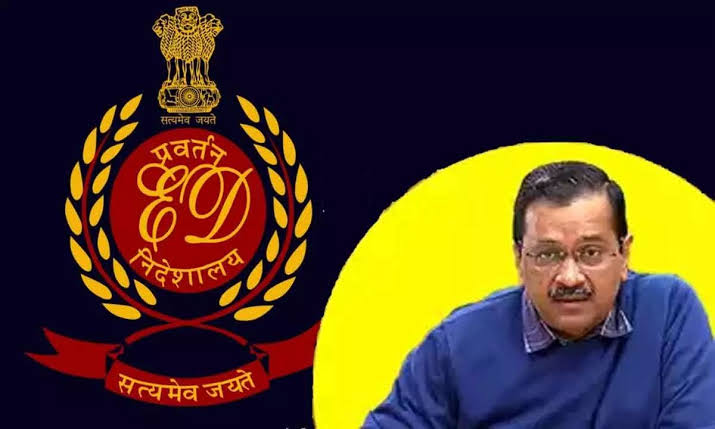
The Enforcement Directorate (ED) is suing Chief Minister Arvind Kejriwal in a Delhi court for failing to appear at the central agency’s summons in the Delhi excise policy case.
In accordance with Section 50 of the Prevention of Money Laundering Act, which establishes the ED’s authority over summonses, document production, and other matters, the ED has filed a complaint case for non-attendance.
Today, Additional Chief Metropolitan Magistrate Divya Malhotra heard the case.
Submitting on behalf of the ED, Additional Solicitor General SV Raju made an appearance. The subject was brought up by the court for additional consideration on February 7.
Kejriwal was served five summonses on various dates in relation to the investigation into the purported scam, but he has declined to appear before the central agency.
Manish Sisodia and Sanjay Singh, two prominent members of the Aam Aadmi Party (AAP), are already detained in connection with the same issue.
AAP said that the ED’s summons was “politically motivated” and asserted that the agency intended to detain the Chief Minister.
The situation:
Concerning purported anomalies in the Delhi Excise Policy for 2021–2022, the Central Bureau of Investigation (CBI) filed a complaint on August 17, 2022, which is the basis for the ED’s investigation into allegations of money laundering.
Lieutenant Governor VK Saxena filed a complaint on July 20, 2022, which led to the registration of the CBI case.
On August 22, 2022, the ED later filed a case against the defendants related to the money laundering issue.
AAP leaders, including former Deputy Chief Minister Sisodia and other unidentified private individuals or businesses, are accused of hatching a criminal conspiracy during the policy-making process.
It has been claimed that some of the “intentionally” left or created gaps in the policy were the cause of the conspiracy. These were purportedly intended to favour certain conspirators and licensees after the tender procedure.
The central agencies claim that a small number of South Indian liquor industry players paid kickbacks through hawala channels to certain AAP public employees in order to accomplish the goals of “monopoly and cartelization” among liquor producers, distributors, and retailers.