


Experts and authorities have forecast that after both side took maximalist stances, diplomatic relations between India and Canada might enter a “deep crisis” and become the “worst ever.”
After halting visa services for many weeks due to Ottawa’s accusation that Indian operatives could have been involved in the death of a Khalistani terrorist from Punjab, India has now decided to partly resume the services.
The two nations’ relations, which have been tight for than a century and have deep linkages via the Sikh community, have reached an all-time low due to mutual recriminations after that claim, which India vehemently rejects.
According to Reuters, “officials and experts in both countries said that while India’s relaxation on visa requirements may have raised some expectations of improved relations, it was not a breakthrough, as neither side has much incentive to hasten a return to normalcy.”
“Neither New Delhi nor Ottawa looks likely to take dramatic steps to reconcile soon as Prime Minister Narendra Modi prepares for Indian national elections by May,” the statement said. “Canada’s murder investigation proceeds.”
According to Michael Kugelman, director of the South Asia Institute at the Wilson Center in Washington, “the relationship is in deep crisis, perhaps its worst ever,” as stated in the assessment.
“Each side may have a strong interest in the crisis not getting completely out of control, but that doesn’t mean there are strong incentives to resolve the crisis,” according to the paper.
According to Ajay Bisaria, who served as India’s ambassador to Canada from 2020 to 2022, “quiet diplomacy” has resulted in a “de-escalation phase” in the relationship, the article said.
Tens of thousands of Indians and individuals of Indian descent who reside in Canada or want to study there are projected to find it more difficult to travel throughout the country even with the respite, according to the research.
“The acrimony has delayed discussions on a free-trade deal and threatened Canada’s plans as a Group of Seven member in the Indo-Pacific, where New Delhi is critical to efforts to check an increasingly assertive China, even though both governments have spared business and trade links,” the statement said.
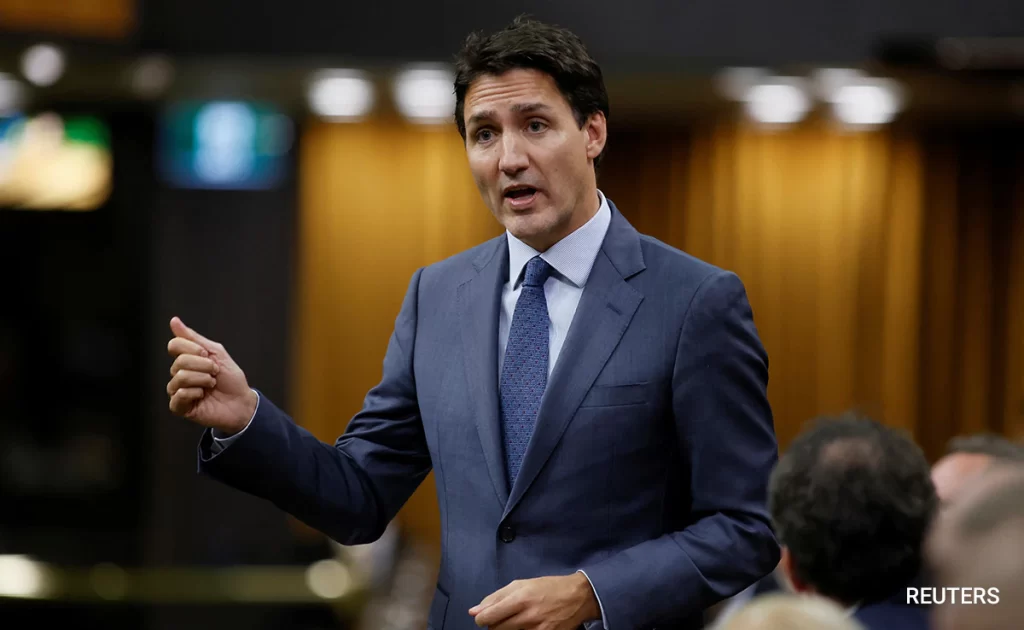
On September 18, Prime Minister Justin Trudeau of Canada said that his country was “actively pursuing credible allegations” that connected Indian government officials to the June murder of 45-year-old Khalistani terrorist Hardeep Singh Nijjar in a Vancouver neighborhood.
India’s head of intelligence was expelled by Canada in Ottawa. India swiftly retaliated, banning 13 types of Canadian visas and shutting Canada’s diplomatic mission there, which Ottawa said went against the Vienna Conventions.
Since the 1980s, concerns around Sikh separatism between India and Canada have plagued the relationship. It is improbable that PM Modi would concede, particularly in the run-up to the elections.
An expert on foreign policy at the Atlantic Council named Michael Bociurkiw was quoted in the paper as saying that “a pause” was necessary “for cooler heads to prevail and to get the relationship back on track.”
However, it won’t happen right away. It’ll need time, “he said.