


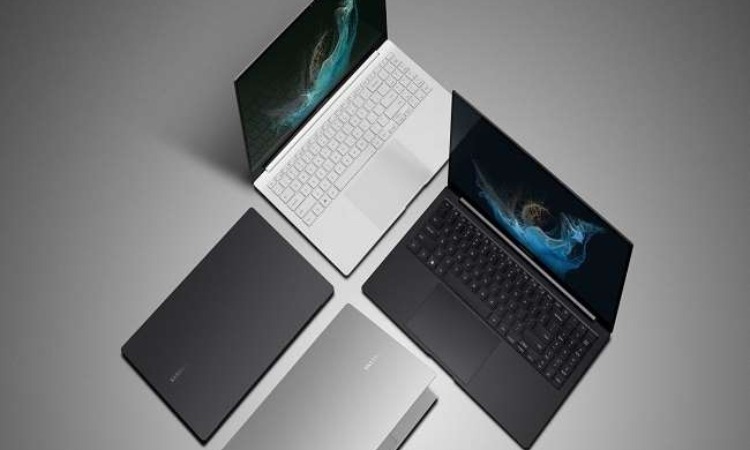
The government modified its restrictions on laptop and computer imports on Thursday by allowing importers to bring in shipments of IT gear from outside with only a simple “authorization” after stating the amount and value.
The new “import management system” aims to keep track of computer, tablet, and laptop shipments entering the nation without reducing market supply or adding to an onerous licensing process.
Companies in India’s IT hardware market, which had expressed worries about the installation of a rigorous licensing framework for imports, are expected to find comfort from the decision. HCL, Samsung, Dell, LG Electronics, Acer, Apple, Lenovo, and HP are a few of the top electronic manufacturers that are available on the market.
The new licensing or import authorisation/management system, which will be put into operation with immediate effect, is primarily intended to monitor imports of these products to ensure that they are coming from “trusted” sources, Director General of Foreign Trade (DGFT) Santosh Kumar Saranagi told reporters here.
A synopsis of the import items, as well as information on previous import, export, and turnover, must be provided by the importer when applying for authorization. The government will not deny any requests for imports, subject to certain restrictions, and will use the information to keep an eye on shipments of these commodities coming in.
The policy has undergone some “tweaking” in response to sector players’ concerns, and an end-to-end online system has been made available to importers, according to Saranagi.
This system will “provide us with the kind of data and information (that) we need to make sure that we have a completely trusted digital system in this country,” according to S Krishnan, secretary of the Ministry of Electronics and Information Technology (MeiTY).
After announcing import restrictions on August 3, the government abruptly changed its mind on August 4 and declared that the licensing system will take effect on November 1 in response to industry concerns.
According to a representative, the new online system is easier to use than the complex licensing system.
Multiple authorization requests from importers are permitted, and each authorization is good until September 30, 2024. Up until September of the following year, any number of import consignments will be granted authorization.
According to Krishnan, the government would examine the facts, consult with business, and then make decisions on the post-September 2024 scenario.
The purpose, according to the MeiTY secretary, is to encourage the manufacture of ever more electronic gear in the nation. “The intent is not to cause any kind of inconvenience or difficulty, impose any needless restrictions on any of the players involved,” the secretary stated.
He said, “Electronics will grow to be the largest manufacturing sector not just in India but throughout the world, and India needs to have a significant presence in the sector. These steps will assist in achieving that overall objective.”
“The goal is to provide assurance over the next year or two. The secretary said, “Further actions will be taken. We are only introducing the system, and we will analyze it over a pretty lengthy time based on whatever data we are able to acquire (and) depending on the sort of contact we have with stakeholders.
According to Sarangi, the government would have clear information on certain items arriving from various sources thanks to this import management system, and they can then monitor it in consultation with the stakeholders.
According to the DGFT, the system will guarantee that it is faceless and contactless, and there won’t be any problems for importers to fill out their information.
In order to maintain India’s reliable supply chain, the new licensing regime is applicable to laptops, personal computers (including tablet computers), microcomputers, big or mainframe computers, and some data processing units.
Companies on the “denied entity list” would not be granted authorizations, he said.
A list like this would include companies who have not met their export commitments or have defaulted on them by taking advantage of programs like advance authorization and Export Promotion Capital Goods (EPCG) or becoming the target of DRI (Directorate of Revenue Intelligence) proceedings.
Although an online system has been implemented, according to Sarangi, “there is no change in that” and these IT hardware devices are still “under the restricted” category.
When questioned whether the new approach will raise the cost of these products, Krishnan said that they did not anticipate any kind of supply restriction to do so.
“Supply will continue to come from both domestic and imported sources, and we believe, as domestic production (will increase), overall supply will increase and prices will either stay where they are or will come down,” the official said.
The secretary also said that a large number of PLI applications have been submitted; they are now undergoing assessment, and the procedure would be finished in one to two months.
The DGFT responded that a clarification had been given to put the new online authorization mechanism for these imports into operation and that the government would not be withdrawing the notice from August.
Different organizations have received a number of exemptions from the DGFT.
These IT hardware goods made in Special Economic Zones (SEZs) may be imported into domestic tariff regions (outside SEZs) without requiring an import authorization as long as the necessary levies, if any, are paid, according to a notice.
Private businesses are also free from requesting this approval for imports if they are supplying these items to federal, state, or local government organizations or enterprises or for defense reasons.
Additionally, in order to import this IT hardware, SEZ units, export-oriented units, Electronics Hardware Technology Park (EHTP), Software Technology Park, and Bio-Technology Park are exempt from the need to get a “restricted import authorisation”.
Additionally, the import of one laptop, tablet, personal computer, or ultra-small form factor computer, including those bought via e-commerce portals through the mail or a courier, is free from the limits and is not subject to the luggage regulations.
The amount specified on a valid import authorization may be updated at any time after it has been issued, provided the import’s total value is not altered.
Laptops, computers (including tablet computers), microcomputers, big or mainframe computers, and certain data processing devices were all subject to import restrictions in August.
The import management system will cover these five types of products, and authorizations will need to be granted in an end-to-end online format for the purpose of customs clearance.
In comparison to $10.3 billion in 2021–22 and $7.1 billion in 2020–21, India imported these items for $8.7 billion in 2022–23.
In comparison to 2021–2022, the nation imported personal computers, including laptops, for $5.33 billion in 2022–2033.
China ($5.11 billion), Singapore ($1.4 billion), Hong Kong ($807 million), the US ($344.7 million), Malaysia ($324.8 million), Taiwan ($272.5 million), the Netherlands ($132.8 million), and Vietnam ($126 million) are the top nations from which these items were imported in the most recent fiscal year.
The Production Linked Incentive (PLI) Scheme 2.0 for IT Hardware, with a budgeted commitment of Rs 17,000 crore, was authorized by the government in May.
The plan, which has a budget of Rs 7,350 crore, was authorized for IT hardware in February 2021 and covers the manufacturing of laptops, tablets, All-in-One PCs, and servers.