


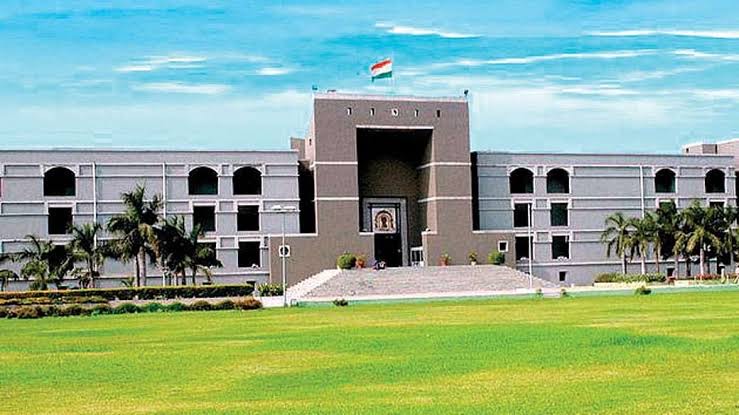
On Wednesday, the Gujarat High Court approved the medical termination of a 26-week pregnancy for an 11-year-old girl who had been raped by her own father [XYZ v. State of Gujarat].
When granting the application victim’s request for an abortion, single-judge Justice Samir Dave referred to the Hindu sacred classic Durga Saptashati, also known as “Devi Mahatmya,” to emphasise the respect for women.
According to the Court, one of the best methods to comprehend a civilization’s spirit is to research its history about women’s roles and status.
The single-judge stated that the earliest artefacts discovered during archaeological excavations in ancient India provide evidence of goddess worship.
According to the Court, “Durga Saptashati” is one of the earliest full manuscripts still in existence from Hindu traditions. It conveys reverence and worship of the feminine side of God.
The single-judge noted that the poem “is thought to be both a culmination of centuries of Indian ideas about the divine feminine as well as a foundation for the literature and spirituality focused on the feminine transcendence in centuries that followed.”
The bench alluded to a passage in the text and gave the Hindi translation of the phrase’s meaning as follows: ” , इसस्त्रिलए अगर स्त्री चाहे तो वह सब कर सकती हैं जो वह करना चाहती हैं , यह ताकत सर्फ़ उसीमे हैं जो बडे बडे संकटों का नाश कर, श्रेष्ट से श्रेष्ट और कठिनतम कार्य भी पूर्ण कर सकती हैं। जरुरत हैं तो सर्वशक्तिमान नारी को स्वयं को पहचानने को।” (Devi Jagdambe, all women are your role models. Because of this, a woman can accomplish anything she sets her mind to if she so chooses. However, this power only belongs to those who can solve their biggest difficulties before moving on to the best and most challenging jobs. There is a requirement that the very powerful woman acknowledge herself.
The Court further stated that the ultimate insult to a woman’s dignity is touching her without her consent.
“Trying to touch a woman’s dignity is the highest insult a woman can get. The victim in this case, a young child who is 11 years and 9 months old, was subjected to a horrible crime by none other than her own father, which is quite surprising and painful, Justice Dave lamented.
In light of these findings, the Court approved the survivor’s request for a medical abortion.
The bench directed the State to pay a compensation of 2.5 lakh within a period of two months, taking into account the survivor’s young age and the fact that she must endure excruciating mental and bodily pain.
A medical board had been established previously by the bench to examine the foetus and determine the survivor’s mental state.
The medical board concluded that the foetus did not have any general anomalies or deformities. However, it was discovered that the young girl has a clinically average IQ and that she is under stress as a result of an unforeseen catastrophic tragedy and her pregnancy.
Her mother believes that the patient’s mental health will suffer if the pregnancy is carried on because it will be stressful and embarrassing for her and their family. She has stated that she wants to end her daughter’s pregnancy. The child need continuing treatment from mental health professionals, the Court concluded.
She is therefore experiencing an uncomplicated pregnancy, but the risks of difficulties developing later are higher than in typical situations because of her young age, the Court stated.
As a result, it approved the argument for abortion.
Justice Dave has previously cited a religious scripture in response to a rape survivor’s request to end her “unwanted” pregnancy.
Justice Dave cited Manusmriti on June 9 to highlight how girls in the past were married off by the age of 14 to 16 and would have given birth to at least one child by the time they were 17.
For making a remark while listening to the rape victim’s appeal, the judge received criticism. But in response to the criticism, he cited the Bhagavad Gita and declared that a judge must be like a “Stithaprajna,” which implies one should disregard both praise and criticism.
For the rape victim, attorney Poonam M. Maheta made an appearance.
Read Judgement :