


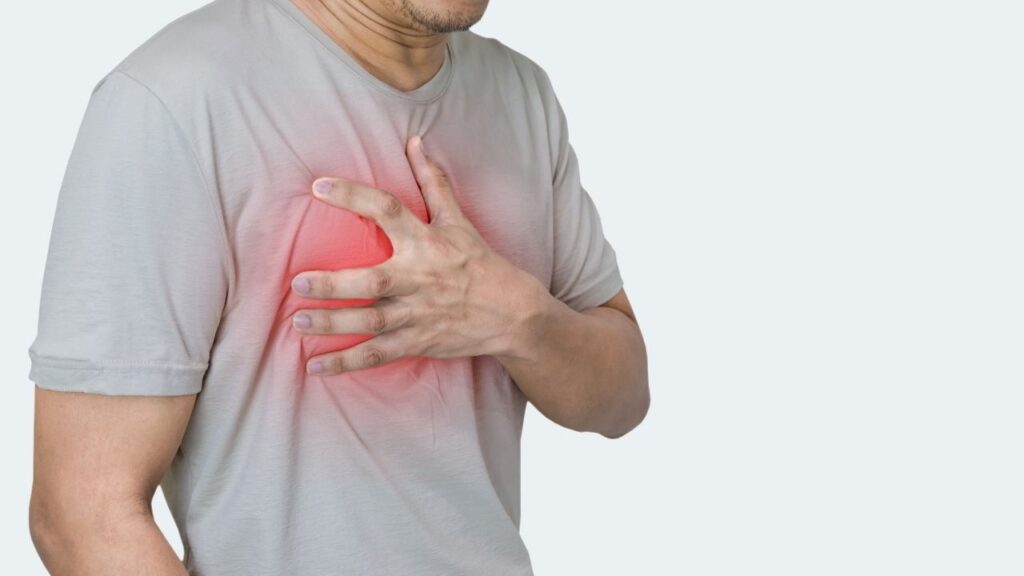
Myocardial infarctions, another name for heart attacks, are significant medical crises that need prompt care. The idea that heart attacks invariably manifest as left-sided chest discomfort is one of the most widespread myths regarding this condition. Although this symptom is common, it’s important to understand that heart attack symptoms may appear in a variety of ways and aren’t necessarily limited to the left side of the chest. This page tries to shed light on the many heart attack symptoms, their probable locations, and the risks of mistaking them for unimportant conditions like acid reflux or gas.
Different Heart Attack Symptoms’ Manifestations
Contrary to common opinion, symptoms of a heart attack may go much beyond the typical left-sided chest discomfort. It is important to understand that this pain may occur everywhere, including the centre of the chest, the right side, or even regions that don’t appear to be connected to the heart. It may be acute, crushing, or radiating. The ability to identify these many forms is crucial for early intervention and prompt medical care.
Heart attack symptoms’ locations
Left-Sided Chest discomfort: Left-sided chest discomfort is the most well-known sign of a heart attack. A common way to characterize this pain is as a heavy, squeezing feeling that may spread to the left arm, jaw, or shoulder. This well-known symptom is brought on by a blocked coronary artery, which reduces blood supply to the heart muscle.
Heart attack symptoms, such as pain or discomfort in the centre of the chest, might also be present. Due to the possibility that this feeling would be misdiagnosed as gas or indigestion, many may put off seeking medical attention. Never disregard central chest discomfort since it can be a sign of a catastrophic cardiac attack.
Heart attack symptoms may also appear on the right side of the chest, but less often. This kind of discomfort might be misconstrued for other illnesses including muscular strain or gallbladder problems. Ignoring right-sided chest discomfort may be dangerous since the heart muscle has to be treated soon away to prevent further harm.
Heart attack-related discomfort might extend to unanticipated places, including the arms, neck, jaw, and shoulders. The soreness that spreads from the chest to these areas is how this phenomena is often characterized. Understanding the heart cause of this spreading discomfort is essential.
Beyond Chest Pain Symptoms
There are additional heart attack symptoms in addition to chest pain, therefore it’s crucial to be aware of them as they may also manifest without discomfort in the chest. These signs might consist of:
Breathlessness: Unexpected shortness of breath, which often happens when at rest, may be a sign of a heart attack. The heart’s ineffective blood pumping causes this symptom to manifest.
Vomiting and Nausea: In women, especially, experiencing nausea or vomiting may be a sign of a heart attack. Due to the frequent misdiagnosis of these symptoms as digestive issues, critical time for medical action may be missed.
Cold Sweats: Profound and unexpected cold sweats that aren’t related to physical exertion or variations in the outside temperature may be an indication of a heart attack. The body’s reaction to the stress of heart trouble is what causes this to happen.
weariness: Unexpected signs of heart attack include weakness, dizziness, and weariness. These signs and symptoms occur because the body’s entire energy supply is impacted by the heart’s impaired performance.
Misunderstanding and its Risks
Heart attack symptoms are often misdiagnosed as simple gas, indigestion, or acid reflux, which is a hazardous misunderstanding. Ignoring these signs or attributing them to harmless sources might result in delayed medical care, which can cause irreparable heart muscle damage or even death. It is crucial to realize that heart attack symptoms may resemble those of many other illnesses, and they should never be discounted without a full medical evaluation.
The Functions of Age and Gender
Age and gender might also affect the symptoms of a heart attack. In addition to chest discomfort, women are more prone to develop unusual symptoms such shortness of breath, nausea, and back pain. These discrepancies emphasize the need of detecting a wider variety of symptoms and may result in underdiagnosis and delayed treatment.
Age also influences how quickly heart attack symptoms appear. Elderly people may have less obvious symptoms or may have disorientation, vertigo, or fainting, which makes diagnosis more difficult. It’s important to pay attention to even the smallest changes in health, particularly for older people who are more vulnerable.
For quick and efficient medical action, it is crucial to recognize the numerous ways that heart attack symptoms might appear. It is important to keep in mind that symptoms may also appear in the center of the chest, on the right side, and even radiate to apparently unrelated locations, even if left-sided chest discomfort is a well-known sign. Misdiagnosing heart attack symptoms as gastric or acid reflux may have serious repercussions, including deadly results or permanent heart damage. It is crucial to be aware of the many heart attack symptoms and to seek medical help as soon as possible to protect one’s health and wellbeing.