


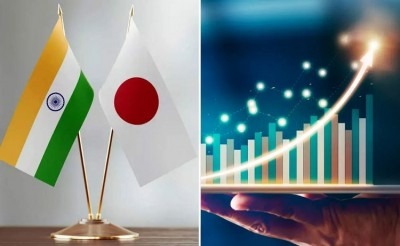
By 2030, India will surpass Japan as the third-largest economy in the world, predicts S&P Global Market Intelligence. By 2030, the Indian economy, which is now the fifth-largest in the world, is anticipated to have a GDP of USD7.3 trillion. India has had significant economic development in recent years, and for the fiscal year that ends in March 2024, GDP growth is predicted to be between 6.2 and 6.3%. India’s GDP increased by 7.8% in the April–June quarter, reiterating the country’s strong economy.
S&P Global expects a persistently high growth in 2023 and 2024, mostly supported by strong domestic demand. A young population and growing urban family incomes have supported the country’s long-term prospects, which have been highlighted by the flood of foreign direct investment during the last ten years.
India is expected to surpass Japan and become the second-largest economy in the Asia-Pacific region by 2030, when its nominal GDP, expressed in USD, would rise from USD3.5 trillion in 2022 to USD7.3 trillion. India’s GDP exceeded that of the UK, France, and Germany by 2022, and it is anticipated to overtake Germany by 2030.
With a GDP of USD 25.5 trillion, or one-fourth of the world’s GDP, the United States is now the country with the greatest economy. The second-largest economy is China, which has a GDP of over US$18 trillion, or 17.9% of the global GDP. Germany is the fourth-largest economy, with a GDP of USD4 trillion, while Japan is in last position with a USD4.2 trillion GDP.
India’s long-term economic outlook is attributed by S&P Global to numerous important growth factors. India is a desirable location for multinational investments in a variety of industries, including manufacturing, infrastructure, and services due to a growing middle class, strong consumer spending, and a sizable industrial sector.
The current digital revolution of India is expected to hasten the expansion of e-commerce and alter the retail environment. Leading international IT and e-commerce firms are becoming more and more interested in the Indian market.
In India, the number of internet users is predicted to more than double from 500 million in 2020 to 1.1 billion by 2030. Homegrown startups like Mensa Brands, Delhivery, and BigBasket stand to gain from this digital growth.
Strong FDI inflows into India have persisted, fueled by investments from international technology behemoths like Google and Facebook. These businesses are drawn to India because of its enormous and rapidly expanding consumer market as well as rising FDI inflows from the industrial sector.
In the next ten years, India’s economy is expected to continue to grow at one of the fastest rates in the world, providing a critical long-term growth market for multinational corporations in a variety of sectors, including manufacturing and services like banking, insurance, asset management, healthcare, and information technology.