


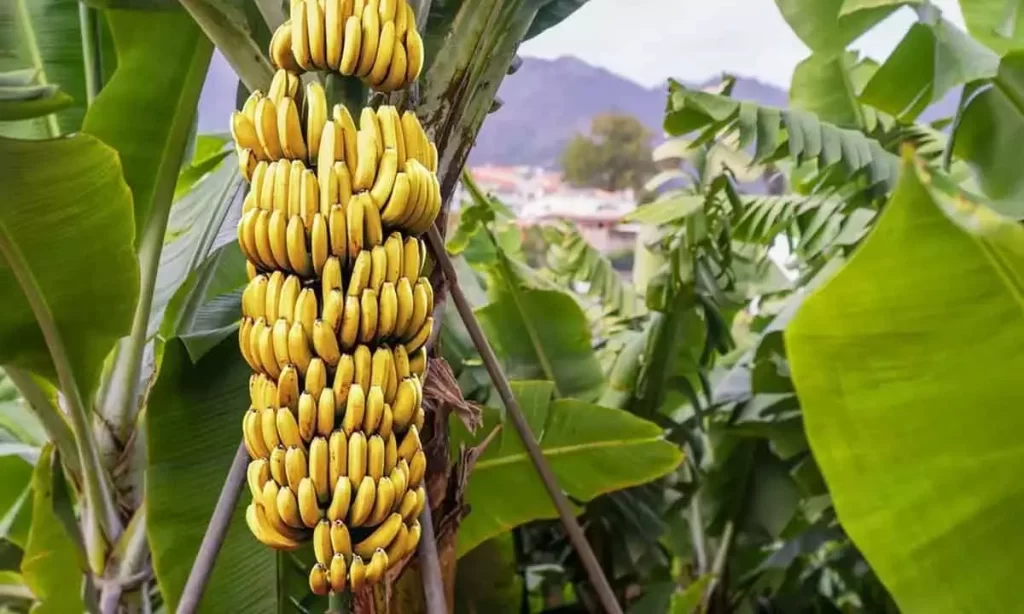
According to figures released by the Food and Agriculture Organization (FAO) for the year 2021, which revealed that the nation accounted for 26.5% of the world’s output of the fruit, India is the top producer of bananas.
With an estimated 56.84 lakh tonnes produced, Andhra Pradesh was the top producer, contributing 16.5 percent of the nation’s total output of bananas in 2021–2022.
The Mission for Integrated Development of Horticulture (MIDH) initiative is being implemented by the Center to boost output and promote the sector’s overall growth in the nation. In addition, the government is putting its Cluster growth Programme (CDP) into action to encourage integrated and market-driven growth of pre-production, production, post-harvest, logistics, branding, and marketing activities and to harness the regional specialization of horticultural clusters.
“Under CDP, 55 horticultural clusters have been found, and 12 of them, including the banana clusters in Anantapur (Andhra Pradesh) and Theni (Tamil Nadu), have been chosen for the CDP’s pilot phase. According to a senior official of the ministry of agriculture and farmer welfare, support under MIDH is given for banana (sucker) at 40% of the maximum cost of Rs. 2.00 lakh/ha to cover the cost of planting materials and drip irrigation systems.
For the purpose of covering the cost of planting supplies and INM/IPM without integration, assistance is offered at a rate of 40% of the maximum cost of Rs 0.87 lakh/ha. According to the official, help is provided at 50% of cost for Northeastern and Himalayan states, TSP territories, Andaman & Nicobar, and Lakshadweep Islands.
The official said, “In the case of banana (tissue culture), support is granted 40% of the maximum cost of Rs 3.00 lakh/ha for paying the expenditure on planting material, cost of drip system, INM/IPM, canopy management, etc. under integrated package with drip irrigation.
For the installation of cold storage, ripening chambers, and reefer transport trucks for perishable horticultural crops, including bananas, MIDH also offers credit-linked support.
“Assistance is also extended for setting up market infrastructures, setting up static/mobile vending cart/platform with cool chamber, setting up functional infrastructures for collection, sorting/grading, packing, etc. for preventing losses and facilitating better marketing of the horticulture produce,” the official said.
In the current year, Andhra Pradesh is predicted to produce 5684.47 metric tonnes, followed by Tamil Nadu (4236.96MT) and Maharashtra (4966.33MT). According to the official, a total of 34907.54 metric tonnes are anticipated to be generated this year across all of the states and Union Territories.