


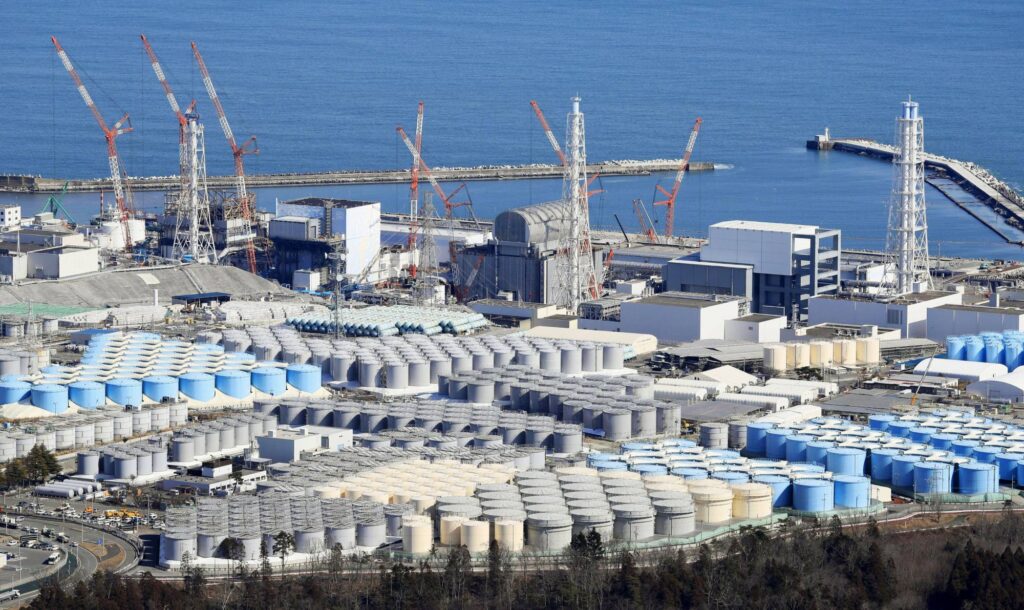
Beginning on Thursday, Japan will begin discharging radioactive wastewater from the Fukushima Daiichi nuclear reactor into the Pacific Ocean. This is a contentious but crucial first step in the decades-long process of shutting down the facility following its catastrophic accident 12 years ago.
At a meeting of Cabinet members engaged in the proposal on Tuesday, Prime Minister Fumio Kishida gave the project his final approval. He also granted the operator, Tokyo Electric Power Company Holdings, the go-ahead to start the coastal release on Thursday, weather and sea permitting.
The discharge of the water, according to Kishida, is necessary for the decommissioning of the facility to go forward and for Fukushima Prefecture to recover from the March 11, 2011, tragedy.
He said that the government had taken all necessary steps to safeguard public safety, protect the fisheries’ image, and present clear, scientific justifications for both domestic and international comprehension.
He promised that the government would keep up the endeavor until the release and decommissioning process was complete, which would take decades.
Three of the Fukushima Daiichi plant’s reactors melted down, polluting their cooling water as a result of a huge earthquake and tsunami that wrecked the plant’s cooling systems. About 1,000 tanks, which occupy most of the plant’s grounds and will be filled to capacity in early 2024, are used to collect, filter, and store the water.
Japanese fishing organizations have opposed the discharge of the treated wastewater vehemently because they fear additional harm to the image of their seafood as they work to rebuild from the nuclear tragedy.
Concerns have also been expressed by organizations in China and South Korea, turning this into a political and diplomatic problem.
In order to decommission the plant and avoid unintentional tank leaks, the government and the facility’s operator, Tokyo Electric Power Company Holdings, argue that the water must be evacuated.
The TEPCO official in charge of the water release, Junichi Matsumoto, told the Associated Press in an interview last month that while the water release represents “a milestone,” it is still only the first stage in a difficult decommissioning process that is anticipated to take decades.
After previous unintentional and unauthorised releases, the government pledged in 2015 not to start without “understanding” from fishing organizations, therefore the lessening of resistance from the fishing sector was crucial to the release.
The National Federation of Fisheries Cooperatives’ Masanobu Sakamoto met with Kishida on Monday and restated the objection of his group to the release while acknowledging that certain people in the fishing industry had become more confident in the move’s safety. He said that despite the government’s assurances of assistance, they continue to worry about the state of their business.
For sales marketing and other initiatives, as well as for sustainable fishing operations, the government has pledged financing totaling 80 billion yen (US$ 550 million).
According to the government and TEPCO, the water will be treated and then greatly diluted with saltwater to levels much safer than those required by international standards, with little negative effects on the environment and public health.
In a final study released in July, the International Atomic Energy Agency came to the conclusion that the release, if carried out as intended, would have a little effect on the environment and human health.
Most scientists agree with the IAEA’s position, but others argue that the long-term effects of the low-dose radiation that persists in the water need study.
To prevent the matter from interfering with their relationship, Kishida’s administration has increased its outreach efforts to neighboring nations, particularly South Korea.
According to Kishida, the endeavor has advanced and the international community is generally reacting calmly to the strategy. While China has increased radiation testing on Japanese fishery goods, delaying customs clearance, Hong Kong has nevertheless said that it will stop shipments from Fukushima and nine other prefectures if Japan followed forward with the plan.