


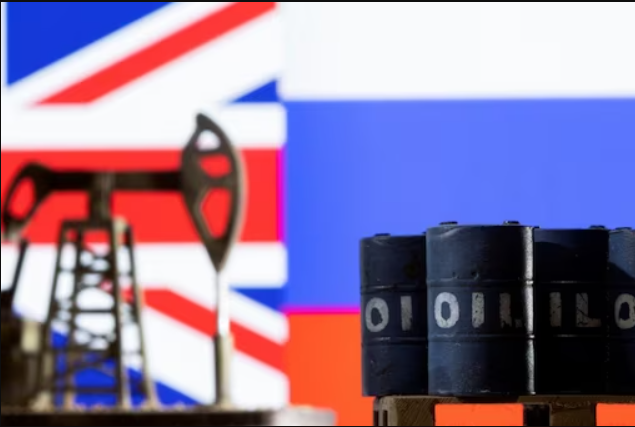
Britain imposed further sanctions against Russia on Friday, targeting firms linked to the alleged theft of Ukrainian grain, and published proposals to impose import restrictions on Russian diamonds, copper, aluminum, and nickel.
New sanctions on Russia over its conflict with Ukraine were also declared by the United States and Canada. Washington placed penalties on the Russian operations of Polymetal, a competitor, and gold producer Polyus, which would further harm Russian gold sales already suffering from Western sanctions and limitations.
However, since Russian shipments of such goods to the UK have already decreased as a result of the application of tariffs, the UK import embargo will only have a negligible effect.
British Prime Minister Rishi Sunak stated in a statement that “we will legislate later this year to ban imports of Russian diamonds, and end all imports of Russian-origin copper, aluminum, and nickel.”
According to data, just a tiny part of the aluminum, nickel, and diamonds that Britain bought came from Russia.
The import of basic metals from Russia was subject to an extra 35% duty last March by the British government. Then, despite the fact that nothing was kept there, the London Metal Exchange (LME) halted supplies of Russian copper, aluminum, nickel, and lead into its authorized warehouses in Britain.
According to a statement released on Friday, “The LME will closely monitor the latest development for further details and will communicate to the market in due course,” should it decide that action beyond the current suspension is necessary.
Russia is a significant producer of diamonds, nickel, and aluminum. Before the G7 countries debated how to track Russia’s diamond traffic in order to impose restrictions later, Britain’s import ban proposals were made public.
When questioned about potential future diamond import limitations in the European Union, Kremlin spokesperson Dmitry Peskov said, “The global market is fluid, rich in alternative destinations.”
Along with China and Australia, Russia is one of the nations with the biggest gold production rates worldwide.
The newest US sanctions on Russia’s two largest gold mining enterprises follow sanctions against major Russian banks, which served as the nation’s primary gold exporters prior to the war, as well as June’s embargo on new Russian gold imports by the United Kingdom, the United States, Japan, and Canada.
The prohibition was put in place after Russian shipments to the West had already stopped since, according to participants in the business, the Russian gold trade had been diverted to Asia, where the majority of nations do not have sanctions against Russia.
US sanctions don’t apply to the parent business, Polymetal International PLC, which is located on Jersey island and has holdings in Kazakhstan; they only target the portion of Polymetal with a presence in Russia, Polimetall AO.
In order to split its Russian and Kazakh companies next year, Polymetal requested its shareholders to authorize re-domiciling to Kazakhstan from Jersey in May.
A “SHADY ENTITY”
In addition, Britain went after “shady individuals and entities” involved in the theft and resale of Ukrainian grain, something Russia has both denied and been accused of doing.
It’s rare to target companies that trade grains since such activity often falls under humanitarian exceptions. Major grain exporters to Africa and the Middle East are both Russia and Ukraine.
The UK Foreign, Commonwealth and Development Office released a statement saying that “this grain and other agricultural goods have reportedly been stolen from warehouses and fields in the temporarily occupied territories in Ukraine.”
Nornickel and Polymetal, a Russian manufacturer of nickel and copper, refused to comment. Rusal, a manufacturer of aluminum, Alrosa, a diamond miner, and Polyus did not respond to Reuters’ requests for comment.