


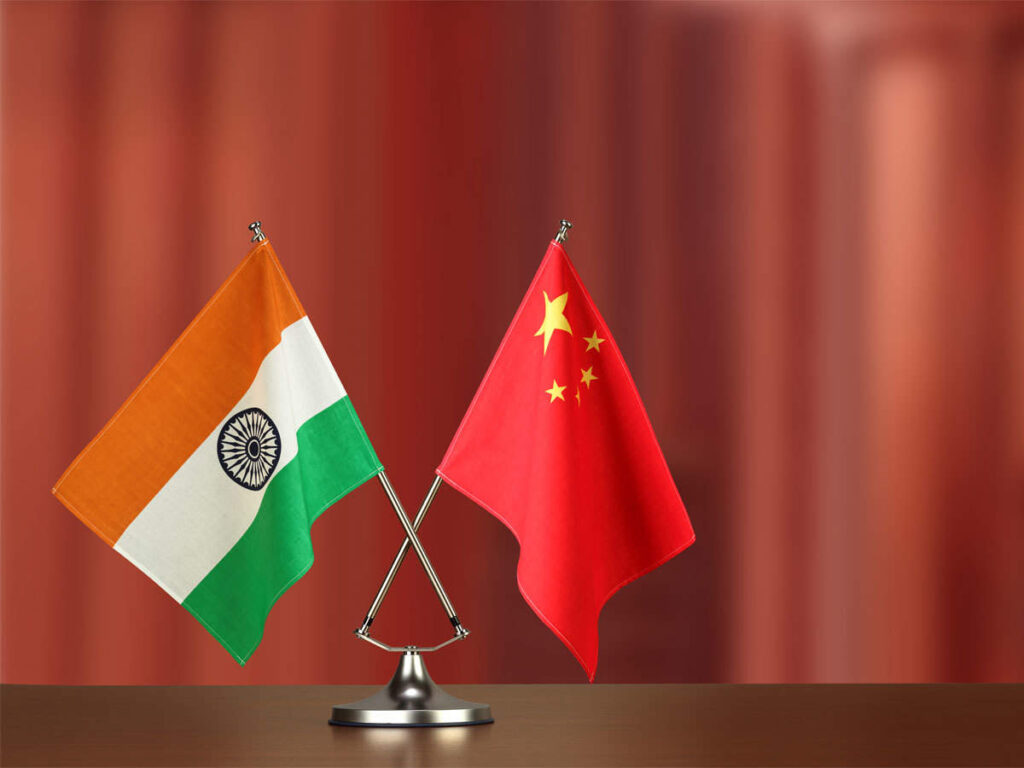
According to China’s top think tank, India and China will account for half of the global growth this year. Asia will continue to be a key development engine with an expected 4.5 percent GDP growth, making it a “standout performer” despite the global economic downturn.
Asian countries are expected to do particularly well in 2023 given the global economic slowdown, according to a research by the Boao Forum for Asia (BFA), a well-known government think tank in Beijing. The research was made public as the think tank on Tuesday started its four-day annual session in the Chinese province of Hainan’s Boao town.
According to the research “Asian Economic Forecast and Integration Development,” Asia will be a “standout performer in face of the global economic downturn” with a weighted real Gross Domestic Product (GDP) growth rate of 4.5 percent in 2023, up from 4.2 percent in 2022.
This year, according to the research, China and India will account for half of global growth, according to estimates from the Washington-based International Monetary Fund (IMF). Asia’s economies, which are a significant driver of the global economy, will quicken the pace of recovery in 2023.
According to IMF calculations, only China and India will account for half of global growth this year, with every 1% gain in China’s economic development translating into an average 0.3% increase in production throughout the rest of Asia. According to the analysis, more Asian areas may potentially contribute 25% of global growth. India is predicted to expand at 6.8% in 2023, followed by China with a growth rate of 5.2%, according to IMF predictions.
IMF Managing Director Kristalina Georgieva emphasised that the global economic growth might dip below three percent this year in her remarks at the China Development Forum on March 26. According to Georgieva, “we predict 2023 to be another difficult year, with global growth dropping to around 3%, as scarring from the epidemic, the conflict in Ukraine, and monetary tightening weigh on economic activity.”
Even with a more optimistic prognosis for 2024, she said, “global growth will still be significantly below its historical average of 3.8%.” In 2023, the BFA report stated, “Asia is expected to accelerate its pace of overall economic growth, continue to advance regional production, trade, investment, and financial integration and cohesion, and seize the ‘Asian moment’ for global economic governance in the context of a global slowdown and the risk of increasing fragmentation of globalisation.”
The report called for “significant attention” to the resilience of Asian economies, reconfiguration of industrial chains, climate change responses, and implementation of regional trade agreements to manage critical issues facing Asia’s development. The report said that despite a deteriorating global labour market in 2023, the employment situation in Asia, particularly in East Asia, may exceed expectations.
Despite the region’s positive economic outlook, the think tank warned of significant development challenges in Asia. “Many low- and middle-income countries in Asia are encountering massive development challenges amid multiple crises, such as inflation, earthquakes, droughts, floods, supply chain disruptions, food and energy shortages, and climate change,” the report stated.
The BAF Annual Conference 2023, which started on Tuesday and will last until March 31 in Boao, will host more than 2,000 delegates from 50 countries and regions. According to the Chinese Foreign Ministry, several heads of government, including Chinese Premier Li Qiang, Singapore’s Prime Minister Lee Hsieh, and Malaysia’s Minister of Foreign Affairs, Dr. Ramalinga Rajapaksa, will attend.