


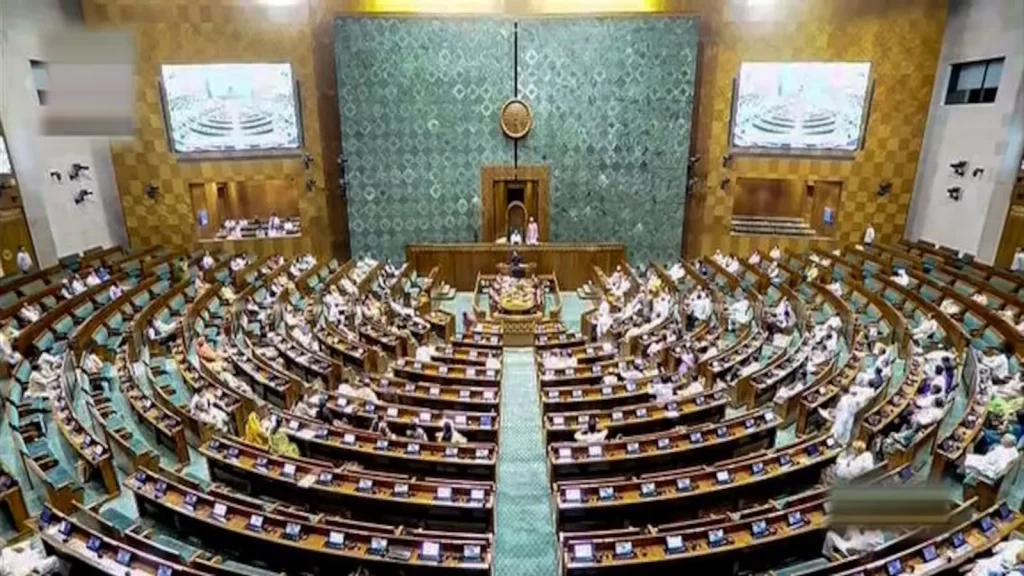
The Press and Registration of Periodicals (PRP) Bill, 2023 was approved by the Lok Sabha on Thursday by voice voting after a two-and-a-half-hour discussion during which the most, if not all, of the opposition MPs, were not present. The Bill decriminalizes all but one crime, establishes an appeal body to handle registration-related disputes, and streamlines and digitizes the process of registering newspapers and other publications with the Press Registrar.
The Press and Registration of Books Act, of 1867, which mandated that periodicals, books, and newspapers be registered with the government, would be replaced by the PRP Bill. Both the previous Congress-led administration and the BJP-led government have attempted many times to replace the colonial-era statute. A law that the Congress government offered in 2011 was not approved.
“I am introducing the Press and Registration of Periodicals Bill, 2023 to you, carrying on the legacy of repealing regulations from the colonial period. With the passage of this bill, India will no longer be governed by colonial laws and would have new laws. Following their colonization of India in 1867, the British felt they had to exert press control. Getting registered was somewhat difficult. Establishing a printing press and going into publishing were significant events. District magistrates played a major role. Anurag Thakur, the minister of information and broadcasting, proposed the bill in the Lower House and said, “This was a complex system that had eight steps.”
The bill was approved by the Rajya Sabha on August 3.
The PRP Bill prohibits the publishing of periodicals by anybody found guilty of terrorism, illegal conduct (as defined by the Illegal Activities (Prevention) Act, 1967), or working against national security. After receiving an online application from interested companies, the federal government-appointed Press Registrar General of India would be in charge of registering periodicals, which include newspapers and magazines but exclude academic journals.
“The registration process won’t take two to three years anymore. Currently, obtaining approval for your newspaper will only take two months. This is straightforward, astute, and concurrent,” Thakur said.
Prior to this, you had to see the Registrar General after the district magistrate. You may now visit both the registrar general and the DM at the same time. We won’t wait for a response from the DM if it doesn’t arrive within 60 days. You will get approval straight from the RNI [PRG],” he said.
“With the exception of one offense, we have decriminalized all of these bills,” Thakur said. According to the Bill, a publisher of a periodical may be fined up to ₹5 lakh and ordered to cease publication if they publish it without first getting a certificate of registration from PRG. The publisher faces a maximum six-month prison sentence if they go on publishing in defiance of the ban.
According to Thakur, regular declarations—which were once necessary to be filed to the DM—have also been eliminated. He said, “We have modified it to an online declaration to the PRG.” Books have been taken out of this location as the HRD ministry is now in charge of them, according to Thakur.
Some of the Bill’s “draconian provisions” alarmed the Editors Guild of India (EGI) when it was approved by the Rajya Sabha in August. “Compared to the existing law, the new bill actually broadens the State’s powers to have more arbitrary and intrusive checks into the operation of newspapers and magazines,” the organization said.
The concerns brought up by the EGI were brought up by Bhartruhari Mahtab of the Biju Janata Dal and Imtiyaz Jaleel of the AIMIM. “This bill is more about regulation and press control than it is about registration,” Jaleel said.
The PRG and any “specified authority” are authorized to visit a periodical’s premises in order to “inspect or take copies of the relevant records or documents or ask any questions necessary for obtaining any information required to be furnished,” according to a provision that the EGI had brought attention to. It had said that the phrase “specified authority” conferred jurisdiction to government offices that went beyond the Press Registrar and may potentially include law enforcement and the police.
The president’s consent to the measure is now pending.
In his remarks, Thakur also mentioned the importance of press freedom and journalist protection to the Narendra Modi administration. TMC MP Dola Sen asked a question on policy frameworks for the safety of journalists, and he responded with this statement.
“…the honorable MP from West Bengal posed the first query…Although I didn’t want to name any states, I was a bit uncomfortable to say this since so many events had occurred there. There have been violent occurrences against journalists in West Bengal, he added.
“There, journalists don’t feel safe…and given that it is a state matter, this is really concerning. In addition, he said, “They should have protection and a space set aside for them to work autonomously.
Rahul Shewale, a Shiv Sena MP, also brought up the subject of journalist protection.