


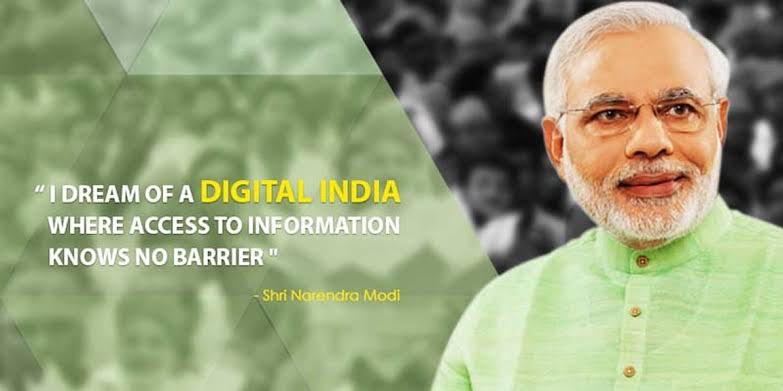
The Prime Minister Narendra Modi-led Digital India initiative was launched on July 1, 2015, and since then has grown into a historic mass movement that has revolutionised the lives of a vast majority of Indian residents.
It is crucial to recognise the incredible accomplishments of this revolutionary effort, which aims to turn India into a knowledge-based economy and a digitally empowered society, as we mark its eighth anniversary.
Conquering the Digital Divide and Giving the People Power
The lofty goal of bridging the chasmic digital divide that permeates the Indian landscape is at the heart of the Digital India programme. This bold initiative works tirelessly to provide equal opportunities and unrestricted access to cutting-edge digital infrastructure, promoting inclusivity and empowering people from all social classes. The programme has successfully erased the geographic gaps between the government and the public, greatly reducing bureaucratic bottlenecks and pervasive corruption. This was accomplished by giving digital access to the status of an essential service and providing on-demand governance.
The far-reaching transformational effects of Digital India have empowered those who have benefited from it through the unmistakable lens of transparent and incorruptible service delivery. India has become a global leader in the skilful application of technology for social welfare, making it a model for digital innovation and welfare-driven governance.
Important Initiatives and Areas
Numerous noteworthy efforts that have been sparked by Digital India have produced amazing results in a variety of fields. The most notable of these successes is the admirable achievement of narrowing the digital divide between urban and rural areas. Urban and rural areas have peacefully fused, encouraging seamless connectivity and unrestricted communication, thanks in large part to ground-breaking programmes like Common Service Centres, BharatNet broadband services, and the Digital Village project. Rural communities have been inspired by these transformational initiatives, which have given them access to digital services, education, healthcare, and e-commerce on a scale never before seen.
The success of Digital India rests in large part on data-driven transformation. It is undeniable that the emergence of transformative platforms like DigiLocker, the Open Government Data (OGD) Platform, and the National Knowledge Network has fundamentally changed how social services and vital items are distributed across the country. These ground-breaking platforms have sped up real gains for both individuals and businesses by streamlining procedures, reducing the bureaucratic maze, and providing secure access to vital data and services.
Under the auspices of the Digital India programme, the field of digital infrastructure has prospered. Pioneering initiatives like MyGov, eHospital, and CO-WIN have subtly changed the ways that citizens can access government-funded services, giving them access to unmatched efficiency and ease. These technological advancements have brought forth a new era of efficiency and openness, from streamlining hospital appointments to establishing strong citizen-governance relations.
Through the use of technology, Digital India has enabled unprecedented levels of financial inclusion throughout the country. The Jan Dhan-Aadhar-Mobile (JAM) trinity, which ushers in an era of unsurpassed convenience and efficiency in the transfer of welfare subsidies to the bank accounts of the impoverished, is at the forefront of this paradigm-shifting transformation.
Additionally, the Unified Payments Interface (UPI) has brought about a fundamental shift in money transactions in India, irrevocably altering the financial environment. With millions of people now having access to financial services, UPI’s introduction has sparked a seismic rise in digital payments, strengthening the foundation of the country’s economy. Unbelievably, in May 2023, UPI reached an all-time high, registering a stunning 9.41 billion transactions worth a staggering Rs 14.30 trillion.
The Digital India project has also led to an unparalleled increase in job opportunities in a variety of industries. Online education, e-commerce, and the expanding gig economy have all experienced exponential growth thanks to the key catalyst of accessible internet access. Customer service, digital marketing, and education are three areas of online labour that have flourished and offer hitherto unexplored opportunities for career and personal improvement.
India’s unrelenting march towards an illustrious future has a solid foundation thanks to the success of the Digital India project. Securing the nation’s digital capabilities, closing knowledge and access gaps, and embracing seamless global integration becomes of utmost importance as it moves forward with its transformational journey. By carefully prioritising cybersecurity measures, the country will be protected from emerging and new threats, establishing an ecosystem that is durable and impervious to disruption and allowing for unrestricted digital metamorphosis.
The Digital India plan, with its breathtaking trajectory, has unquestionably triumphed, enabling India to become a digitally independent country. This transformative undertaking has profoundly changed the lives of numerous people by bridging the digital gap, enhancing access to cutting-edge digital infrastructure, boosting financial inclusion, and catalysing the creation of employment. India has made outstanding efforts to use technology for social welfare, positioning it as a torchbearer who is shining the way for other countries. As growth continues, steadfast adherence to the values of openness, diversity, and technological innovation will further improve the lives of all Indian residents.