


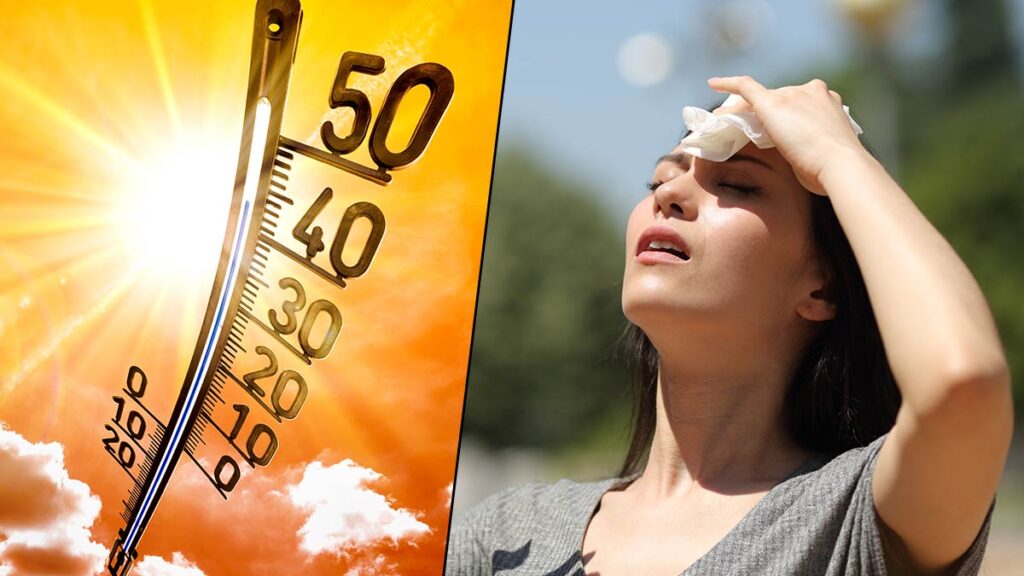
Odisha is suffering from extreme heat, with temperatures over 40 degrees Celsius in half of the state, the India Meteorological Department (IMD) said on Thursday.
Satyabrata Sahu, the Special Relief Commissioner, examined the situation in light of the IMD’s forecast for a further increase in temperature in 23 of the state’s 30 districts, and he urged the local authorities to be ready.
Six of these locations—out of the at least 16 stations that reported temperatures over 40 degrees Celsius—do so at or above 42 degrees Celsius. At 43.4 degrees Celsius, Jharsuguda and Boudh had the highest temperatures, followed by Sambalpur (43.3), Hirakud (42.3), Sundergarh (42.1), and Rourkela (42).
Angul (41.7), Sonepur (41.3), Bolangir (41.2), Titilagarh, Talcher, and Nuapada (41), Baripada (40.6), Nayagarh and Bargarh (40.2), and Malkangiri (40) are among the locations where temperatures were over 40 degrees Celsius.
Bhubaneswar and Cuttack, two twin cities, saw temperatures of 37.7 °C and 38.5 °C, respectively. However, the citizens of the state capital were uncomfortable due to the 95% relative humidity.
The Regional Meteorological Centre (RMC), Bhubaneswar, said in its evening bulletin that the maximum temperatures would not fluctuate much over the next three days, after which the mercury will soar even higher.
RMC Director H R Biswas said that “the maximum temperature is likely to be 40 degrees Celsius and above over the next five days” and advised people to use care while walking outdoors. The SRC examined the state’s heat situation.
“It was agreed to start taking preventative action to deal with the crisis, with a focus on providing drinking water at every market, bus stop, and congested areas in rural and urban sections of the state. In locations with a lack of water, water tankers should be set up, according to a news release from the SRC office.
The SRC instructed the authorities to fix all tube wells and pipelines and to provide bus passengers access to drinking water and ORS. The announcement said that the authorities were also instructed to have enough saline, ORS, and life-saving medications in dispensaries, PHCs, CHCs, and subdivision and district hospitals.
Additionally, the SRC requested that booths for drinking water be set up at bus stops, markets, and other gathering areas. He insisted that measures be adopted to guarantee a constant supply of electricity.
He also advised people to wear loose clothing, carry water bottles, sunglasses, and umbrellas, and to avoid going outside between the hours of 11 a.m. and 3 p.m. unless it was absolutely necessary.