


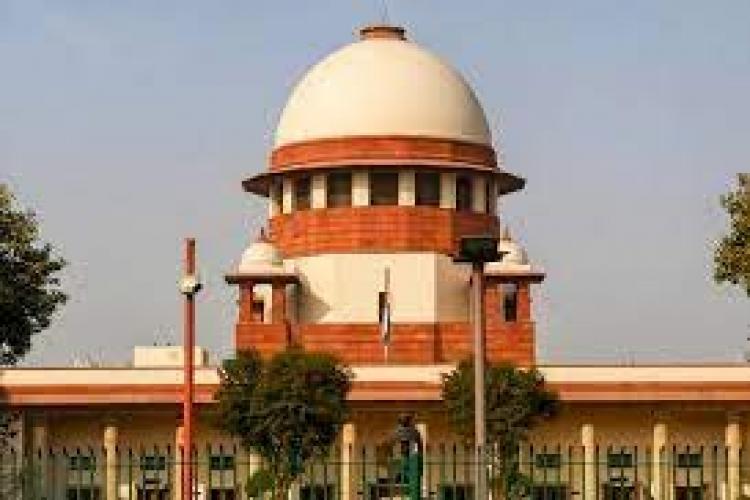
The Central Bureau of Investigation (CBI) and the Enforcement Directorate (ED) have arbitrarily detained opposition leaders, according to a petition filed by 14 opposition parties, led by the Congress, that the Supreme Court agreed to hear on April 5. The petition complains of these actions and calls for new rules governing arrest, detention, and bail.
Senior attorney Abhishek Manu Singhvi asked Chief Justice of India Dhananjaya Y Chandrachud to schedule the plea for hearing on April 5 after he stressed that the rules were being sought for all people, not only for political figures.
14 political parties, or 42% of the spectrum, are present before this honorable court. Democracy, according to them, is under danger. We’re not attempting to influence the ongoing inquiries. Nonetheless, there are some dismal figures. The opposition leaders are the target of 95% of the incidents. Singhvi said, “We are requesting pre-arrest and post-arrest guidelines.
The issue will be listed on April 5, according to the CJI.
Apart from the Congress, the petitioners before the court included the Aam Aadmi Party, All India Trinamool Congress, Rashtriya Janata Dal, Bharat Rashtra Samithi, Dravida Munnetra Kazhagam, Nationalist Congress Party, Shiv Sena (Uddhav Balasaheb Thackeray), CPI (M), Jharkhand Mukti Morcha, Janata Dal (United), Samajwadi Party, CPI, and National Conference.
“Even though the issue is now before the SC, I would want to stress that anytime the ED and CBI are conducting action, individuals are being incarcerated and that is concluded if the court deems them guilty,” a BJP spokesperson said. Then, as a result of these alarming revelations and the money being collected during the central agencies’ investigation, the court is also unable to grant them bail.
“Take the excise policy case into mind. Remember the sting operation film that was published; was it fake? There must be some validity to the gravity of the crime that such things are occurring. No one can dispute that,” the person added while requesting anonymity.
This may be the second occasion that a coalition of political parties has petitioned the highest court. Over two dozen opposition parties petitioned the Supreme Court in 2019 with a demand that each assembly segment or constituency conduct a random audit of at least 50% of its Electronic Voting Machines (EVM) utilizing the Voter Verifiable Paper Audit Trail (VVPAT). At that time, the court denied the request to match the counts to 50% and instead ordered the electoral commission to increase the VVPAT-EVM verification from one to five in each assembly segment of a parliamentary seat (from 0.44% to 2%).
In a petition submitted on March 23, the Opposition parties said that the current administration is enforcing a “undeclared emergency” across the nation, with an alarming increase in incidences of wanton arrests of both Opposition political heavyweights and regular residents.
According to the argument, a pattern of using investigative agencies, in particular the CBI and ED, to persecute and silence the entire political opposition as well as other outspoken citizens and imprison them for extended periods of time under harsh laws like the Prevention of Money Laundering Act, has emerged (PMLA).
The petition said that major political personalities from the Opposition had been detained for an extended period of time by citing cases of P Chidambaram of the Congress, Manish Sisodia and Satyendar Jain of the AAP, Madan Mitra and Firhad Hakim of the TMC, and Nawab Malik of the NCP.
The petition continued, citing BJP leader and Assam chief minister Himanta Biswa Sarma, who was previously associated with the Congress and was the target of corruption allegations at the time. “In stark contrast, political figures who have crossed over politically to the side of the ruling party at the Centre have mysteriously been given ‘clean chits’ or have seen investigative agencies go slow in proceedings against them,” it said.
The argument said that another insidious trend has evolved, wherein the ED arrests an accused after they have been granted bail in a CBI case in order to get the greatest amount of imprisonment for the government’s political opponents.
The petition further said that between 2004 and 2014, ED looked into 26 political figures, of whom 14 (or about 53%) were from the opposition.
Whereas, since 2014, 115 (or over 95%) of the 121 political figures under investigation are from the Opposition…
The CBI looked into 72 political figures between 2004 and 2014, of which 43 (less than 60%) were from the opposition. According to the petition, there has been an exponential increase in ED and CBI charges against opposition politicians since 2014, when the BJP-led NDA took office. “Post-2014, of the 124 political heavyweights probed by CBI, 118 have been from the Opposition (almost 95%),” says the petition.
“Furthermore, between 2005 and 2014, 104 complaints were submitted as a result of a total of 112 raids conducted by the ED (93% rate of action on raids,” the petitioners said. Remarkably, over 3000 raids were undertaken between 2014 and 2022, but only 888 complaints (29% of raids resulted in action), suggesting the use of pointless raids as a form of harassment after 2014.
The central government’s investigative agencies are allegedly applying the law unfairly and inconsistently, which has the cumulative impact of eroding a functioning democracy that is a fundamental component, according to the Opposition parties.
Thus, the petition asked the supreme court to rule that no one shall be detained in a case carrying a maximum sentence of seven years in prison but not involving bodily harm if they do not pose a flight risk or if there is proof that they can sway witnesses or tamper with evidence (the “triple test”). Detailed justifications must be provided whenever an arrest is made or a person is remanded to police custody; otherwise, the accused should be allowed to go, it said.
The parties emphasized that in these situations, unless the accused violates one of the three criteria of the “triple test,” the courts must adhere to the legal principle of “bail, not prison.” The petition continued, “This Hon’ble Court declare that, in cases of non-violent offenses, including those under special laws, if it appears to the court that trial is likely to be concluded within 6 (six) months, then the accused should ordinarily be released on bail, thereby balancing the rights of the accused under Article 21 with the need for a fair trial.
Anil Baluni, the national spokesman for the BJP, said that the government would only comment on the topic at the hearing on April 5 since it was now a pending legal case.