


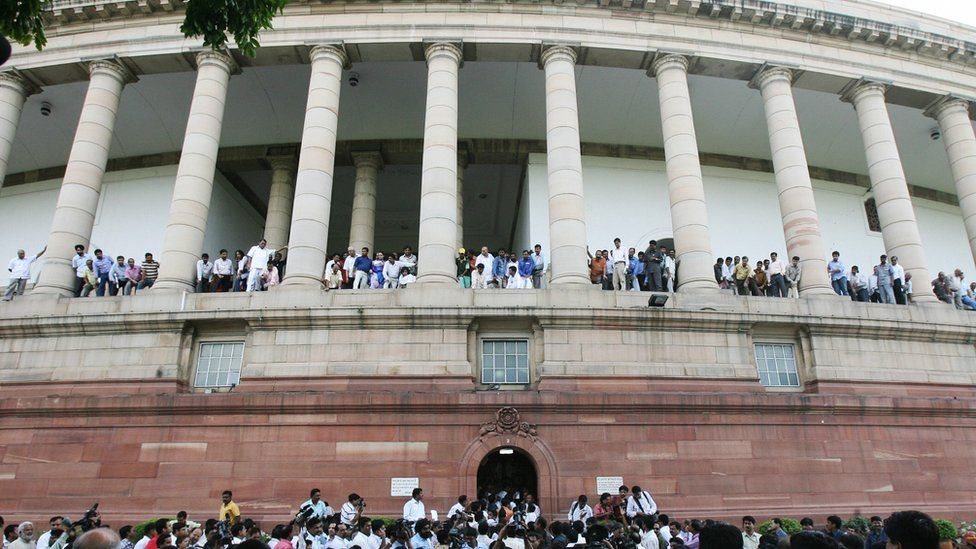
Following the adoption of the draft report for the Digital Personal Data Protection Bill by the committee chaired by Shiv Sena member Prataprao Jadhav, at least six opposition MPs left a meeting of the Parliament’s standing committee on communication and information technology. Karti Chidambaram of the Congress, Mahua Moitra, Jawahar Sircar, John Brittas of the Communist Party of India, and Galla Jayadev of the Telugu Desam Party were among the MPs who quit.
Along with Jadhav, Nishikant Dubey and Dr. Anil Agarwal of the Bharatiya Janata Party fought for the passage of the Bill.
In his dissenting opinion, Brittas noted that several issues remain unresolved, including the reason why the proposed law would let the union government to provide broad exemptions to certain agencies. Additionally, he questioned how it would prevent abuses of the basic right to privacy.
The dissenting comment said that the measure imposes financial fines rather than criminal punishment upon fiduciaries, who are mostly large corporations, who intentionally abuse data.
An opposition MP told News18, “How can we adopt a bill when we haven’t even been given a chance to examine its final and latest version?”
“By filling the Data Protection Board with its own men rather than members of the court and other qualified authorities, the administration was dismantling the monitoring organization. Any temporary permission I grant a data fiduciary to use my personal information (such as medical records) cannot be shared with anybody else without my permission. Another MP said that the administration was not promising this.
Those in attendance at the meeting informed News18 that Brittas, Chidambaram, and Mitra vehemently opposed the proposal to implement the report.
Another opposition MP told News18, “The administration is keen to control our personal data to spy on us instead of safeguarding it.
“With the support of the majority of the committee, we have approved both legislation. According to Lok Sabha Rule 261, the opposition boycotted, BJP MP Nishikant Dubey tweeted.
According to sources, the study approved on Thursday asserts that no law is ever flawless and that laws change over time.
According to sources, “the committee urges that the provisions that cannot be fully defined within the bill’s scope be addressed through rules prescribed under the bill that are then presented to Parliament.”
The DPDPB was adopted by the Narendra Modi-led government’s cabinet on July 5 after receiving over 21,000 proposals and discussions from 88 organizations. The government has included this measure on its agenda for the current monsoon session of Parliament.
According to sources, the law is devoted to safeguarding the privacy of Indian customers; nevertheless, they add that it will always be difficult to distinguish between simple and sensitive data, or vice versa, thus this legislation is being presented with the principles in mind. However, a variety of concerns and circumstances have been identified in which data collection would not be subject to prior permission. The circumstances can include, among others, a case of war, a medical emergency, or information needed by a law enforcement agency.
Upon passage by Parliament, the proposed measure would take the place of the 2011-notified Information Technology (Reasonable Security Practices and Procedures and Sensitive Personal Data or Information) Rules.