


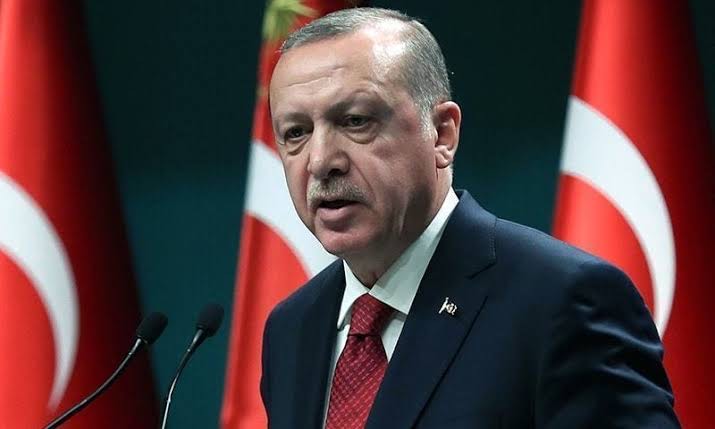
Europe and Asia are bordered by Turkey, also known as Türkiye. Turkey, which is surrounded by eight nations, has a varied terrain that includes plains, mountains, and coasts in the Mediterranean, Aegean, and Black Sea regions. However, because of Turkish President Recep Tayyip Erdogan’s secret but fervent wish to restore the Caliphate and become its Khalifa (Caliph), the nation is rapidly losing its cultural variety and secularism to Islamist extremism.
The Islamic Caliphate’s overthrow and the emergence of secular Turkey
Following the fall of the Ottoman Empire, as stipulated by the Treaty of Lausanne, Mustafa Kemal Atatürk, a prominent political figure and military leader, established the Republic of Turkey on October 29, 1923. In Atatürk’s vision, Turkey was to be a democratic, secular nation-state founded on Western principles.
Severing links with the Ottoman past, which Mustafa Kemal Atatürk considered outdated and overly Islamist, was the primary goal of the first Turkish president’s reforms, known as the Atatürk Reforms or Kemalism. The Republic of Turkey was founded on Mustafa Kemal’s philosophy, which was based on liberal republicanism, secularism, and a more contemporary interpretation of Islam. He became known as Atatürk, the Father of Turkey, as a result.
During the well-known Hat Revolution in 1925, Atatürk banned religious clothing, including headscarves, veils, and the fez, a traditional head covering. In 1926, Atatürk replaced the Islamic law with a civil code modelled after Switzerland. In contrast to ethnically based identities, he advocated for a single Turkish identity.
Even after Kemal’s passing, Turkey upheld his ideals for the majority of the 20th century, with the Turkish military defending secularism and limiting the role of religion in politics. Under the leadership of Mustafa Kemal Atatürk and the influence of Kemalism following his passing, Turkey experienced rapid economic expansion, urbanisation, industrialisation, and assimilation into Western organisations, such as the North Atlantic Treaty Organisation (NATO), in 1952. The state made sure that religion did not control public life, even though Atatürk and his ideas were not opposed to Islam and Islam continued to be a cultural force in Turkey.
The abolition of the Caliphate (1924), the establishment of a Directorate of Religion Affairs (1924), the establishment of a new capital at Ankara (1923), the advancement of press freedom (1925), the establishment of a Government Statistics and Census Bureau (1926), the reform aimed at separating church and state (1934), the introduction of women’s participation in politics (1934), and the introduction of equality of the sexes in other areas (1926) were some of the significant reforms introduced by Mustafa Kemal Atatürk that altered the course of modern Turkey.
Other reforms included the following: the establishment of coeducation and women’s education (1927), the conversion of Islamic personal names to Western ones, the revision of the calendar (1925–26), industrialisation, and the establishment of a banking system (1927–1931). A continuous Islamist undercurrent subtly simmered in Turkey’s sociopolitical fabric, waiting to resurface even as Mustafa Kemal Atatürk’s reforms drove the country towards modernity and progress.
Erdogan, the Caliph dream, and Turkey’s slow drift away from its secular roots
Under President Recep Tayyip Erdogan, Turkey has seen a shift in recent years from a secular state to one that is more and more ensnared in the grasp of Islamist fanaticism. This change demonstrates how Turkey has deviated from Mustafa Kemal Atatürk’s original vision.
When Erdogan’s conservative Adalet ve Kalkınma Partisi (AKP), or Justice and Development Party, took office in 2003, it marked a sea change. Erdogan’s political origins can be traced back to Islamist movements that aimed to restore Ottoman “glory”. Erdogan came from the Welfare Party (Refah Partisi), which was outlawed in 1998, and the Virtue Party (Fazilet Partisi), which succeeded it. These Islamist political organisations promoted the integration of Islam into Turkish politics, which had previously been based on Atatürk’s secular ideals. These groups were outlawed because they opposed the nation’s secularism.
Erdogan, a cunning politician motivated by Islamist fervour, avoided direct conflict with the secular elite by advancing his Islamist agenda gradually. Erdogan shocked everyone by winning Istanbul’s mayoral elections when no one was expecting him to. But after being found guilty of inciting religious hate in 1998 and facing a political ban, he was forced to resign. Erdogan was convicted by the judges of reciting a poem by Ziya Gökalp that was pro-Islamist and likened mosques to military barracks and Muslims to an army.
Erdogan was sentenced to 10 months in prison, of which he spent four months, and was later barred from holding public office. However, Erdogan was permitted to run in the 2003 Siirt provincial by-election after the AKP government, headed by Prime Minister and party co-founder Abdullah Gül, removed the restriction. The winner was Erdogan. With the resignation of Abdullah Gül and the election of Erdoğan as Turkey’s 11th prime minister on August 28, 2007, the country’s slow transition from its secular foundation to “Neo-Ottomanism” began.
Erdogan presented the Justice and Development Party, or AKP, as a moderate, pro-democracy force in the early years of his rule, pledging EU membership and economic expansion. Erdogan gained public support as a result of these pledges, but eventually he began to reveal his true nature.
By appointing hundreds of imams and directing the construction of mosques on an unprecedented scale, notably the majestic Çamlıca Mosque in Istanbul, the AKP leader expanded access to Islamic education nationwide. According to a 2017 New York Times story, Erdogan has built approximately 9,000 new mosques in Turkey since taking office as prime minister; by now, this figure must have significantly increased.
Notably, Erdogan was elected President of Turkey in 2014 after serving as Prime Minister from 2003.
The Erdogan-led administration started a worldwide mosque construction campaign back in 2015. As part of this effort, ten enormous mosques were built in various nations, including the United States, Russia, Kyrgyzstan, the Philippines, the United Kingdom, the Palestinian Territories, Somalia, and Albania.
Erdogan’s infatuation with the defunct Ottoman Empire is the driving force behind his efforts to quickly Islamise Turkey. From the thirteenth century until the Ottoman Empire’s dissolution following World War I, Turkey served as the head of the Muslim world, or Ummah. Ever since he first ran for mayor of Istanbul in 1994, Erdogan has harboured the desire to bring the Ottoman Empire back and establish himself as a contemporary caliph or Khalifa.
Erdogan skilfully solidified power at home to further his Islamist goals. The AKP leader replaced secularist groups in the military, judiciary, and university with his supporters after surviving a rare coup attempt in 2016. Erdogan has reportedly severely restricted media freedom, shutting down or co-opting critical outlets. The aspirant caliph wishes to steer the discourse and advance an orthodox Islamist philosophy.
Turkey’s educational system has been redesigned under Erdogan with an emphasis on Islamism. Islamic Imam Hatip schools, which initially trained Islamic imams and preachers, have been heavily subsidised by his government. President Erdogan outlined the justification for financing Islamic schools back in 2018, stating that his goal is to create a “pious generation” in Turkey, which is primarily Muslim, “that will work for the construction of a new civilisation”.
According to a 2018 Reuters article, the Turkish government intends to quadruple its budget for Imam Hatip higher schools for boys and girls between the ages of 14 and 18 to 6.57 billion lira ($1.68 billion). According to Reuters, Imam Hatip students receive 23% of the funds for higher education, although they make up only 11% of the student body overall.
Over time, the Diyanet, or Turkey’s Directorate of Religious Affairs, has also become increasingly powerful. Even at the expense of marginalising non-Sunni groups like Alevis, the Diyanet has been advocating for a Sunni Islamic identity that is consistent with Erdogan’s goal of Islamist homogeneity.
After Israel and the Islamic terror group Hamas went to war after the latter’s unprovoked strike on October 7, 2023, Turkey has also offered support to Palestine. Erdogan declared in November 2024 that Turkey would cut all connections with Israel.
“Under Tayyip Erdogan’s leadership, the Republic of Turkey’s government will not maintain or expand ties with Israel. We are committed to our ruling coalition’s decision to sever relations with Israel, and we will continue to do so. The Turkish president declared, “At this time, the Republic of Turkey and its government have severed all relations with Israel.”
In an apparent effort to strengthen his reputation as a leader and champion of Islam and Muslims, Erdogan has also frequently accused Western governments of engaging in “Islamophobia” and has been outspoken in his criticism of Western policy in the Middle East. In an attempt to divert the Turkish people from secularism and encourage them to embrace neo-Ottomanism, or simply a Turkish form of strict Islamism, the Turkish leader frequently makes statements extolling the former Ottoman Empire, its history, and its “achievements”.
The Islamist Neo-Ottomanist ideology has been successfully mainstreamed, thanks in large part to the AKP leader’s gradualist strategy. Erdogan avoided the reaction that would have resulted from a rapid shift by focusing on normalising Islamic influence through gradual changes rather than imposing Islamism immediately. Nonetheless, there has been opposition to Erdogan’s Islamist plans. The Turkish secularists, urban elites and minority groups have objected to growing Islamisation, pointing to limitations on alcohol, which is prohibited in Islam despite an abundance of the same being promised to Muslims who would join Jannat in eternity. What came as a great shock to the globe was the conversion of the famous Hagia Sophia Church into a mosque by the Erdogan dictatorship, with various countries condemning the Turkish president.
Erdogan’s expansionist policies, which are based on Misak-i-Millî and Islamism
Erdogan’s foreign policy is at odds with the nation’s secular past because of his ambition to make Turkey the head of the worldwide Muslim Ummah. Still, the AKP leader has only grown more confident as a result of his repeated electoral victories. Erdogan pledged to end the civil service’s decades-old ban on headscarves during his 2007 election campaign, and the AKP government fulfilled this promise in 2013.
Abdullah Gül, the former Prime Minister of Turkey, had publicly stated in 2003 that he had neo-Ottomanist expansionist plans. He told a Turkish newspaper, “Turkey cannot be confined to Anatolia; its full borders extend beyond the official ones.”
“We are directly concerned with the Balkans, the Middle East, and Central Asia,” he continued. Anatolia cannot be confined to Turkey. To highlight Turkey’s “authority” over Syria and Iraq, which are home to a diverse population of Kurds, Arabs, Syriacs, Assyrians, Armenians, Turkmens, and others, Gül also cited the 1920 Misak-ı Millî (National Pact), a territorial claim from the Ottoman era.
Turkey sees the 2011 Middle East upheaval and violence as a chance to get involved in Syria. This nation’s neo-Ottomanists view it as a component of Misak-i-Millî and its problems as a domestic issue. On August 8, 2011, Erdogan declared, “Syria is not a foreign issue for us; we consider it a domestic matter.”
Additionally, Erdogan has begun awarding Syrian refugees Turkish citizenship. “They come from lands within the Misak-ı Millî borders, which gives them a rightful claim to become Turks,” Süleyman Soylu stated in 2019 to support this claim.
The Erdogan-led government sent troops to Syria and backed the Syrian National Army, which opposed Assad. With the help of its Syrian proxies, Turkey has increased its power in the nation and taken control of numerous cities, including Tel Abyad (Gire Spi), Ras al-Ain (Sere Kaniye), Azaz, Afrin, Jarablus, and al-Bab. Additionally, Turkey intends to set up military installations in Syria.
One shameful aspect of Erdogan’s political career is his repression of the Kurdish population in the area. The Turkish government has been targeting Kurdish activists, politicians, and media outlets under the guise of combating terrorism. This has included detentions, limits on their freedom of expression, and removal from office, among other measures.
Erdogan recently travelled to Istanbul to meet with Ahmad al-Shaara, the provisional president of Syria and a former member of Al Qaeda. Erdogan’s contribution to the removal of Western sanctions against Syria was acknowledged by Shaara. Fascinating. Ahmad al-Sharaa signed a temporary constitution in March of this year, putting the country under Islamist rule but pledging to protect the rights of all Syrians for the next five years.
President Bashar al-Assad’s 24-year-old dictatorship was overthrown in December by an insurgency led by the hardline Sunni group Hayat Tahrir al-Sham (HTS), an Al-Qaeda affiliate. Since then, the country’s current leaders have struggled to keep control of a sizable portion of Syria. The Erdogan administration, which seeks to unite the Muslim Ummah and establish Turkey as its leader, has unquestionably benefited from this. Even though Syria is going through a transitional period, Turkey and Syria are already planning to sign several agreements, including one for the export of power and gas to Syria.
Erdogan’s Islamic endeavours also extend to Iraq. He claimed Mosul in Iraq in 2016 by citing Ottoman history, Turkey’s Sejluk, and Misak-i-Millî. Through the establishment of military outposts, Turkey has been increasing its military presence in Iraq’s Kurdistan region over the years. Libya has been infected by Turkish expansionist policies under the guise of national security. A Memorandum of Understanding (MoU) between the Libyan Parliament and Turkey was signed in August 2024, allowing Turkish military access to Libya with broad operational freedom and legal protections.
The Erdogan administration does not even wish to hide its support for Islamist causes, as seen by Turkey’s terrorist operations and affiliation with Islamic terror organisations like the Muslim Brotherhood.
It should come as no surprise that Turkey has long-standing disagreements with its neighbours, Greece, Armenia, and Cyprus. “Our struggle did not end with expelling the enemy [Greeks] from our lands and throwing them into the sea from Izmir,” Erdogan stated in January 2024 at a gathering of the AKP.
In 1922, Turkish forces massacred more than 100,000 Greek Christians from Anatolia and numerous Armenians in the Smyrna (now Izmir) Massacre. Although Erdogan celebrated this occurrence, Turkish Islamists actually take satisfaction in “throwing Greeks into the sea”.
Additionally, according to the 1947 Treaty of Paris, the 1932 Convention between Turkey and Italy, and the 1923 Treaty of Lausanne, Greece was granted 152 islands and islets in the Aegean Sea. Even though Armenia has occupied approximately 215 square kilometres (83 square miles) of internationally recognised Armenian territory since 2020, Erdogan also supports an Islamic Azerbaijan in its conflict with Armenia. Erdogan’s “Khalifa” desire has so consumed him that he publicly took credit for Azerbaijan’s victory over Armenia in the 2020 Second Nagorno-Karabakh War last year. Erdogan’s remark has drawn harsh criticism from Azerbaijan.
Turkey supports Pakistan, a terror sponsor, against India: Erdogan’s desperation overrides the war against terrorism.
Recep Tayyip Erdogan has always supported Pakistan against India because he wants to establish himself as the head of the Muslim Ummah and increase Turkish influence in Islamic countries. Turkey has been using international venues to support Pakistan’s nefarious narrative on Kashmir, despite Pakistan’s established backing of cross-border jihadist terrorism against India over the years. Pakistan has also been receiving material assistance from Turkey, including weapons. Erdogan has allied with Pakistan, a country that has long used Islamist terrorism as a state policy, as a result of his self-imposed desire to restore an Ottoman-style caliphate.
In addition to supporting Pakistan’s position on Kashmir, Turkey has expressed support for Pakistan even in the wake of the Pahalgam Attack in 2025, the Pulwama Attack in 2019, and the Uri Attack in 2016. Following India’s revocation of Article 370 and Article 35A in Jammu and Kashmir, Turkish media have accentuated Pakistan’s propaganda and misinformation. Erdogan also supported Pakistan following India’s 2019 Balakot airstrikes in Pakistan following the Pulwama attack, which Pakistan sponsored. This demonstrated his willingness to court Islamic countries, even those with a clear history of supporting, financing, and shielding Jihadi terrorists, to strengthen his position as the world’s leading Islamic leader.
As expected, despite India’s Operation Sindoor, which caused Pakistan great harm, the Turkish media has also been repeating Pakistani lies. In an attempt to further the mythical “Islamophobia” narrative, Pakistan and Turkey also used the Organisation of Islamic Cooperation (OIC) as a tool to promote anti-Indian narratives, citing the Citizenship Amendment Act and the NRC. Pakistan tried to mobilise OIC support against India a few days ago, but the unfriendly neighbour’s efforts were unsuccessful.
It should be highlighted that Turkey’s support for Pakistan includes more than simply rhetoric and advocacy for Kashmir at the UN and other international fora; it also includes defence cooperation and trade. The hostile neighbour began a retaliatory drone offensive employing Bayraktar TB2 drones provided by Turkey after the Indian Armed Forces struck Pakistan-sponsored terror facilities. Turkey has expressed support for a “brotherly” Pakistan, even after India successfully stopped Pakistani attacks and forced Pakistani forces to plead for a ceasefire in front of Indian forces.
Although it is well known that Turkey supports Pakistan religiously and ideologically, this animosity has now escalated into military aggression, with Turkey providing Pakistan with deadly aerial weapons that are used against Indian targets.
According to reports, Turkish advisers were assisting Pakistan’s military in using these drones against India in addition to providing weapons. India’s retaliatory strikes reportedly killed two Turkish drone operators, exposing Turkey’s ground support during the fight with India.
A Turkish C-130 Hercules military transport plane landed at Karachi airport on April 27, 2025, and a Turkish Ada-class anti-submarine corvette docked at Karachi port on May 2, 2025, both of which may have carried weapons while the conflict was developing. Pakistan was expecting India to retaliate for the Pahalgam terrorist attack.
When Turkish President Recep Erdoğan met with Pakistani Prime Minister Shehbaz Sharif in Istanbul on May 25, 2025, the two leaders agreed to enhance their collaboration, particularly in the areas of energy, transportation, and defence. Ironically, Erdogan’s office stated that Turkey would work with Pakistan to combat terrorism. That’s right, the same Pakistan where Hafiz Abdur Rauf, a terrorist who has been designated by the UN and sanctioned, is conducting the funeral of terrorists killed by India while Pakistani soldiers stand by. The son of a UN-designated terrorist is the Director General of the Pakistani Army’s PR wing.
“I pray for Allah’s mercy for our brothers who lost their lives in the attacks, and I extend my condolences to the brotherly people and state of Pakistan,” Erdogan had previously remarked in response to India’s killing of more than 100 terrorists.
Erdogan’s desire to unite the Muslim Ummah under his leadership is closely related to his support for Pakistan. The Islamist leader sees himself as the head of an Ottoman-style Islamic empire and a contemporary caliph. In addition to the domestic policy changes intended to turn Turkey into a true Islamic country and break with Atatürk’s vision of a secular Turkey, Erdoğan is purposefully using words and deeds to mobilise support for Islamic countries by promoting Islamist causes, even though Saudi Arabia is widely regarded as the head of the Muslim Ummah. However, Turkey’s backing of Pakistan has not only infuriated India but also cast doubt on its legitimacy as a NATO member.
Recep Tayyip Erdogan is implementing a form of Islamism that combines populism, Islamist nationalism, and the desire to restore the Ottoman past behind the façade of democratic legitimacy. Turkey has gradually shifted towards Erdogan’s Islamism and away from Mustafa Kemal Atatürk’s secular outlook. However, Erdogan undermines Turkey’s secular heritage and drives the nation towards possible diplomatic and military confrontations by supporting terror-sponsor Pakistan, suppressing secular groups within Turkey, and pursuing global aspirations to become a contemporary Caliph or a neo-Ottoman Empire.