


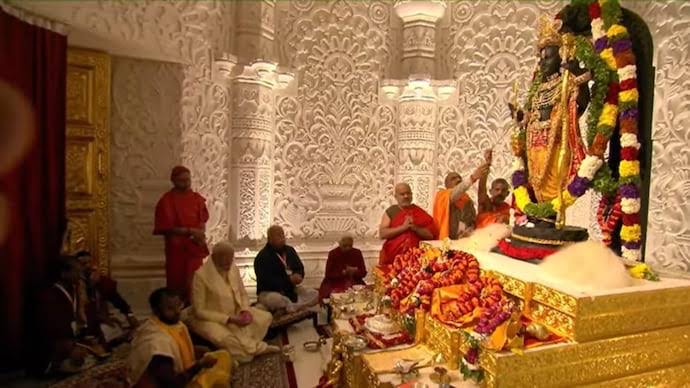
What we witnessed yesterday at Ram Mandir was the Pran Pratishtha Ceremony. One of the most fundamental rituals in Hinduism is called Pran Pratishtha. It is the embodiment of the Sanatan Dharma, which is a spiritual and ceremonial belief system. This is a sacred ceremony that is not merely a collection of procedures but rather a meaningful expression of devotion and spirituality between the participants.
Through the practice of Pran Pratishtha, the goal is to evoke the presence of the divine within an idol, thereby transforming the sculpture into a cherished representation of a deity. Due to the fact that it represents the actual presence of the deity within the idol, this rite is an essential component of Hindu worship. For this reason, the idol is deserving of devotion and prayers.
The Pran Pratishtha of the Ram Mandir:
Within the city of Ayodhya, the Ram Mandir Pran Pratishtha is more than just a religious gathering. In the annals of Sanatan Dharma’s history, this event ushers in a fresh chapter. A series of intricate rites that were rich in Vedic traditions were performed during the celebration, which started on the sixteenth of January. There are many different aspects of purification, dedication, and consecration that are represented by the ceremony. The procedures also included a procession across the city with the idol of Ram Lalla, which culminated with the placing of the idol in the sanctum sanctorum of the temple in a ceremonial manner.
Pran Pratishtha Acquiring an Understanding:
Pran Pratishtha is of the utmost significance in Sanatan Dharma since it is responsible for infusing an idol with Pran, which is the life energy. On this occasion, an idol is elevated from the status of an object to that of a living incarnation of the deity, which is referred to as Pratishtha. For this reason, the devotees are able to offer their prayers and devotion to the idol, which has been converted into Bhagwan. By performing the rite, the deity’s presence within the idol is made to appear to be eternal, thus changing the temple into a place where divine contact can take place.
Practices associated with Pran Pratishtha:
A procession of the idol, known as the Shobha Yatra, is the first step in the Pran Pratishtha process. This event signifies the beginning of the idol’s transformation into a deity. At the mandap, rituals are performed in order to reawaken the idol and make certain that it is prepared to transfer its divine essence to a new form in the event that it is required to do so.
The “adivas” ceremony involves the idol being submerged in water and grain at the same time. It is said to repair any damage that may have been caused by creating the material and to identify any faults in the material. Following the completion of this ceremony, a bath, also known as an “Abhishek,” is carried out in order to purify the idol by using sacred items such as water, fragrant floral essence, and other things. An essential component of the event is the ritual of opening the eyes of the deity, which involves applying kohl around the eyes with a gold needle. This is an important part of the ceremony. Instead of looking directly into the eyes of the holy, this step is performed from behind the idol in order to avoid the overpowering effect of a direct glance.
It is important to note that Pran Pratishtha is not the same as Pratishtha. In the latter, it is necessary to do pujas and rituals on a consistent basis in order to ensure that the Bhagwan remains present within the idol. Pran Pratishtha, on the other hand, is responsible for permanently installing the life force within the idol, which eliminates the requirement for ongoing maintenance operations.
The Pran Pratishtha procedure in greater detail:
In order to complete the Pran Pratishtha ritual, there are various steps involved, which are as follows:
The Karmakuir:
The procedure of purifying the idol from the location of the artisan who crafted it is referred to as the purification process. In order to accomplish this, it is necessary to eliminate any bad effects and close the eyes of the idol using honey and ghee, in addition to reciting certain mantras.
The Jaladhivas:
By submerging the idol in water, this procedure guarantees that it is complete and checks for any potential damages that may have occurred to the idol. The idol vessel is then filled with panchamrut, which is a blend of five different ingredients.
The Dhanyadhivas:
The grains, which are also referred to as Dhanya, are responsible for the purification of the idols throughout this process.
The Ghrutadhivas:
The idol is then immersed in cow ghee, which is the next step in the purifying process.
Abhishek :
Through this method, idol is submerged in liquids such as milk and water in order to undergo the bathing procedure.
Netra Anavaran:
When performing this procedure, a mirror and a golden needle are used in order to remove ghee from the eyes of the deity in a gentle manner.
Shodshopchar Puja:
In order to complete this procedure, the idol must be positioned in the final position within the inner sanctum, the Nidra Devi, also known as the Goddess of Sleep, must be invoked, and a Yagya must be performed overnight away from the statue.
Those steps that have been listed above are the preparatory ones; the genuine Pran Pratishtha will start when they have been completed. In this process, the Pujari performs Nayasa, which involves the methodical invocation and transfer of the life force to various portions of the idol. This process infuses the idol with Pran, which is the life breath; Jiva, which is the soul; and the ten Indriyas, which are the senses. Subsequent to the Pran Pratishtha ritual, the idol is further cleansed using fragrant water and flowers. The Netra Anvaran ritual is carried out in order to open the eyes of the idol, which represents the woken state of Bhagwan being performed.
The idol is transformed from an inanimate object into a living incarnation of the deity through the process of Pran Pratishtha because of these processes. It has the ability to communicate with the devotees and to answer the prayers that they offer. As a result, the idol transforms into a sacred entity, bridging the gap between humans and the divine and providing the groundwork for Hindu devotional activities that revolve around the ritualistic worship of Bhagwan in his earthly guises.
Regarding the significance of concealing the face of the idol:
One of the most fascinating parts of Pran Pratishtha is the custom of covering the eyes of the idol until the ceremony is over. This is one of the oldest practices in the religion. The concept that the idol is not yet the deity itself but rather merely a representation of the deity until the Pran Pratishtha is done is emphasised by this particular belief. Covering the face is done in order to retain the idol’s purity and sanctity until the ritual infuses it with divine life. This is done in order to separate the corporeal form of the idol from its spiritual essence. It emphasises the reverence and sanctity that are paid to the idols in Hindu worship and makes certain that they are treated with the utmost care and devotion.