


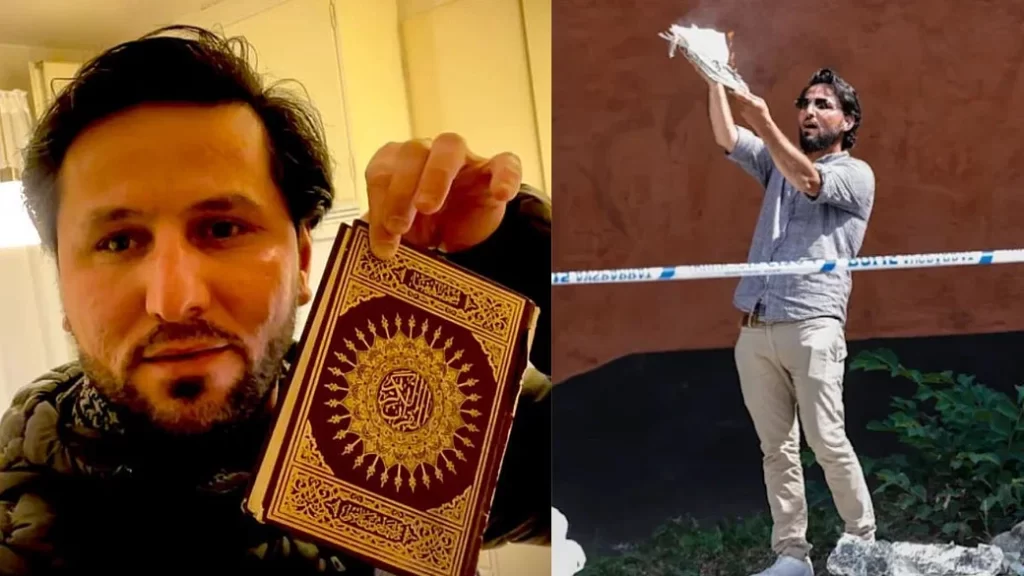
In response to protests and a barrage of condemnations, a man who burnt chapters of the Koran outside a mosque in Stockholm said to Swedish media on Thursday that he planned to burn another Koran within ten days.
Salwan Momika, 37, trampled on the Islamic holy book and lit some pages on fire in front of the biggest mosque in the city on Wednesday after Swedish police gave him permission to protest.
The burning of the Koran, which occurred at the same time as the Muslim holiday Eid al-Adha and the conclusion of the yearly pilgrimage to Mecca in Saudi Arabia, incited outrage inside and beyond of the Middle East.
Speaking to the newspaper Expressen, Momika said that he had received “thousands of death threats” and that he was aware that his behavior would draw criticism.
Nevertheless, he said that he has further plans for action in the following weeks.
I will burn the Iraqi flag and the Koran in front of the Iraqi consulate in Stockholm within ten days, he said.
Although they had first announced they had begun an inquiry over “agitation against an ethnic group,” they subsequently said that they had issued him a permit in accordance with free expression rights, noting that he had carried out the burning so close to the mosque.
However, Momika refuted claims that his activities amounted to “hate crimes” or “agitation against any group.”
“The police are allowed to look into whether the fire was motivated by hatred. They could be correct, or they might be incorrect,” Momika told the newspaper, adding that the final decision will be made by a court.
Following a Swedish appeals court’s rejection of the police’s decision to refuse licenses for two protests in Stockholm that included Koran burning, the police were given two weeks to approve the protest.
Following the burning of the Quran outside the Turkish embassy in January, which sparked weeks of demonstrations, demands for a boycott of Swedish products, and further postponed Sweden’s NATO membership bid—which is being resisted by Ankara—police had at the time cited security concerns.
However, the appeals court decided in mid-June that the gatherings should not have been banned by police, stating that the security concerns they had raised were insufficient.