


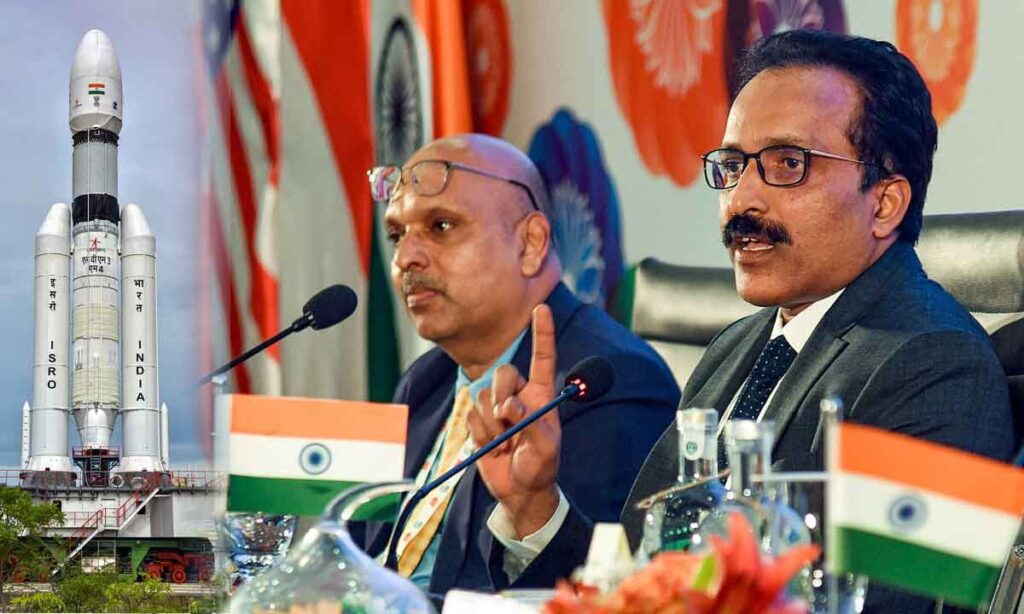
The chairman of the Indian Space Research Organisation (Isro) has stated that Chandrayaan-3 has been designed with the knowledge of everything that could go wrong. He described a change to a “failure-based design” from the “success-based” strategy of the previous moon mission spacecraft, which failed to land intact.
The Indian space agency has mastered the process of reaching the moon, according to Isro chairman S Somnath, who spoke to HT in an interview before the Chandrayaan-3 launch slated for July 14. However, the agency was focused on the landing.
We are moving on with a failure-based approach for Chandrayaan-3 rather than the success-based strategy we used for Chandrayaan-2. We have examined every potential problem and made every effort to be ready for it, he added.
Three errors were found in the investigation of the Chandrayaan-2 mission, which was launched on July 22, 2019, and finally made what the space agency termed as a “hard landing” on September 6.
“The first challenge was that the five engines that were used for retardation (reduction of velocity), developed slightly higher thrust than was intended,” he said, describing how this overproduction caused a series of minor issues to start piling up, including a lack of stability during a phase when the craft is supposed to be steady in order to take pictures.
The second was that the ship began performing very quick twists as a result of trajectory adjustments brought on by the extra push that led to a type of “accumulation” of issues that were resolved too late. This made it difficult for the craft to turn, he said.
The third was that the ship was already too near to the surface and was attempting to land in a location that was still far away. The ship was attempting to get to the landing place, which was just a 500 by 500 yard piece, by accelerating. The desire to arrive at the precise landing site while yet keeping low velocity was conflicting… In a word, Chandrayaan-2 had a restricted capacity for handling parameter variance, and we have addressed that.
Somnath stated that the intended landing place has been increased from a 500m x 500m patch to a 4km x 2.5km region “so that it will not limit the craft to a small space” in order to explain some of the major modifications.
“We also increased fuel capacity so that it can move to an alternative landing site,” he said.
The scientific goal of the Chandrayaan-2 “orbiter was already achieved; what was not achieved was the scientific goal of the lander and rover,” according to Somnath.
An indigenous lander module, a propulsion module, and a rover make up Chandrayaan-3. Its goals include creating and showcasing innovative technology needed for extraterrestrial missions. The lander will be able to gently land at a chosen location on the moon and release the rover, which will do in-situ chemical analysis of the lunar surface as it is moving.
According to the head of the space agency, this expedition will establish the groundwork for a second lunar trip, the specifics of which will be revealed later. “Isro is renowned for its economical engineering. We have a reputation for successfully completing exploratory missions for a much less money… For a second moon mission, we are in discussions with the Japan Aerospace Exploration Agency (JAXA). Information will be released shortly.
A succession of Isro space missions are part of the continuing Indian lunar exploration effort. Chandrayaan-1, the first moon rocket, was launched in 2008 and successfully placed into lunar orbit.
However, Chandrayaan-2’s lander “crash-landed” on the moon’s surface on September 6, 2019, after it diverted from its route while trying to land as a result of a software malfunction. Chandrayaan-2 was successfully launched and sent into lunar orbit in 2019.