


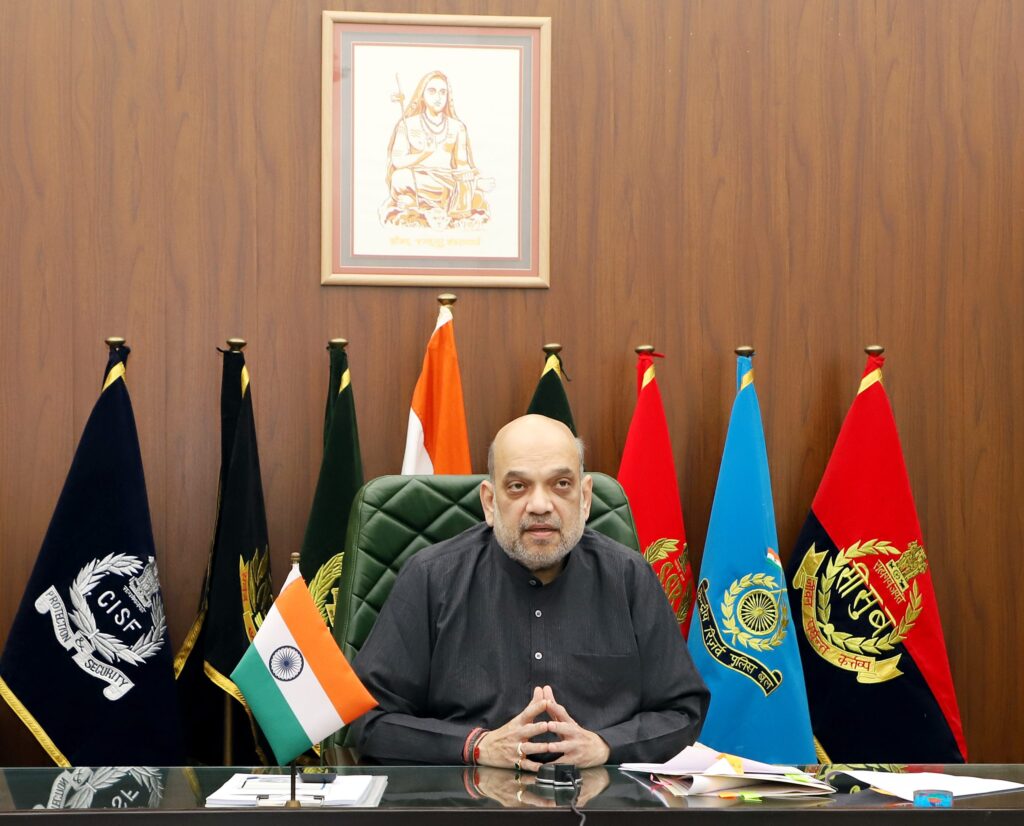
The Northern Zonal Council will meet on Tuesday in Amritsar under the chairmanship of Union Home Minister Amit Shah. The states of Punjab, Haryana, Rajasthan, and Himachal Pradesh as well as the union territories of Chandigarh, Jammu and Kashmir, Ladakh, and Delhi make up the Northern Zonal Council.
An official announcement states that the 31st meeting of the council would take place on September 26 in Amritsar, Punjab. The Bhakra-Beas Management Board, affiliation with Panjab University, road building activities under PMGSY, canal projects and water sharing, concerns relating to the reorganization of states, and infrastructure development are only a few of the many topics covered by the council.
The UDAN scheme’s regional connection, land acquisition, environmental and forest clearing, and regional concerns of shared interest are among the other difficulties. Every time the zonal councils convene, a number of important national problems are also covered, according to the statement.
The council is composed of the chief ministers of the member states, two senior ministers from each state, and the lieutenant governors/administrators of the Union territory. The meeting will also include participation from the chief secretary, top officials from the state and UT administrations, and senior officials from the federal government. According to authorities, as part of its overarching goal to build and promote cooperative and competitive federalism in the nation, the Narendra Modi administration has been hosting meetings of the zonal councils on a regular basis.
The regional councils provide a structured venue for debate on topics affecting one or more states or between the Center and the states. The number of meetings of the zonal councils and its standing committees have tripled in the last nine years under the leadership of Prime Minister Narendra Modi, they said.
Through dialogue and the sharing of opinions among states on crucial problems of social and economic development, regional councils assist in the creation of a coordinated strategy. Issues affecting the center, states, and one or more states that are within the zone are discussed by the zonal councils.
As a result, they provide a platform for settling disagreements and problems between the Center and the states as well as amongst several states in the zone. The states and Union territories (UTs) utilize the zonal council sessions to discuss best practices as well.
The councils also talk about a wide range of topics, such as boundary disputes, security, issues with infrastructure like roads, transportation, industries, and the sharing of water and power, issues with the environment and forests, housing, education, and food security, as well as issues with tourism and transportation. Five zonal councils were established across the nation in 1957 in accordance with Section 15-22 of the States Reorganisation Act, 1956.
Each of these five zonal councils is headed by the Union’s home minister, with the chief minister of the host state (to be selected annually by rotation) serving as the vice-chair. The governor designates two more ministers from each state as members.