


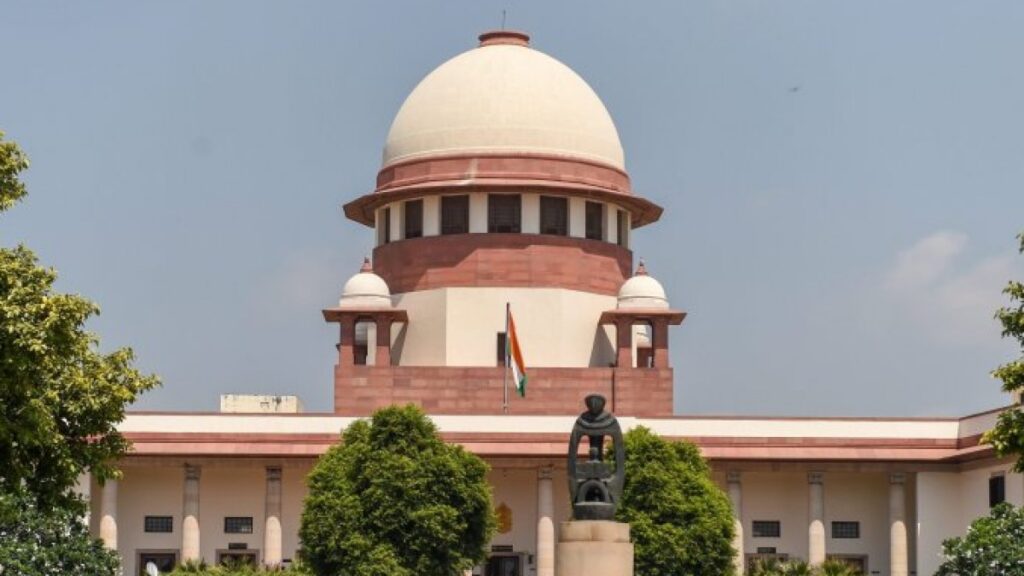
The Bombay High Court’s decision to dismiss the SFIO investigation against audit firms BSR and Associates and Deloitte Haskins and Sells—both of which were formerly IL&FS Financial Services auditors—over suspected financial irregularities was overturned by the Supreme Court on Wednesday.
In addition to upholding the legality of Section 140(5) of the 2013 Companies Act, the top court also granted the Serious Fraud Investigation Office (SFIO) and the Center’s appeal against the high court’s decision.
A five-year ban on an auditing company is imposed if it is shown that they “acted in a fraudulent manner” or “abetted or colluded in any fraud” under the clause, which also deals with the termination and resignation of auditors.
“The challenge to the constitutional validity of section 140(5) of the Companies Act, 2013 fails, and it is observed and held that section 140(5) is neither discriminatory, arbitrary and/or violative of Articles 14, 19(1)(g) of the Constitution of India, as alleged,” a bench of justices led by M. R. Shah and M. M. Sundresh wrote in their 103-page decision.
It overturned the high court decision that had terminated the audit firms’ legal actions under section 140(5) of the Act because the auditors had quit.
The National Company Law Tribunal will now pass a final order on such application after holding an inquiry in accordance with the law, it said. “The application/proceedings under section 140(5) of the Act, 2013 is held to be maintainable even after the resignation of the concerned auditors,” it said.
The highest court made it plain that it had not reached a merits determination about the accusations brought against the auditors and that the NCLT would ultimately be responsible for making a decision on the SFIO’s plea.
“The contested judgement and order passed by the High Court quashing and setting aside the prosecution filed by the SFIO… on the file of Special Court (Companies Act) and Additional Sessions Judge, Greater Mumbai is also quashed and set aside by this order,” it said. Now, it was ordered that the concerned Trial Court proceed with the aforementioned Criminal Complaint in accordance with the law and on the basis of its own merits.
The High Court’s 2020 decision providing relief to the audit firms BSR and Associates and Deloitte Haskins and Sells was challenged by the Centre and the SFIO in an appeal. They had previously worked as IL&FS Financial Services auditors.
Prior to this, BSR and Deloitte filed a petition with the HC last year disputing the legality of the Union government’s request for their removal as ILFS auditors as well as the constitutionality of section 140(5) of the Companies Act.
Even though the Bombay High Court determined that section 140(5) of the Companies Act was constitutionally valid, its provisions for debarring “fraudulent” audit firms cannot be applied to such auditors who have already resigned or rotated out of a company under investigation for financial irregularities.
The high court ruled that since BSR had resigned and Deloitte had been rotated out by ILFS before the matter reached NCLT, the terms of the section did not apply to the previous auditors in the current case.
The high court’s decision was based on petitions submitted by the companies as well as N Ganesh Sampath, Kalpesh Mehta, and Udayan Sen, three other former ILFS auditors.
Before the NCLT, they had contested the Union government’s request that they be charged under Section 140(5) of the Companies Act and given a five-year auditing ban.
In addition to challenging the constitutionality of the provision, they also contested criminal charges brought against them by the Union Ministry of Corporate Affairs after an investigative report was submitted there before a special court.
Records show that the IL&FS Group Companies had a total debt load of more than Rs 91,000 crore, and between June and September 2018, a number of defaults threatened to bring India’s financial system to its knees.
As a result, legal action has been started against the businesses and their auditors.