


A story in The Wall Street Journal on Thursday reported that the Trump administration is considering imposing temporary tariffs on a wide range of goods from around the world. The story states that the US government could utilise a law that allows it to impose tariffs of up to 15% on goods for 150 days.
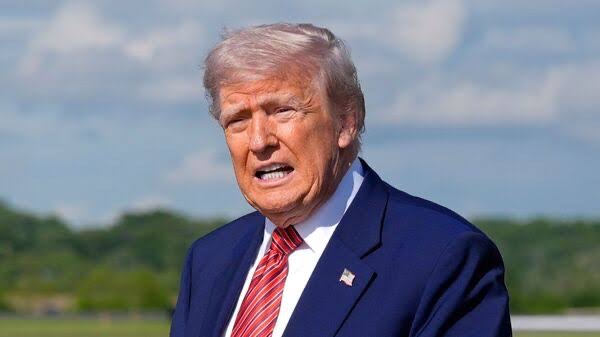
On Wednesday, Donald Trump talked about the TACO term. (Bloomberg)
On Wednesday, Trump spoke about the TACO term (Bloomberg).
The WSJ spoke with individuals familiar with the situation, and they stated that no final decision has been made yet.
The Trump administration started to think about a “Plan B” after its tariff strategy was “undermined” when a trade court said Trump had gone too far with his power and stopped the tariffs.
Trump wants a “stopgap” move after tariffs fail.
The WSJ story states that the administration is considering utilising a rarely used provision of the Trade Act of 1974 to impose tariffs on significant portions of the global economy as a short-term measure.
As a means to address trade issues with other countries, the act permits taxes of up to 15% to be imposed for 150 days.
The goal is to give Trump more time to make tariffs that are specific to each critical trade partner. He could use another part of the same law to do this. This part of the law is designed to prevent other countries from engaging in unfair trade practices.
However, the government may want to wait before moving forward, as on Thursday, a federal appeals court briefly lifted some of the toughest tariffs that the Republican president had imposed.
The WSJ reported that, in response to a reporter’s question, White House press secretary Karoline Leavitt said the government is considering alternative ways to impose tariffs while appealing the court decisions.
The report said that the US might use taxes more often, citing national security reasons.
On Bloomberg TV, senior counsellor for trade and manufacturing Peter Navarro stated that the administration could use the Smoot-Hawley Tariff Act of 1930. This law has a section that allows the United States to impose tariffs on countries that mistreat America.
On Wednesday, a three-judge panel at the U.S. Court of International Trade in New York ruled that President Trump lacked the legal authority to make such broad changes to tariffs on his own.
“Granting tariff power to another part of the government without limits would be an improper handover of legislative power,” the judges wrote in their ruling.
The court also stated that the International Emergency Economic Powers Act of 1977 (IEEPA), the law Trump used to justify his actions, was never granted to the president by Congress as unlimited power to raise taxes.
The federal trade court’s ruling from the previous day was stayed, however, by the Court of Appeals for the Federal Circuit, which stated that halting the tariffs would be “critical for the security of the country.”