






















We criticise people, companies and situations without knowing the full reality of events. Many organisations collapsed in recent times and we also saw a list of top-notch people who have been prosecuted by authorities for irregularities, fraud and money laundering. Some could leave India and some had to bear the brunt of jails. But not all failures are planned, some happen due to unforeseen events and situations.
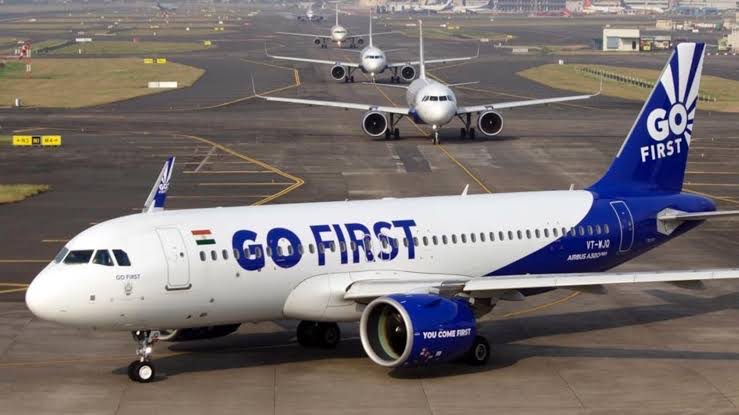
Controlled by the Wadia Group, an ultra-low cost, after experiencing severe financial difficulties, Go First Airlines filed for voluntary insolvency before the National Company Law Tribunal on Tuesday. Additionally, on May 3, 4, and 5, The Airlines cancelled all flights, leading to the DGCA sending a show-cause notice. Half of the airline’s fleet had to be grounded due to engine problems, and the “faulty” Pratt & Whitney engines that were installed on those Airbus A320 aircraft were to blame. In a statement, the airline claimed that it was “facing a financial crisis due to Pratt & Whitney’s non-supply of engines, which has forced the company to ground 28 planes or more than half of its fleet.”
Go First claimed that it was compelled to file for bankruptcy as a result of Pratt & Whitney, the sole engine provider for the airline’s fleet of Airbus A320Neo aircraft, refusing to abide by an arbitration ruling ordering the release of spare leased engines that would have allowed the airline to resume full operations. According to the statement, the percentage of its fleet that was grounded “due to Pratt & Whitney’s faulty engines” climbed from 7% in December 2019 to 50% in December 2022, costing the company 10,800 crore ($1.32 billion) in lost revenues and associated expenses.
Go First claims that Pratt & Whitney has refused to abide by an emergency arbitrator’s ruling ordering the American engine manufacturer to deliver 10 engines by April 27 and an additional 10 engines per month through the end of 2023. The airline claimed that it would be able to resume full operations by August or September 2023 if P&W provided the engines. Pratt & Whitney, however, attempted to respond to Go First by claiming that the airline has a “lengthy history of missing its financial obligations.” Although the firm hasn’t made an official statement, a Go First spokesperson told the media that Go First hasn’t been paying its bills to Pratt & Whitney.
The representative stated that the business is adhering to the March 2023 arbitration judgement regarding Go First and that it is devoted to the success of its airline customers. They refused to provide more information, claiming that the subject is now being litigated. While Go First’s creditors claim that the company is making timely loan repayments, Pratt & Whitney has accused the airline of missing financial responsibilities. According to a banker, the airline’s problems are solely related to the aircraft engines.
Nearly 50 of the 57 Airbus A320s operated by Go First are Airbus A320neos with Pratt & Whitney PW1100G engines. This engine is a more recent, fuel-efficient high-bypass geared turbofan. However, since its introduction, the engine has struggled with several issues that have significantly decreased its dependability. Airlines all across the world, including IndiGo, Go Air, Lufthansa, JetBlue, Nippon, Hong Kong Express, and others, were forced to halt their aircraft powered by the engine. The P&W engine was introduced in 2016, and in 2017 several A320neo aircraft, notably those operated by IndiGo and Go First, were grounded all over the world.
Due to issues with the engine, the Directorate General of Civil Aviation (DGCA) ordered IndiGo, the largest airline in India and the largest user of the A320 Neo, to replace all of the engines on its fleet of A320 Neo aircraft with upgraded engines provided by Pratt & Whitney. The sole engine for the narrowbody aircraft, the CFM International LEAP-1A, was chosen by IndiGo when it made two orders for 590 new Airbus A320neo aircraft in 2019 and 2021.
When Air India placed its 470-plane order earlier this year, it chose CFM International engines for 210 Airbus 320/321 Neo and 190 Boeing 737 Max aircraft. The difficulties with Pratt & Whitney’s geared turbofan engines have been recognised. Greg Hayes, CEO of Raytheon Technologies Corp., the firm that owns P&W, stated in February that the engine’s dependability had fallen short of expectations and that the business was working to address issues. When Go First, then known as Go Air, ordered 72 A320 Neo aircraft in 2011, it opted for the P&W engines. Additionally, the airline purchased a comprehensive service agreement that required payment from the engine manufacturer for any maintenance problems. The three main terms of the agreement were.
When an aircraft is grounded due to an engine failure, Pratt & Whitney is required to supply backup engines within 48 hours, repair the defective engines for free because they are still covered by warranty, and make up for any lost revenue as a result of the aircraft’s grounding. According to to Go First, P&W adhered to the terms of the contract up until March 2020, providing spare engines on schedule, repairing them without charge, and paying some compensation. However, the engine manufacturer has discontinued offering any of this after the Covid-19 pandemic. In addition, the airline started to have “more severe” engine failures in 2020, and P&W discontinued performing maintenance work for the company in 2022 due to a disagreement over payment.
The airline claimed that it had chosen the P&W engine because the American manufacturer had provided better fleet-management terms and because the engines are more fuel-efficient, quieter, and need less maintenance. In 2016, Go First received its first A320 Neo aircraft with a Pratt & Whitney PW1100G engine, and within 6 to 8 months, the engines developed problems.
Pratt proposed in February 2023 to provide replacement engines at a rate “four times lower than the failure rate.” The following month, Go First filed a complaint with the Singapore International Arbitration Commission (SIAC) against P&W for failing to provide spare engines as required by the maintenance agreement. Pratt & Whitney’s attorneys argued in the arbitration that even if the engines weren’t operating as intended, they weren’t defective. Additionally, they asserted that the airline owes them more than $100 million. The airline won the arbitration award, which was announced on March 30 of this year. Pratt & Whitney was mandated by the SIAC to provide Go First with 10 engines by April 27 and a further 10 spare leased engines per month until December 2023.
P&W, however, disobeyed this directive, therefore the airline was compelled to keep grounding A320 Neo aircraft due to defective engines. As a result, on April 15, the SIAC released a second arbitral ruling requesting adherence from the US-based corporation. But P&W persisted in failing to comply, promising to furnish just three engines by the end of May. Only 56 of the airline’s 103 required Pratt engines are now in operable condition, even though 103 engines are required for normal operations.
The airline decided to declare voluntary insolvency as losses mounted owing to decreasing business as half of its jets were grounded. Go First further claimed that as a result of the planes’ grounding, it lost $10,800 crore in lost profits and other expenses. The airline reported that over the past two years, it has paid lessors 5,657 crores, of which 1,600 crores were paid as lease rent for grounded, non-operational aircraft. The airline is asking P&W for compensation in the amount of over 8,000 crore.
The airline not only declared bankruptcy but also filed a court motion in Delaware, United States, asking for the enforcement of the arbitration ruling. On April 28, Go First filed an emergency petition with the Delaware Federal Court asking for a court order compelling Pratt & Whitney to abide by the two arbitration decisions rendered by SIAC on March 30 and April 15. The petition warned that there was a good chance Go First would have to file for bankruptcy if Pratt did not quickly comply with the awards.
“The court should recognise the awards due to Go First’s dire need for immediate confirmation and enforcement, without which Go First faces irreparable harm, and absent which the emergency arbitration would be rendered meaningless,” the petition further stated. In the petition, the airline accuses P&W of providing it with defective geared turbofan engines, failing to fix the damaged engines, and not offering enough spare leased engines. On Wednesday, Pratt & Whitney declared that it was observing the arbitration order. The Indian government has promised to assist Go First because the airline is having difficulties for no fault of its own. “Go First has experienced serious supply chain problems with their engines.
The government has been helping the airline in every way possible, according to a statement from the civil aviation minister, Jyotiraditya Scindia. Not only Go First but several airlines have experienced problems with P&W engines. Even after the original engines were replaced with modified engines, over 30 IndiGo Airbus A320 Neo aircraft are now grounded owing to engine problems. The fact that IndiGo is a considerably larger operator with a diverse fleet of aircraft has allowed it to manage the situation with little to no impact on its business. We need to observe where this issue takes these airlines now.