


























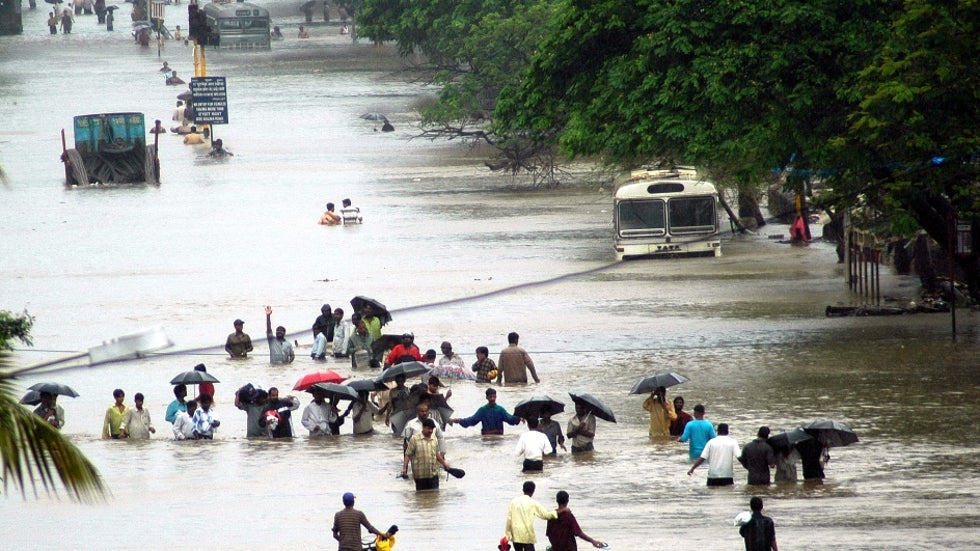
Mumbai residents consider July 26, 2005, the day of the floods, to be among the darkest in the city’s history. Mumbai saw an unparalleled catastrophe on that dreadful Tuesday as torrential rains flooded the financial center, leaving destruction in its wake.
THE RAINSPLASH
As the clock struck twelve, the rain started to fall at a regular rate, soon intensifying into an unrelenting downpour. In only 24 hours, Mumbai got an incredible 37 inches of rain, with 26 inches falling in just four hours. This deluge exceeded the yearly rainfall in several regions of the nation, including the renowned Cherapunji, which is renowned for having the most rainfall in the whole globe.
The calamity was brought on by 944 mm (37.17 inches), the eighth-heaviest 24-hour rainfall ever recorded, which flooded the city and intermittently persisted into the next day. The city’s water supply became tainted when rainwater and sewage combined. In order to supply housing societies with clean drinking water, the government ordered them to add chlorine to their water tanks.
PAST DEATHS
The assault overwhelmed the city’s infrastructure. As floodwaters increased, low-lying roads and homes were submerged. Tragically, almost a thousand people died, and a great number of houses were destroyed, paralyzing the city. Thousands of people were stranded far from their homes and searching urgently for transportation while surrounded by chaos. Fear of a possible epidemic increased as tens of thousands of animal carcasses floated in the floods.
THE DISRUPTION IN TRANSPORTATION
Mumbai’s transportation system, which is often its lifeblood, was severely damaged. 37,000 auto rickshaws, 4,000 taxis, and 900 BEST buses were wrecked by the floods, which also forced 10,000 trucks and tempos off the road. Due to flooded lines, local trains, which make up the majority of the city’s daily commute, were also stopped.
THE LOSSES PERIOD
Infrastructure, companies, and property were severely damaged by the floods. Billion-dollar economic losses are said to have resulted from the incident.
WHY DOES MUMBAI SUFFER FROM HEAVY RAIN?
The weather conditions that caused the disaster were not unexpected during the monsoon season, experts said The Weather Channel. According to Prof. Sridhar Balasubramanian of the Mechanical Engineering Department at IIT Bombay, a low-pressure area over the northern Bay of Bengal that brings winds from the Arabian Sea may always represent a serious hazard.
The ensuing westerly winds along the west coast activate an off-shore trough, resulting in an upper-level cyclonic circulation. The production of rain-bearing clouds in the highest levels of the atmosphere amplifies the moisture incursion. The majority of Mumbai’s recent severe rains were caused by these similar dynamics, he told the news source.
In the days before to July 26, 2005, a low-pressure region transporting moisture from the Arabian Sea gradually strengthened into a well-defined low. Due to the interaction of these weather systems, thick clouds were formed, which brought about heavy rain that lasted for around 6 to 8 hours.