




















In Kabul last week, hundreds of women were warned to close their parlors by security personnel connected to the Taliban who fired shots into the air and used fire hoses. The ladies were protesting a Talib order from last month that required the closure of thousands of female-run parlors. Parlors have provided financial freedom for women in Afghanistan.
Parlours were places where women might gather to socialize but were not a place to achieve economic security. Women and young girls have been forbidden from attending schools and colleges, hanging out in parks, amusement parks, and gyms, and being told to cover up in public since the Taliban took control in 2021. Adiba Qayoumi, a 23-year-old refugee who is presently residing in Delhi, said that one of the first things the Taliban did to stop women’s empowerment was to visit every parlor and take down the banners that featured women.
According to a recent UN study, movements opposing gender equality have gained momentum and women’s rights have been curtailed in several countries throughout the globe, signaling that the world is not on pace to achieve gender equality by the year 2030.
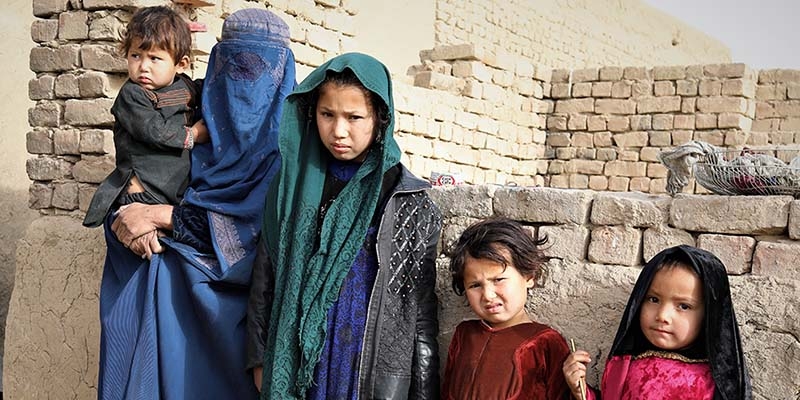
Women who have been forced to leave Afghanistan and look for “homes” abroad have been disproportionately affected by the conflict and the rise in gender-based violence there. However, their quest and attempt to find a secure home somewhere else has been intersectional and a lot more difficult than it first seems. The impact of the refugee crisis on them as Muslim women and as refugees may also be determined by listening to the stories of young women and single moms who are fighting to provide for and educate their children in order to have a brighter future.
According to UNHCR, 46% of refugees are women and young girls, while 36% are small children. “My status as a refugee seems to have had a greater impact on my rights as a woman and as a person. In the position I’m in right now, I don’t have the authority to speak for myself. Adiba, who presently works at a diagnostic center in Bhogal, adds, “I wish I had because maybe I would be enjoying my life like you. In 2019, she fled her homeland and sought safety elsewhere. But safety won’t provide you food. Women are not allowed to attend school in Afghanistan. Although education is not prohibited in India, Adiba explains that as refugees with nowhere to go, we have no access to it.
Another Bhogal resident from Afghanistan who immigrated to India in 2018 is Nageena Nazreen, 40, who worked as a nurse in Jalalabad. There, her husband’s drug addiction often heightened the difficulties of her existence as a woman and a mother of two. Nazreen’s life took a difficult turn when she was forced to file for divorce in order to live a secure existence. In the meanwhile, she also lost one daughter in a scenario like war. As a single mother looking for a better life, she moved to Delhi where she encountered sexual taunts in the lanes and alleyways of Bhogal.
“At first, when I moved here with only my daughter and went about seeking for housing and employment, guys would make unwanted comments. They would often approach me disrespectfully,” she sobs as she remembers the tough times she had to endure. Nazreen works on credit since she can’t find a job despite her skills in the healthcare industry. According to her, an Afghan woman’s social position, financial security, and emotional anchors deteriorate when she doesn’t have a “man to protect her, financially.”
Farida Khaekwan, a 46-year-old single mother of four children, echoes the same sentiments. In addition to the strain of poverty and dislocation, she has been a single mother for more than ten years, and her trip from Kabul to Delhi was wrought with comparable hardships. At the age of 18, Farida, who lost her parents when she was quite young, had her first nikah. She was unaware that her spouse had a neurological disorder at the time. She gave birth to her fourth kid, and her husband died. She returned so her brother could depart with her.
“However, you are aware of what occurs when a widow with four children comes to live with her maternal family. According to Farida, society does not seem to accept her for who she is. Farida wedded, but this time to a guy who was considerably older than her in order to shield herself from all the rumors and seek financial security. He would travel from Sweden to see them once a year while she was living in Kabul. But her spouse hasn’t seen the family since the relocation to Delhi in 2016.
Her spouse, who was born in Sweden and has Swedish citizenship, has been supporting Farida and her kids financially. He is about 90 years old, however, and due to his health problems, he is unable to care for them any more. Additionally, he has just given Farida divorce papers. Farida, who now manufactures crochet crafts and sells them to support her family, says “We don’t know how will we pull off our financial needs once the money stops flowing in.”
She did manage to get employment in 2021, but it was only for a short time. She works on weaving projects with 7-8 other women to get the necessary community support. For Nazreen, who in Afghanistan, death was a matter of a single blow however here, it becomes a long process eating them away day by day, “life is quite uncertain for us here and today, we do not know what happens to us tomorrow,”
However, Adiba, whose mother was an Afghan human rights and women’s rights activist, believes that dying in India from homelessness is preferable than being killed by the “animals, they call the Taliban.” She responds, “I don’t want to be penalised for being a woman.