






















As tensions with the former colonial power and its neighbors rose, Niger’s new junta on Monday accused France of attempting to “intervene militarily” to restore ousted President Mohamed Bazoum.
In response, France’s Foreign Minister Catherine Colonna said it was still “possible” to bring Bazoum back to power in the evening.
The junta-run governments of Mali and Burkina Faso also issued a late-Monday warning, signaling rising regional tensions, saying any military action in Niger would be seen as “a declaration of war” on both of their nations.
The elite Presidential Guard overthrew Bazoum on July 26. Bazoum was a western friend whose victory just over two years ago represented Niger’s first peaceful turnover of power since independence.
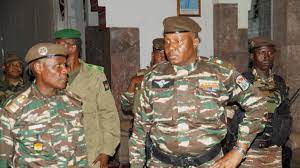
General Abdourahamane Tiani, the head of the guards, announced himself to be in charge, but his claim has been rejected internationally, and the West African bloc ECOWAS has given him one week to abdicate.
Bazoum is one of the few elected presidents and pro-Western figures left in the Sahel, where Islamic insurgencies have also led to coups in Mali and Burkina Faso since 2020.
Following a number of arrests, Bazoum’s PNDS party issued a warning on Monday that Niger risked turning into a “dictatorial and totalitarian regime.”
The party claimed that the arrests of the mining and oil ministers on Monday morning. Additionally detained was the chairman of the national executive committee of the PNDS.
The party said that the junta had previously detained the interior and transport ministers as well as a former minister of defense.
The European Union criticized the Monday detention of ministers from the overthrown administration and requested their immediate release.
A very dangerous situation
“In its search for ways and means to intervene militarily in Niger, France… held a meeting with the chief of staff of the Nigerien National Guard to obtain the necessary political and military authorization,” the putschists said on state television.
Colonna said that the accusation was “wrong” and that it was still “possible” to reinstate the democratically elected president to office in an interview with the French news outlet BFM.
After tens of thousands of people demonstrated in front of the French embassy in Niamey on Sunday, French President Emmanuel Macron promised “immediate and uncompromising” response if French persons or interests were targeted.
“Organised, not spontaneous, violent, extremely dangerous, with Molotov cocktails, Russian flags appearing, and anti-French slogans (that were) an exact copy of what you can hear elsewhere,” said Colonna of the event.
According to the presidential palace in Paris, Macron has talked with regional leaders and Bazoum many times.
The Economic Community of West African States (ECOWAS) issued a stern caution on Sunday.
The bloc threatened to employ “all measures,” which “may include the use of force,” to restore constitutional order if Bazoum was not reinstalled within a week.
Bola Tinubu, president of Nigeria, Niger’s southern neighbor and the region’s powerhouse, said that “it is time for action” as ECOWAS chairman.
After Mali and Burkina Faso, the nation of Niger was jolted by a military coup in less than three years.
A jihadist insurgency in all three countries tore apart weak administrations, inflamed military resentment, and inflicted economic harm on some of the world’s poorest nations.
Pro-Russian and anti-French protests have often followed the removal of elected leaders.
A military intervention in Niger may have devastating effects and destabilize the whole region, Burkina Faso and Mali warned on Monday.
ESSENTIAL ALLY
The junta’s supporters claim that Russia would be a greater partner than France, the nation’s longtime ally, in protecting them from the jihadists.
A coup attempt in 2020 in Mali resulted in a dispute with France, which this year withdrew its soldiers as the junta inserted Russian paramilitaries.
Following two coups last year that installed a junta that followed a nationalist agenda, France also left Burkina Faso.
In response to the withdrawals, France revised its ten-year anti-jihadist policy in the Sahel, focusing on Niger, where it has 1,500 soldiers and a significant air base close to Niamey.
The putschists claimed that the most recent coup was a reaction to “the degradation of the security situation” brought on by the jihadist fight, as well as corruption and financial difficulties.
International naysayers have increased their pressure, focusing on trade and assistance for development.
All financial and commercial transactions have been halted by ECOWAS. The United States, which has 1,100 soldiers stationed in Niger, the European Union, and France have all threatened to withhold assistance or already have.
On Monday, Germany halted its financial assistance and development cooperation. Additionally, UN humanitarian missions have been postponed.
Since gaining its independence from France in 1960, Niger has had four coups as well as countless additional attempts, including two in the past against Bazoum.
The 63-year-old former interior minister’s election represented the first orderly change in power in Niger since the country’s independence.
Two terrorist battles are being fought in the desert landlocked state, which routinely comes in last on the UN’s Human Development Index.