




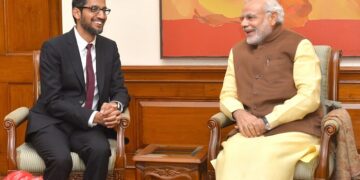

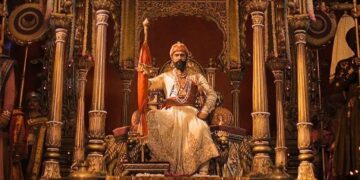


















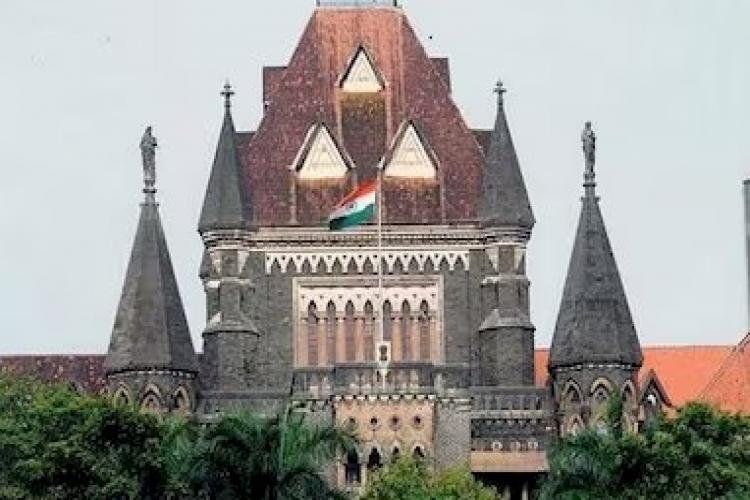
their remarks about Chhatrapati Shivaji Maharaj and other icons has been dismissed by the Bombay High Court, which ruled that their statements do not, at least on the surface, violate any criminal laws. The high court also said that the remarks represent the speaker’s view and opinion of such facts with the objective to convince the audience, and that the stated purpose seems to be to educate society for the benefit of everyone. The HC’s order was only just made public. Koshyari resigned from his position as governor last month after his term was marred by controversy over comments he made against Shivaji Maharaj, social revolutionaries Mahatma Phule and his wife Savitribai, and Marathi people.
He received criticism for referring to Shivaji Maharaj as a “icon of olden times,” while Trivedi purportedly said that the Maratha empire’s founder had expressed regret to Mughal ruler Aurangzeb. On March 20, Justices Sunil Shukre and Abhay Waghwase rejected a plea brought by Scheduled Caste (SC) citizen Rama Katarnaware of Panvel. The petitioner asserted that Koshyari and Trivedi, who are not SC or ST members, disrespected these late political figures who were highly regarded by members of society in general and by SC/ST communities in particular with their public remarks. The petitioner made various unpleasant remarks on Shivaji Maharaj, Mahatma and Savitribai Phule, and “Marathi manoos” by Koshyari and Trivedi.
The bench, however, said in its ruling that “An in-depth consideration of the referred statements would tell us that they are in the nature of the analysis of history and the lessons to be learned from history.”They also convey the speaker’s objective, which is that, at the very least in the present, we should take lessons from the past and be aware of the repercussions of adhering to certain traditions and what can possibly go wrong if those traditions are maintained, the bench ruled. It went on to say that these remarks essentially represent the speaker’s impression and opinion of those facts with the goal of persuading the audience, to whom they were addressed, to consider and act in a manner that is beneficial to society. According to the speaker, the goal behind the words seems to be the education of society for its improvement, the bench said.
The judges concluded that “these statements cannot, under any circumstances, be seen as disrespectful to any great person, held in high esteem by members of the society in general and by members of the Scheduled Castes and the Scheduled Tribes in particular.” According to them, in light of the aforementioned, the remarks made do not, on their face, amount to an infraction punishable under the Scheduled Castes and Scheduled Tribes (Prevention of Atrocities) Act or any other criminal statute. The petitioner’s attorney said that since the respondents are “highly powerful and influential authorities,” only a constitutional court of this calibre can provide the proper instructions for the registration of the crimes and keep track of how the inquiry is going.
“There can be no second view with regard to the authority of this court. This court may undoubtedly provide instructions to protect the cause of justice in the exercise of its exceptional authority under Article 226 of the Indian Constitution. However, the real issue is whether or not the petitioner in this case can use such a power, and we respond by saying no,” the panel ruled. This is because, it said, we do not perceive any of the claimed violations having a prima-facie basis based on the allegedly disagreeable utterances.