
























The second earth-bound manoeuvre of Aditya L1, the first space-based Indian mission to study the Sun, was successfully completed during the early hours of Tuesday, according to the Indian Space Research Organization (ISRO). According to reports, ISRO’s Telemetry, Tracking and Command Network (ISTRAC) was in charge of the operation.On September 3, the first earthbound maneuver was executed successfully.
“From ISTRAC, Bengaluru, the second Earth-bound movement (EBN#2) is successfully carried out. During this operation, the satellite was monitored by ISTRAC/ISRO ground stations in Mauritius, Bengaluru, and Port Blair. The new orbit obtained is 282 km by 40225 km, according to a statement from ISRO on X (formerly Twitter).
It said that the next maneuver (EBN#3) is planned on September 10, 2023, about 02:30 IST.
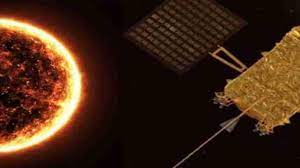
Aditya-L1, India’s first attempt at establishing a space-based observatory, will circle the Earth in a halo around the first sun-earth Lagrangian point (L1), which is around 1.5 million kilometers away from the planet.
The spacecraft will reportedly do two more earth-bound orbital maneuvers before entering the transfer orbit for the Lagrange point L1. Aditya-L1 is anticipated to reach its destination at L1 in 127 days or such.
relating to ISRO’s first trip to the Sun
On September 2, the Aditya-L1 spacecraft was successfully launched by ISRO’s Polar Satellite Launch Vehicle (PSLV-C57) from the Satish Dhawan Space Centre (SDSC), Sriharikota.The Aditya-L1 spacecraft was successfully launched into an elliptical orbit of 235×19500 km around the globe after a mission time of 63 minutes and 20 seconds.
Aditya-L1 will be placed in a highly elliptical orbit as part of the project, which is meticulously planned to permit near studies of the Sun, including monitoring solar activity and advancing knowledge of the star that supports life on Earth.
According to reports, the spacecraft contains a Visible Emission Line Coronagraph (VELC), which will be used to image and spectroscopically study the Sun in order to learn more about the physics driving the star.
The spacecraft also offers the benefits of deploying six more equipment to study the Sun’s physics.
The other three payloads will conduct in-situ particle and field research at the Lagrange point L1. Of the seven payloads, four will directly observe the Sun from the exceptional vantage point of L1, which is reported to have an uninterrupted view of the Sun.
The Solar and Heliospheric Observatory Satellite SOHO from NASA, the American space agency, is presently stationed at the L1 point.