























The Allahabad High Court recently held in Kamal v. State that a husband has a duty to support his wife even if he does not receive revenue from his employment.
The Court further stated that the husband might support his wife and make the minimum wage of ₹350–400 per day, even if it is considered that he is simply performing menial labour.
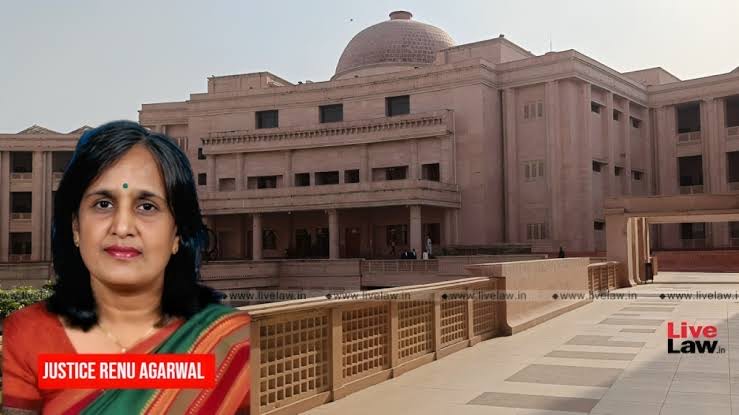
Rejecting a man’s revision plea and contesting a family court ruling directing him to pay ₹2,000 monthly maintenance to his estranged wife, Justice Renu Agarwal made the statement. The individual had stated that his income was insufficient to cover the maintenance.
“For the sake of argument, if the court presumed that the revisionist (husband) has no income from his job or from the rent of Maruti Van, even then the revisionist is duty-bound to provide maintenance to his wife, as is held by the Apex Court in the case of Anju Garg vs. Deepak Kumar Garg 2022, and if he engaged himself in labour work also, then he may earn as an un-skilled labourer about Rs. 350 to Rs. 400 per day as a minimum wage,” the Court opined while rejecting the man’s petition.
The High Court noted this while citing the ruling in Anju Garg v. Deepak Kumar Garg, where the Supreme Court stressed that a husband must provide for his wife, even if it means working physically.
“It is the sacrosanct duty of the husband to provide financial support to the wife and to the minor children. The husband is required to earn money even by physical labour if he is able-bodied and could not avoid his obligation, except on the legally permissible grounds mentioned in the statute,” the Supreme Court had observed in Anju Garg’s case
During the hearing of a husband’s petition contesting a family court maintenance order under Section 125 (order for maintenance of wives, children, and parents) of the Code of Criminal Procedure (CrPC), the High Court was prompted to restate this stance.
In 2015, the petitioner before the High Court wed his spouse. But their time together in their married home was brief—the wife went back to her parents’ house after a few days.
It was said that the wife would not return, no matter how many times the husband tried to make amends.
Later, the husband used the Hindu Marriage Act to bring a lawsuit to restore their marital rights. Following that, his spouse submitted a support request in accordance with CrPC Section 125.
The wife’s application was granted by the family court, and the husband was mandated to provide ₹2,000 monthly support.
The husband questioned the family court’s decision’s accuracy. His attorney contended that the wife had freely moved out of her marital residence without a good reason and had been living at her parents’ house since January 2016; this was something that the family court had overlooked.
He disclosed that he lived in rental housing, worked as a labourer, and was coping with a serious medical condition.
In addition, he said that his wife, a graduate, makes enough money to live on.
The wife’s attorney retorted that the guy made about ₹50,000 a month from his job, a milk company, and agricultural land, and that she had left her marital home because of dowry demands.
The Court noted that the husband’s assertion that he was suffering from a serious illness was not well supported by the available data.
The husband was deemed financially and physically capable of meeting his wife’s needs, according to the court’s further ruling.
In addition, the Court noted that the husband had not provided any proof during the trial to back up his allegation that his wife was having an extramarital affair, which may have prevented her from being eligible for maintenance.
“Moreover, if the revisionist (husband) wants to show that opposite party no. 2 is living in adultery, he has an opportunity to move his application under Section 127 Cr.P.C. for adequate relief,” the Supreme Court stated.
In light of these findings, the court denied the husband’s request and maintained the family court’s decision.
Lawyer Arjun Singh Somvanshi was the husband’s representative.
The responders (the state and the wife) were represented by government advocates Salma Bano and Shresth Agarwal.
Read the order: