






















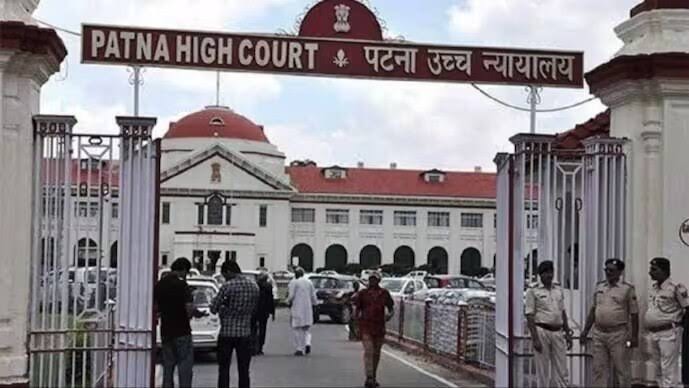
The Patna High Court struck down the 65% reservation quota for scheduled castes (SCs), scheduled tribes (STs), backward classes, and exceptionally backward classes (EBCs) in Bihar on June 20, 2024. The Court said that the Bihar Reservation of Vacancies in Posts and Services (Amendment) Act, 2023, and the Bihar (In Admission in Educational Institutions) Reservation (Amendment) Act, 2023, were unconstitutional because they broke Articles 14, 15, and 16 of the Indian Constitution’s equality clause.
In March, the high court postponed ruling on writ petitions challenging the constitutional legitimacy of increasing the reservation quotas for scheduled castes, scheduled tribes, and backward and extremely backward classes in government jobs and higher education institutions from 50% to 65%. Judge Harish Kumar and Chief Justice K Vinod Chandran’s division bench heard ten writ petitions submitted by Gaurav Kumar and others before deferring to their decision.
Before granting an increase in the reservation percentage based on the documentation, the state did not make an effort to conduct a thorough investigation or analysis. The High Court stated, “The State proceeded based only on the population’s proportion of various groups as opposed to their numerical representation in government services and educational institutions.
The Bihar Reservation of Vacancies in Posts and Services (for Scheduled Caste, Scheduled Tribes, and Other Backward Classes) Amendment Act, 2023, and the Bihar Reservation (in Admission to Educational Institutions) Amendment Act, 2023, were both thrown out because they went against the Constitution and Articles 14, 15, and 16. The Patna High Court decided to approve the Writ Petitions and let the parties bear their costs.
Remarkably, the PIL had said that these modifications went against the Supreme Court’s 50% reservation ceiling set in the Indira Sawhney case (also called the Mandal Commission case). The petitioners argued that it was unlawful for the state to surpass this cap without proving extraordinary circumstances. Additionally, they claimed that sufficient representation, not proportional representation of different classes within the state, should be the basis for the reserve percentages.
It is important to note that the RJD-JDU-led Bihar government increased reservations to 20% for Scheduled Castes, 2% for Scheduled Tribes, 18% for Other Backward Classes, and 25% for Extremely Backward Classes in November of last year. An additional 10% was added for the economically weaker sections, bringing the total reservations to 75%. These amendments were based on a state-wide caste census.
The ruling of the Patna High Court highlights the continued legal and political complexity surrounding caste-based reservations in India and emphasises the necessity of following court precedents and constitutional limitations when putting such policies into effect.
Tejashwi Yadav, the leader of the Rashtriya Janata Dal (RJD) and a former deputy chief minister of Bihar, has accused the Bharatiya Janata Party (BJP) of being responsible for the removal of the 65% reservation quota. Additionally, he claimed that the Bharatiya Janata Party-led central government had purposefully delayed adding the abandoned laws to the Ninth Schedule of the Indian Constitution.
How courts have struck down such legislation in other states in the past
Political parties in India are frequently perceived as using the 50% caste reservation cap as a populist tactic to win over support from particular communities. This strategy breaches constitutional rules and undercuts the meritocracy ideal, even though it seems to alleviate social imbalances. The governments of other states, besides Bihar, have also made an effort to raise reservations above the 50% ceiling.
Maratha reservation abolished by the Supreme Court
The Maratha group is eligible for a 16% reservation under the Socially and Educationally Backward Classes (SEBC) Act, which Maharashtra passed in 2018. As a result, the state’s overall reservation percentage surpassed 50%, which was challenged in the Bombay High Court. The Bombay High Court maintained the Maratha reserve in 2019 but lowered it to 12–13%. After a lengthy legal battle, the case made its way to the Supreme Court, which invalidated the SEBC Act in 2021 because it went beyond the 50% ceiling set by the 1992 Indra Sawhney ruling and no unusual circumstances could have warranted going above it.
Rajasthan’s Gujjar Reservation
The Gujjar community in Rajasthan has long led agitations and called for their people to be included in the reservation system to alleviate their socioeconomic disadvantage. The state administrations run by Ashok Gehlot of the Congress and Vasundhara Raje of the BJP have made numerous attempts to comply with these demands, raising serious legal and political issues. Through the Rajasthan Backward Classes Amendment Act, of 2015, the Rajasthan government awarded the Gujjar community and other groups falling under the Special Backward Classes (SBC) category a 5% reservation in 2019. Currently, the Gujjar group is granted 5% reservation by the Rajasthani government under the Special Backward Classes (SBC) category. This is a component of the state’s larger reservation system, which makes up roughly 64% of the total. Surprisingly, in Rajasthan, reservations are given to SCs at 16%, STs at 12%, OBCs at 21%, MBCs [Gujjar, Raika-Rebari, Gadia Luhar, Banjara, and Gadarias] at 5%, and EWS.
The Rajasthan High Court invalidated this provision because it exceeded the 50% reserve cap and that there wasn’t enough evidence to back up the designation of some communities as being backward. When the case finally made it to the Supreme Court, the justices declined to get involved and turned down a request from Gujjars and the other four MBCs for a stay on the 5% limit.
In Haryana’s private sector, there is a 75% reservation for locals
The caste reservation status in Haryana consists of a combination of quotas across different categories: 20% reserved for SCs, 16% reserved for Backward Classes (A), 11% reserved for Backward Classes (B), and 10% reserved for EWS. This makes the total reservation status 57%. The Punjab and Haryana High Court sent a notice last month asking the state administration to explain why caste reservation in Haryana has surpassed the 50% ceiling.
In addition, the contentious Haryana State Employment of Local Candidates Act, 2020 was approved by the Haryana government, requiring a 75% reservation for local candidates in private sector employment paying less than Rs 30,000 per month. But in February 2023, the Punjab and Haryana High Court invalidated this law. The Indian Constitution’s equality principles and the fundamental rights of private employers to hire people without interference were both violated by the court’s decision that such a reserve was unconstitutional.
The Hemant Soren-led Jharkhand government passed the OBC quota bill, which allows reservations of up to 77%.
Hemant Soren, the then-CM of Jharkhand, introduced the OBC reservation bill in November 2022, which would increase the quotas for OBCs to 27%, SCs to 12%, STs to 28%, and include a 10% EWS quota. During a one-day special session in 2022, this measure was passed. Governor CP Radhakrishnan, however, returned the bill, claiming that it exceeded the Supreme Court’s 50% cap.
With 69% caste reservation in Tamil Nadu, the DMK government declined to impose a 10% EWS quota.
With 69% of the nation’s reservations based on caste, Tamil Nadu has the highest rate. Reservations for Scheduled Castes (18%), Scheduled Tribes (1%), Most Backward Classes / Denotified Communities (20%), Backward Classes (26.5%), and Backward Class Muslims (3.5%) are included in this.
Tamil Nadu has traditionally upheld a 69% maximum, mostly unopposed, but courts have stepped in when state administrations pass legislation that goes over the 50% cap to provide reservation to specific caste groups. This is so because the Constitution’s Ninth Schedule contains the Tamil Nadu Reservation Act, 1994, which established these reservations.
Notably, the Constitution (First Amendment) Act, of 1951 added the Ninth Schedule, which is a list of federal and state laws that cannot be challenged in court. As a result, the Tamil Nadu Reservation Act of 1994 is shielded from court scrutiny.
However the Supreme Court decided in the 2007 decision of I.R. Coelho v. State of Tamil Nadu that laws added to the Ninth Schedule after 1973 might be susceptible to judicial scrutiny if they went against the fundamental framework of the Constitution.
The Dravida Munetra Kazhagam (DMK) government, presided over by Chief Minister C.N. Annadurai, granted Backward Classes (BCs) a 31% reservation in 1969. Under M. Karunanidhi’s leadership, the reservation quota was raised in 1971 based on the findings of the AN Sattanathan Commission, bringing the total number of reservations to 49%. The AIDMK government revoked the economic requirements that MG Ramachandran (MGR) had previously established for quota eligibility in 1980 in response to strong opposition from political parties and their defeat in state assembly elections. MGR increased the reservation percentage for BCs from 31% to 50%, resulting in a 68% reservation overall. The Karunanidhi-led DMK administration implemented a 1% ST quota in 1990. After this, 69% of Tamil Nadu’s population was caste reserved.
The Supreme Court held in the 1992 case of Indra Sawhney v. Union of India that, absent unusual circumstances, reservations should not surpass 50% of seats and positions that are available. To prevent the wealthier OBC members from using reservation privileges, the court also introduced the idea of a “creamy layer.”
Following this, the Tamil Nadu government, under the leadership of Jayalalitha of the AIADMK, successfully pushed for the Tamil Nadu Reservation Act to be added to the Ninth Schedule of the Indian Constitution in 1993. Leading a delegation of state parties, the then-chief minister Jayalalitha requested PM Narasimha Rao forward the law to President Shankar Dayal Sharma for his approval, which was granted a month later.
While the Central government introduced reservations for Economically Weaker Sections (EWS) in 2019, the DMK government vehemently opposed it, claiming that it granted a significant portion of the upper caste population “easy exclusive luxurious” reservations. The DMK government had introduced Muslim reservations in 2006. Additionally, the DMK administration approved an act granting Vanniyars an internal 10.5% reservation under the Most Backward Classes quota. Nevertheless, because it was put into effect without any concrete evidence to back it up, the Supreme Court overturned it.
Political parties frequently voice increased reservations about particular castes or “minority” groups to win their support in elections. These pledges are put up as a means of redressing past wrongs and giving marginalised communities chances. Still, these actions frequently have more to do with political calculations than with actual social change. It is important to recognise that raising doubts could benefit politicians and voters in the short run, but it could also have negative long-term effects on society by escalating animosity and rifts and failing to promote true socioeconomic progress.