























In order to implement the results of the initiative on Critical and Emerging Technology (iCET) by streamlining export controls, enhancing high-tech commerce, and facilitating tech transfer between the two countries, India and the US will hold the first meeting of the Strategic Trade Dialogue on June 4-5.
The two nations’ national security advisors had their first iCET interaction on January 31, and when US Commerce Secretary Gina Raimondo visited India on March 10 to resume the bilateral commercial dialogue, the decision was made to conduct the strategic trade conference.
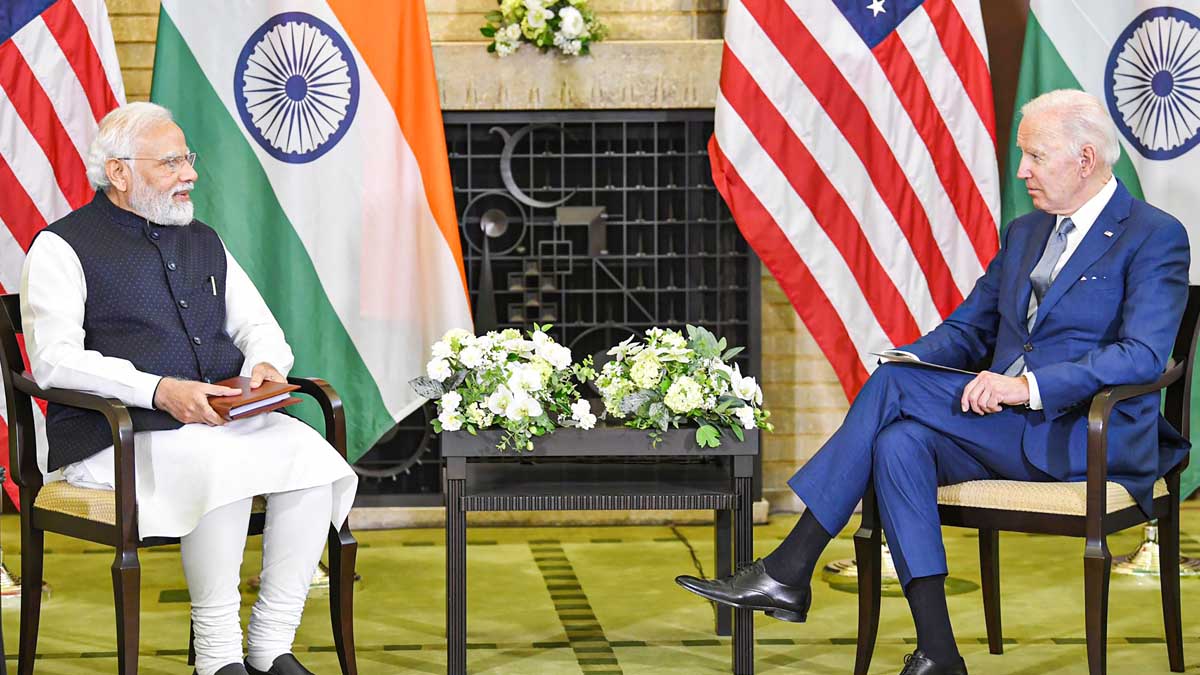
Early in the following month, Indian Foreign Secretary Vinay Kwatra will travel to the US to meet with Under-Secretary of Commerce for Industry and Security Alan Estevez for the strategic trade dialogue and to finalize preparations for Prime Minister Narendra Modi’s visit to the White House on June 22 to meet US President Joseph Biden.
PM Modi and President Biden are scheduled to meet at the G-7 summit in Japan from May 19 to 21, the QUAD summit on May 24, and in Port Moresby, Papua New Guinea, on May 22, as part of the crucial engagement of the Far Pacific countries. As part of India’s overall involvement with the Far Pacific, PM Modi will provide the island country a $100 million credit line, while the US is anticipated to strengthen defense cooperation with PNG to offset the growing security presence of China in the neighboring Solomon Islands.
Kwatra is expected to make sure that all obstacles under the International Traffic in Arms Regulations (ITAR) and Export Administration Regulations (EAR) are removed in order for US companies to work together and produce high-tech systems in India, such as aircraft engines, munition technologies, and armed drones, as part of India and the US engagement, particularly in the Indo-Pacific.
Before PM Modi’s trip to the US, the US is anticipated to approve General Electric’s proposal to jointly construct F-414 jet engines in India for the Tejas Mark II. This is according to officials located in Washington and New Delhi. In order to move the production of F-414 engines to India, US defense firm GE is also in contact with its supporting partners in the EU. In order to offset the Chinese threat of armed drones along the LAC, the US is also prepared to provide military drones to India.
India is pursuing US intelligence, surveillance, and reconnaissance (ISR) technologies in addition to establishing an innovation bridge that would link Indian and US defense companies for improved marine domain awareness in the Indo-Pacific. In addition, the two nations are actively working together to build supply networks in India that can withstand Chinese military threats to Taiwan and the country’s semiconductor sector.