






















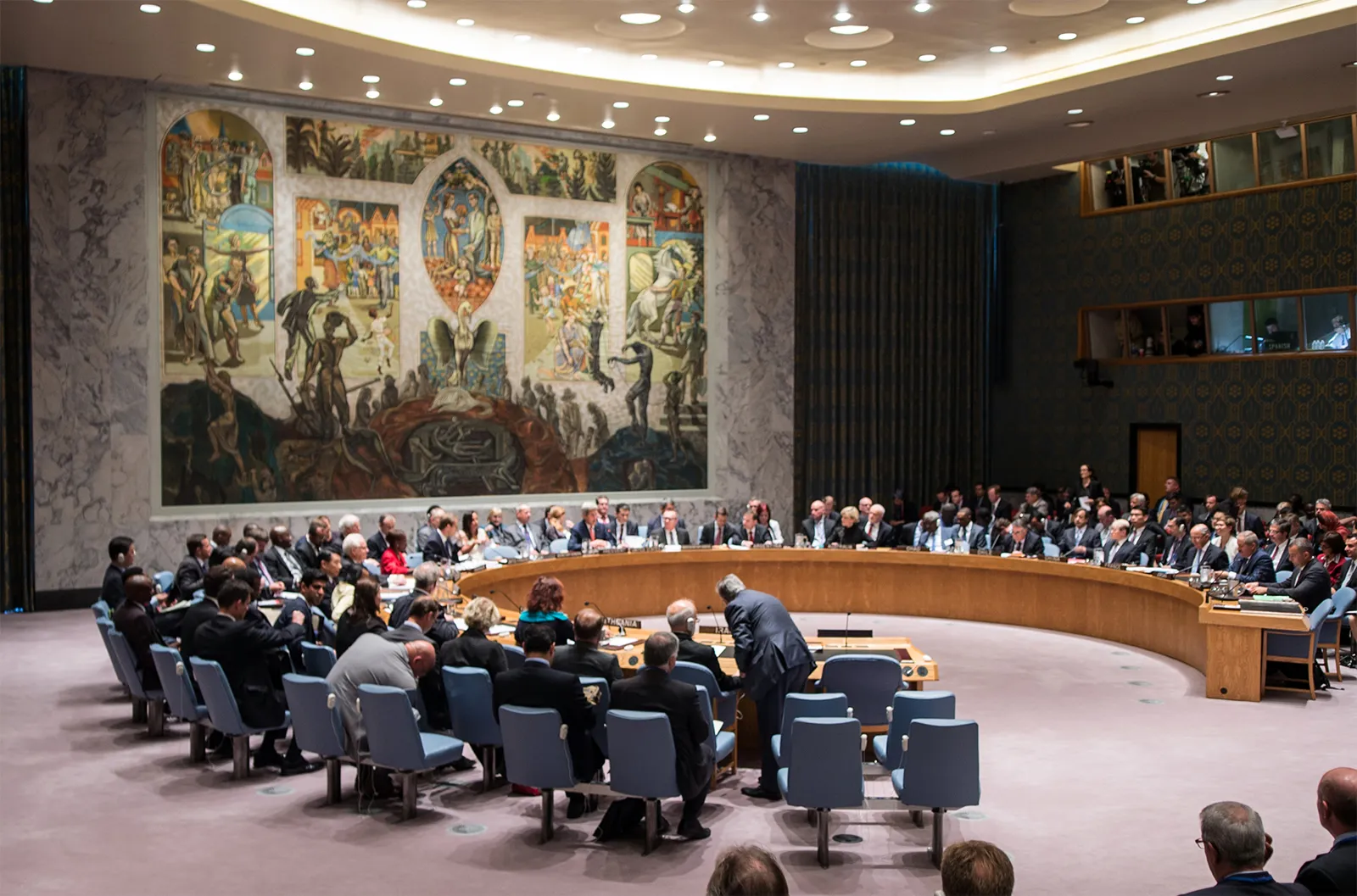
At a meeting of the UN Security Council on Monday, the United States, China, and Russia sparred about who was to blame for motivating North Korea to launch many ballistic missiles and establish a nuclear weapons program.
The Hwasong-17 intercontinental ballistic missile, according to Pyongyang, was launched on Thursday, prompting a meeting of the 15-member council. Since 2006, North Korea has been subject to U.N. sanctions because of its missile and nuclear programs.
Although Washington accuses Beijing and Moscow of giving North Korea greater confidence by protecting it from more sanctions, China and Russia have blamed joint military exercises by the United States and South Korea for upsetting Pyongyang.
U.N. Secretary-General Antonio Guterres “remains very concerned about the differences that have stopped the international community from acting on this subject,” a senior U.N. source said during the meeting.
Although Geng Shuang of China and Anna Evstigneeva of Russia both referred to the U.S. and South Korean military exercises as “unprecedented,” Geng Shuang questioned whether they were defensive drills and blamed them for escalating tensions.
“These exercises have been practiced for a very long time. They only have defensive use. No hostile intent exists between the US and the DPRK, “Linda Thomas-Greenfield, the U.S. ambassador to the United Nations, referred to the country as the Democratic People’s Republic of Korea.
The council has been split about how to handle Pyongyang for a number of years. Further sanctions won’t help, according to Russia and China, veto powers with the United States, UK, and France, who want such restrictions to be loosened. According to Geng, the intention was to attempt to create favorable circumstances for a detente.
Lifting U.N. sanctions, according to Thomas-Greenfield, would be Pyongyang’s reward “for doing nothing to comply with Security Council decisions.” She said that Pyongyang denied the people of North Korea essential humanitarian aid.
With relation to the AUKUS security agreement, which would see Australia establish a nuclear-powered submarine program with the United States and Britain, Russia and China once again expressed their nuclear security worries.
AUKUS does not violate the Non-Proliferation of Nuclear Weapons Treaty, the United States and Britain both notified the council in response to their concerns.
“The illicit nuclear and ballistic missile programs of North Korea go against several Council decisions. Hence, the AUKUS cannot be compared in any way “James Kariuki, Britain’s deputy ambassador to the UN, spoke before the council.