

















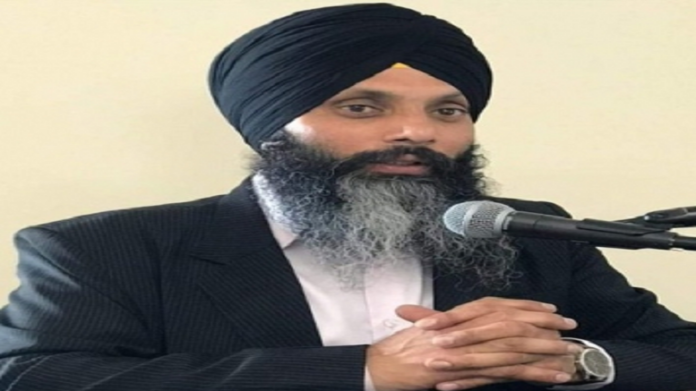
The pro-Khalistani politician Hardeep Singh Nijjar was shot and killed in Surrey, Canada, which has a large Punjabi population. Let’s take a deeper look at Nijjar’s family history since debates regarding this occurrence abound online. Nijjar is originally from Bhar Singh Pura in Jalandhar, Punjab. His family has a long history of land ownership and involvement in farming and livestock keeping. Nijjar’s family had long since made a permanent migration to Canada, but they still had a close relationship with their native hamlet and often travelled there to reaffirm their familial connections. Prior to the implementation of the Covid lockout procedures, villagers reported seeing them in their house.
According to a Punjab government decision from 2020, property owned by Gurpatwant Singh Pannun, the founder of Sikhs for Justice (SFJ), as well as land owned by Nijjar in his village, Khankot village, and Sultanwind Bhainiwal, had been taken. A separatist group called SFJ was founded in 2009. Nijjar, who was born on October 11th, 1977 and went by his last name, was a member of a number of groups, including Babbar Khalsa International (BKI) and Khalistan Tiger Force (KTF). Nijjar won an uncontested election to head the Guru Nanak Sikh Gurudwara in Surrey, Canada, while working as a plumber.
Nijjar has already run into legal issues. He was the subject of a First Information Report (FIR) from the Punjab Police in 2010 for allegedly being involved in an explosion close to the Satya Narayan temple in Patiala. A second FIR was lodged against him in 2015 for allegedly conspiring to kill religious leaders.</p> <p>He was the subject of a second FIR in 2016 for planning a training camp in Canada in December 2015. He was the subject of Lookout Circulars (LOC) and Red Corner Notices (RCN) in 2015 and 2016. He was briefly detained by Canadian police in April 2018, but no charges were brought against him, and he was later freed.
Nijjar angrily denied any connection in terrorist operations in an interview with a Vancouver-based programme. He emphasised that he had spent more than three decades living in Canada and that he had committed himself to serving as a volunteer “sewadar” at a gurdwara in Vancouver. Nijjar strongly thought that he had been unfairly singled out and denied all of the charges brought against him.