
























According to a new research released on Tuesday, 26% of the world’s population lacks access to clean drinking water, and 46% lack basic sanitation, on the eve of the first significant UN conference on water in more than 45 years.
In order to reach UN targets to guarantee that everyone has access to clean water and sanitation by 2030, a glaring gap still has to be bridged, according to the UN Global Water Development Report 2023.
The report’s editor-in-chief, Richard Connor, said at a press conference that between USD 600 billion and USD 1 trillion is needed annually to achieve the targets.
To ensure that money is invested in methods to sustain the environment, provide potable water to the 2 billion people who do not have it, and provide sanitation to the 3.6 million in need, Connor said that forming partnerships with investors, financiers, governments, and climate change communities is equally important.
The research states that over the last 40 years, water usage has increased by around 1% year, and that this rate of rise “is predicted to continue through to 2050, driven by a mix of population expansion, socioeconomic development, and shifting consumption habits.”
According to Connor, demand is actually rising in developing and emerging nations, where it is being fueled by industrial development and particularly by the sharp rise in urban population. According to him, there has been a significant growth in demand in these metropolitan regions.
According to Connor, agriculture uses 70% of the world’s freshwater, thus agricultural irrigation must be more effective, as it is in other nations that are already adopting drip irrigation, which conserves water. It enables cities to have access to water, he added.
According to the paper, seasonal water shortage would worsen in areas where it is already scarce, like the Middle East and the Sahara in Africa, while increasing in areas where it is now copious, including Central Africa, East Asia, and portions of South America.
According to a study from UNESCO, the UN Educational, Scientific and Cultural Organization, “10% of the world population lives in countries with high or critical water stress” and up to 3.5 billion people experience water stress for at least one month out of the year.
According to the analysis, floods in the tropics have grown by fourfold since 2000, while floods in the northern mid-latitudes have increased by 2.5 times. While an increase in severity or frequency of droughts and “hot extremes” may be anticipated in most places as a direct effect of climate change, trends in droughts are more difficult to establish.
According to Connor, untreated wastewater is the main cause of water contamination.
According to him, almost all wastewater is dumped into the environment without being treated in many underdeveloped nations, where the percentage is over 99 percent.
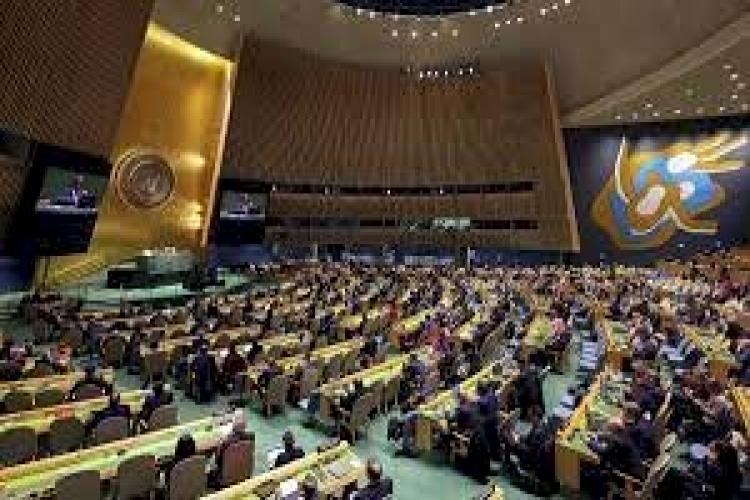
The three-day UN Water Conference, which begins on Wednesday morning and is being co-chaired by King Willem-Alexander of the Netherlands and President Emomali Rahmon of Tajikistan, will cover these and other issues such as safeguarding aquatic ecosystems, enhancing the management of water resources, increasing water reuse, and encouraging cooperation across international borders on water use.
The speakers list includes representatives from 171 nations, including more than 100 ministers, as well as more than 20 organisations. There will be other side activities, five “interactive discussions,” and more during the gathering.