
























Arunachal Pradesh is the destination of Union Home Minister Amit Shah’s two-day visit, during which he will introduce the “Vibrant Villages Program” at the hamlet of Kibithoo, which is situated close to the China-India border. In addition, considering Beijing’s recent aggressive decision to “rename” portions of Arunachal Pradesh, the visit makes a major geopolitical statement.
It should be noted that this would be Amit Shah’s first trip to Arunachal Pradesh while serving as Union Home Minister. Shah will also launch nine state-funded micro-hydel installations in Kibithoo that were built as part of the “Golden Jubilee Border Lighting Plan” as part of the engagements.
According to a release from the Home Ministry, he would also launch projects by the Indo-Tibetan Border Police (ITBP) to improve infrastructure in the states of Arunachal Pradesh’s Likabali, Bihar’s Chapra, Kerala’s Nooranad, and Andhra Pradesh’s Visakhapatnam. Shah will communicate with ITBP employees in the Arunachal Pradesh district of Anjaw in Kibithoo.
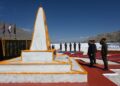
He will go to Namti Field and the Walong War Memorial on April 11.
FOCUS ON CHINA
11 more locations in Arunachal Pradesh, which the neighboring nation claims is the southern section of Tibet, have Chinese names that Beijing declared last week. Asserting that Arunachal Pradesh is a fundamental component of India and that giving it “created” titles does not change this fact, India vehemently opposed the proposal.
It’s not the first time China has tried something similar. We vehemently detest this… The state of Arunachal Pradesh is, has always been, and unalienably belongs to India. Arindam Bagchi, a spokeswoman for the Ministry of Foreign Affairs, said attempts to use fictitious names won’t change the truth.
This was the third set of standardized geographic names for Arunachal Pradesh that had been released by the Chinese ministry of civil affairs. Six locations in Arunachal Pradesh were provided in the first batch of standardized names in 2017, and fifteen further locations were granted in the second batch in 2021. China’s ministry of civil affairs on Sunday announced the 11 locations’ official names.
According to the Chinese state-run Global Times, it also identified the category of sites’ names and their subordinate administrative districts and provided accurate coordinates for two land regions, two residential areas, five mountain peaks, and two rivers.
In the middle of the ongoing eastern Ladakh border conflict that started in May 2020, China changed the names of certain locations in the state of Arunachal Pradesh. India increased its total military readiness after the standoff at the Line of Actual Control (LAC) in the Arunachal Pradesh region.
Last month, S. Jaishankar, the minister of external affairs, said that despite “significant” progress being made in the disengagement process in several places, the situation along the LAC in eastern Ladakh remained “extremely unstable” and is “very hazardous” in military judgment.
Even though the two sides finished withdrawing their soldiers from various locations after significant diplomatic and military discussions, the Indian and Chinese militaries have been engaged in a nearly three-year-long conflict in specific flashpoints in eastern Ladakh.
India has insisted that peace in the border regions is a prerequisite for normalizing relations with China.