

























On Saturday, a train derailment attempt was foiled when thieves took fishplates and keys from a railway track close to Surat’s Kim Railway Station.
Unidentified individuals from the Vadodara Division reportedly removed some keys and the fishplate from the UP line track. They placed them on the same track close to the Kim railway station, according to Western Railway. Service was quickly resumed, though.
The state’s eight bullet train stations’ foundation work was finished on September 19.
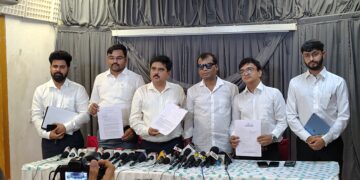
The head of the bullet train project, Pramod Sharma, stated that India was embracing the “Make in India” policy and that bullet train technology had arrived.
“The technology of bullet trains has arrived in India. By means of the “Make in India” initiative, we are moving forward. It is our responsibility to inform the media of our actions. With this, we receive encouragement and positivity,” Sharma remarked.
National High-Speed Rail Corporation Limited (NHSRCL), the company in charge of the enormous bullet train project between Mumbai and Ahmedabad, announced earlier this month that the installation of noise barriers along the Mumbai-Ahmedabad Bullet Train Corridor had started.
The purpose of these noise barriers is to reduce the noise that the train and the civil structure will produce when they are operating.
The concrete panels that make up the noise barriers are one metre wide and two metres high above the rail level. A noise barrier’s weight ranges from 830 to 840 kg. According to NHRSCL, the train’s lower section—which is mainly made up of the wheels churning on the tracks—would produce the aerodynamic sound, which they will disperse and reflect. The train was finished in Gujarat.
The director of the bullet train project, Pramod Sharma, stated that the “Made in India” campaign is driving progress and that bullet train technology has arrived in India.