


























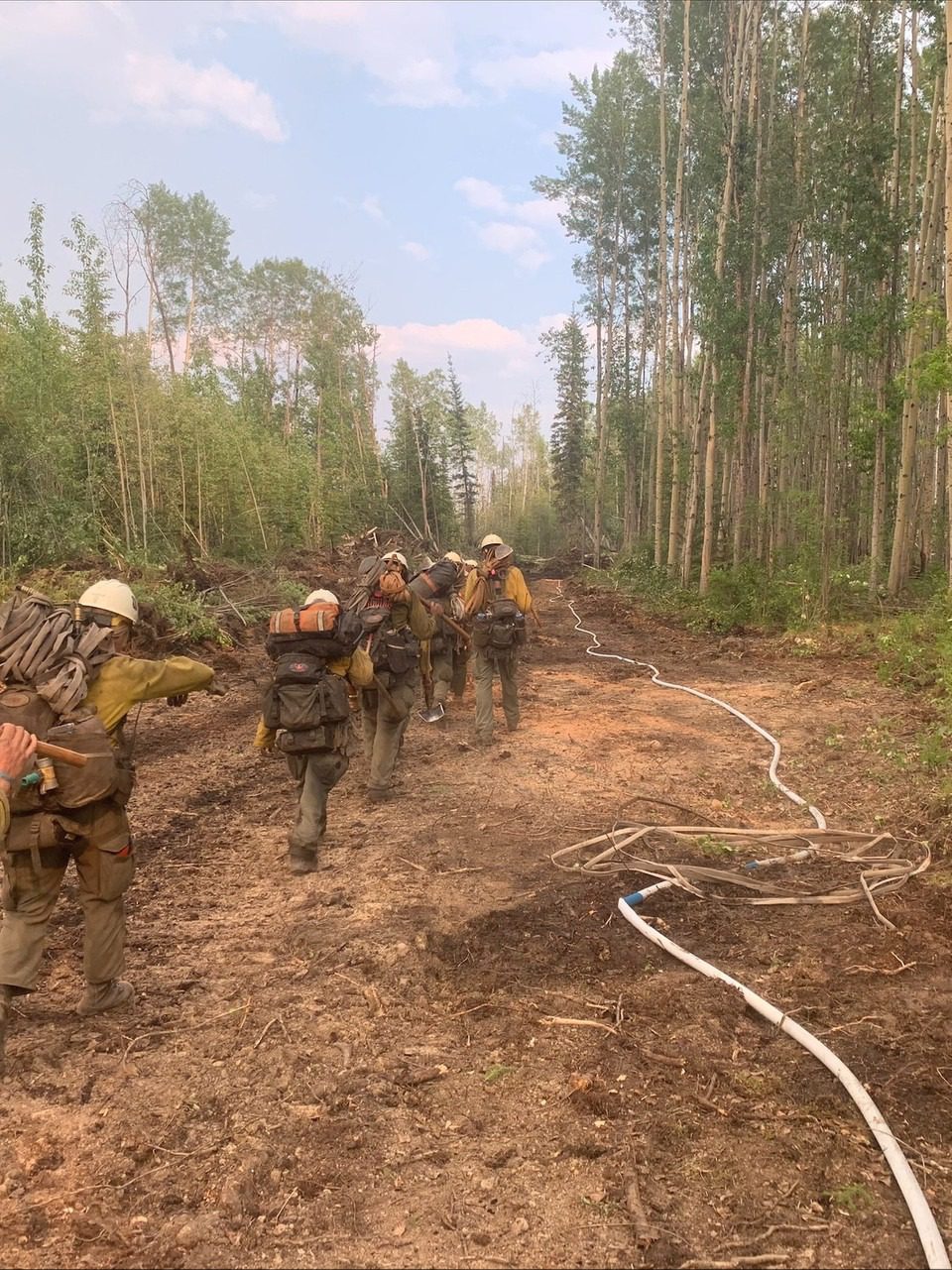
The next episode in Canada’s worst fire season on record saw residents of the Northwest Territories’ capital begin leaving an impending wildfire in lengthy convoys on Thursday. Air evacuations were also in progress for those who couldn’t evacuate by road.
According to Fire Information Officer Mike Westwick, the fire was within 16 kilometers (10 miles) of Yellowknife’s northern border. Residents in the four high-risk districts of the 20,000-person city were instructed to escape as soon as possible.
Residents in other locations are urged to leave by noon on Friday as a result of the possibility that the fire may advance along the route used for evacuation, according to Westwick. First responders were not taking any risks despite the region’s forecast calling for some rain.
Shane Thompson, a federal minister for the Territories, said at a press conference: “I want to be clear that the city is not in immediate danger and that there is a safe window for residents to leave the city by road and by air.” “Without rain, it might make it to the city’s periphery by the weekend.”
As the Northwest Territories health authority begins to cut down on its services, officials announced that the critical care unit at a Yellowknife hospital will shut in the next 24 hours.
The Health and Social Services Authority said on its website that the majority of long-term care patients had been relocated to facilities to the south and that in-patient units from Stanton Territorial Hospital will be moved in the next days, if necessary.
To address the evacuation, Prime Minister Justin Trudeau called an urgent meeting with ministers and high-ranking officials on Thursday.
In eight other villages, including the little town of Enterprise, where 80% of the town was destroyed, over 6,800 people have already been forced to leave their homes. According to officials, everyone was saved.
According to a lady whose family left Hay River on Sunday, their car started to melt as they drove over embers, the front glass shattered, and the car started to fill with smoke, making it impossible to see the road in front of them.
According to Lisa Mundy, who was driving with her husband, their 6-year-old, and 18-month-old children, “I was obviously scared the tire was going to break, our car was going to catch on fire, and then it went from just embers to full smoke,” she told the CBC. She said that after driving into the ditch a few times, they dialed 911.
She told the CBC that her kid would often plead, “I don’t want to die, mommy.”
According to the Canadian Interagency Forest Fire Centre, there have been a record amount of wildfires in Canada this year, scorching more than 137,000 square kilometers (53,000 square miles) and causing suffocating smoke in certain areas of the U.S. More than half of the 1,053 wildfires that were blazing throughout the nation as of Thursday were out of control.
More than 21,000 square kilometers (8,100 square miles) of land have already been consumed by wildfires in the Northwest Territories alone.
Officials said that so far, evacuations from the Northwest Territories have been safe and orderly, and that residents of the capital who are unable to locate suitable housing may get assistance at one of three facilities in the neighboring province of Alberta, which are set to open by midday on Thursday. By vehicle, Yellowknife is more than 1,000 kilometers (620 miles) away from the nearest of those centers.
Officials noted that only individuals who are unable to leave by car should sign up for the evacuation planes. Additionally, those who are immunocompromised or have a condition that makes them more vulnerable were urged to enroll.
Premier Caroline Cochrane said on X, previously known as Twitter, “We’re all weary of the term unprecedented, but there is no other way to characterize this situation in the Northwest Territories. She advised locals to follow established speed limits, traffic control measures, and emergency management personnel. “The nation is watching, and our neighbors are thinking of and praying for us.”
The city of Yellowknife and the nearby First Nations settlements of Ndilo and Dettah are all subject to the Wednesday evening evacuation order. According to Mike Westwick, the area’s fire information officer, eight villages comprising almost 6,800 people, or 15% of the Northwest Territories’ population, have already gone.
The flames have severely impacted indigenous populations and pose a danger to crucial traditional pursuits including native plant harvesting, fishing, and hunting.
Devastating wildfires have also occurred in the U.S., notably one on the Hawaiian island of Maui that claimed the lives of over 100 people and destroyed a historic village.
Authorities issued evacuation orders for rural regions close to California’s border with Oregon on Wednesday after strong winds from a rainstorm sped up a wildfire that had been started by lightning across national forests.