























Hours after party chief Mallikarjun Kharge wrote to President Droupadi Murmu to reiterate concerns over the new scheme, which cuts tenure and offers fewer service benefits, the Congress on Monday pledged to scrap Agnipath and reinstate the previous system of armed services recruitment if voted back into power.
Despite opposition, the Agnipath programme began accepting enrollment in 2022. Agnipath is intended to reduce the average age of the military by recruiting more people on four-year contracts.
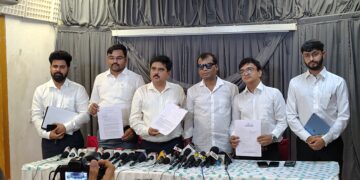
“We are spending more on defence. It was just reported that we are making a lot of money from defence exports. We are also moving towards independence and conducting our manufacturing. At a press conference he co-hosted with member of parliament Deepender Hooda, Congress leader Sachin Pilot stated, “If our defence department is generating so much income and we are becoming so capable, then the most important thing would be to make resources available for the jobs, recruitment, and families of our brave soldiers.”
Pilot attacked the Agnipath plan as little more than a “politicised” cost-cutting tactic, citing Kharge’s letter as support. He claimed that the army had been “weakened” by the government.
Pilot questioned how the government could afford to tamper with the recruitment process to save money when it could spend ₹4100 crore on the G-20 summit, ₹4800 crore on the Prime Minister’s plane, ₹20,000 crore on the Central Vista project, and ₹6500 crore on advertisements.
According to Hooda, the army, its leadership, the young, and no political party had made “no demand” for the Agnipath project. Hooda said that the number of recruits for the army has decreased, from an average of 60–65,000 annually to 45,000 Agniveer recruits in the most recent year. Our 1.4 million-strong army will shrink to 800,000 within ten years if the current rate of recruiting declines, he declared.
He continued by saying that the government had instituted a “No Rank, No Pension” system in place of carrying out the election pledge of “One Rank, One Pension.” He attacked Kailash Vijayvargiya, the leader of the Bharatiya Janata Party (BJP), for claiming that Agniveers will be hired as security guards at their offices.
“The first negative consequence of this plan would be that troops would not receive a pension when they returned home after four years. Where is he going? Vijayvargiya responded by saying that these young people would be employed as security guards at BJP offices.
He added that young people used to risk their lives to defend the nation at the borders. Hooda stated, “They are compelled to take the Dunki route today, entering the country illegally and working as labourers.”
Kharge had earlier drawn attention to the unfairness to nearly 200,000 young men and women in his letter to Murmu. He claimed that the implementation of the new hiring procedure has made their future uncertain. “I recently met them, and they informed me that nearly two lakh [200,000] young men and women were informed that they had been accepted into the Indian Army, Indian Navy, and Indian Air Force between 2019 and 2022,” the author said.
These young men and women, Kharge said, battled against all difficulties to pass demanding written exams, and physical and mental examinations. They thought they had achieved their goals and were just waiting for their joining letters until May 31, 2022. The Government of India’s decision to discontinue this recruitment process and substitute the Agnipath Scheme crushed their hopes that day.
He also mentioned the numerous well-known problems with the Agnipath plan. “General MM Naravane, the former Chief of Army Staff, wrote that Agnipath “took the Army by surprise” and that “for the Navy and Air Force, it came like a bolt from the blue.”
According to Kharge, the plan is biased since it establishes two distinct cadres of soldiers who are supposed to do comparable duties but have drastically different pay, benefits, and future opportunities. After four years of service, “the majority of Agniveers will be released into an uncertain job market, which some have argued could affect social stability,” he said.
“They not only pursued this fantasy for years, but the 250 each 50 lahks [five million] applicants paid to obtain an application form was never reimbursed, amounting to a substantial 125 crore… The ensuing despondency and frustration have also been linked to several documented suicide deaths.
India’s youth cannot be allowed to suffer in this way, according to Kharge. “I beg you to see to it that justice is served and that NYAY is upheld.”
In light of the “overarching public interest,” the Supreme Court last year upheld the Agnipath scheme’s legality, ruling that it is neither arbitrary nor necessitates judicial intervention.
Under the programme, anyone between the ages of 17 and a half and 21 may apply for a four-year term. Agnipath is the only recruitment programme for those below officer rank, allowing 25% of applicants to be granted regular service.