
























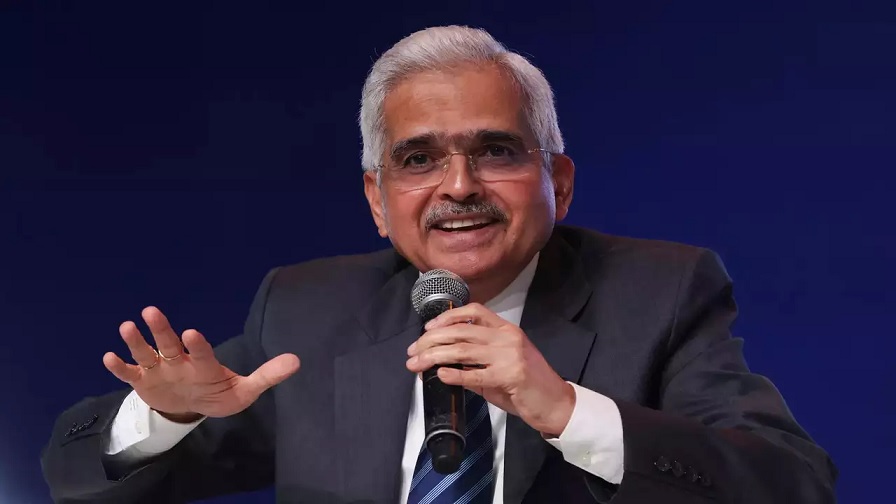
Finance Minister Nirmala Sitharaman and RBI Governor Shaktikanta Das participated in a thought-provoking opening session of the Kautilya Economic Conclave 2023, a meeting of economic professionals and policymakers, which began in Delhi.
Governor Das spoke on the complex issues facing the world economy in his speech, highlighting the delicate balance needed for effective governance in the midst of these difficulties.
Das noted the issues that have been appearing more often on the horizon of the world economy, saying, “The world economy is currently confronting a barrage of challenges. The steady reduction of inflation is the first issue, and it is being disrupted by repeated and overlapping shocks. Second, growth is sluggish, and those impediments are also new and improved. Third, potential threats to financial stability. With price stability as their top priority, central banks have aggressively increased policy rates while indicating they would do so for longer.
“Some central banks have stopped raising interest rates. This endeavor has been constrained by worries about financial stability. Financial markets are now incredibly responsive to any fresh information. In the midst of such a convergence of forces, policymaking has become very difficult, Das said.
The governor of the RBI said, “With every shock, like the most recent simultaneous rise in the price of crude oil and the US dollar, new aspects of policy dilemmas emerge and impede the actions of the central banks. Although there may be a conflict between the demands for price and financial stability, policymakers must strike a delicate balance since, in the medium to long term, price and financial stability strengthen one another.
The sluggish moderation in inflation interrupted by recurrent shocks, the slowing growth made worse by additional barriers, and the impending threats to financial stability were the three main issues he saw.
He pointed out that in response, central banks all over the globe have aggressively increased their policy rates while indicating their determination to do so for a lengthy period of time.
Concerns over financial stability have even caused several central banks to postpone rate increases, further complicating the already complex world of policymaking.
The urgent issue of interest rates was brought up by Governor Das, who said, “Interest rates will remain high, however long it will remain high, we don’t know.” His remarks emphasized the ambiguity surrounding the length of the high-interest rate regime and reflected the cautious posture taken by central banks throughout the world in response to global economic uncertainties.
He made it clear, and this is important: “I am not giving any hint that RBI is going to reduce the interest rates.” This claim put an end to any rumors that interest rates would soon be dropping and reaffirmed the RBI’s commitment to stability despite the changing economic environment.
The simultaneous rise in the price of crude oil and the US currency, he said, added even another degree of complication to policy considerations.
Das stressed the need of finding a careful balance between price and financial stability, acknowledging the possibility for conflict between the two stability factors in the medium to long term.
Governor Das gave details on the strategy taken by the RBI with regard to the prognosis for India’s economy.
“We have maintained a pause on policy rates in 2023–24,” he said. “The magnitude of rate rises was adjusted in June in response to the shifting inflation forecast.
He recognized the ongoing inflationary challenges while also pointing out India’s resilient economy, which is supported by strong domestic demand.
According to the RBI, India’s Real GDP is expected to rise by 6.5% in the current fiscal year, making it a potential global development engine.
Das reassured the audience about concerns about financial stability by saying, “On the front of financial stability, throughout the multiple shocks in the recent period, the Reserve Bank has adopted appropriate approach and taken several initiatives to revamp the regulation and supervision of the banks, the NBFSs, and other financial sector entities by developing an integrated and harmonized architecture.”
As seen by the continuous rise in bank lending supported by improving asset quality, the Indian financial industry has been strong and robust. Adequate commercial banks in India will be able to meet the minimum capital requirements.
“The global economy is dealing with a slew of problems. According to RBI Governor Shaktikanta Das, there is a danger to financial stability, slowing GDP, and inflation.
In order to demonstrate the sector’s capacity to satisfy minimum capital requirements, he stressed the stability and resiliency of the Indian financial system, which is shown by continuous expansion in bank lending and improved asset quality.