




















My younger sister was born in an Old Delhi hospital during the summer of 1946, most likely at the end of August. When I was five years old, my father and I were on our way to the hospital one evening to see the newborn and my mother when we were abruptly advised to go home because there would be “trouble” nearby by a bunch of males.
I recall feeling scared and unsure of what was going on as we raced back home. Because I grew up with the memories of violence throughout Delhi, including our neighborhood, only around August–September 1947, it has persisted in my mind as an unexplained event. So why did I retain this recollection of a 1946 occurrence when I was only five years old?
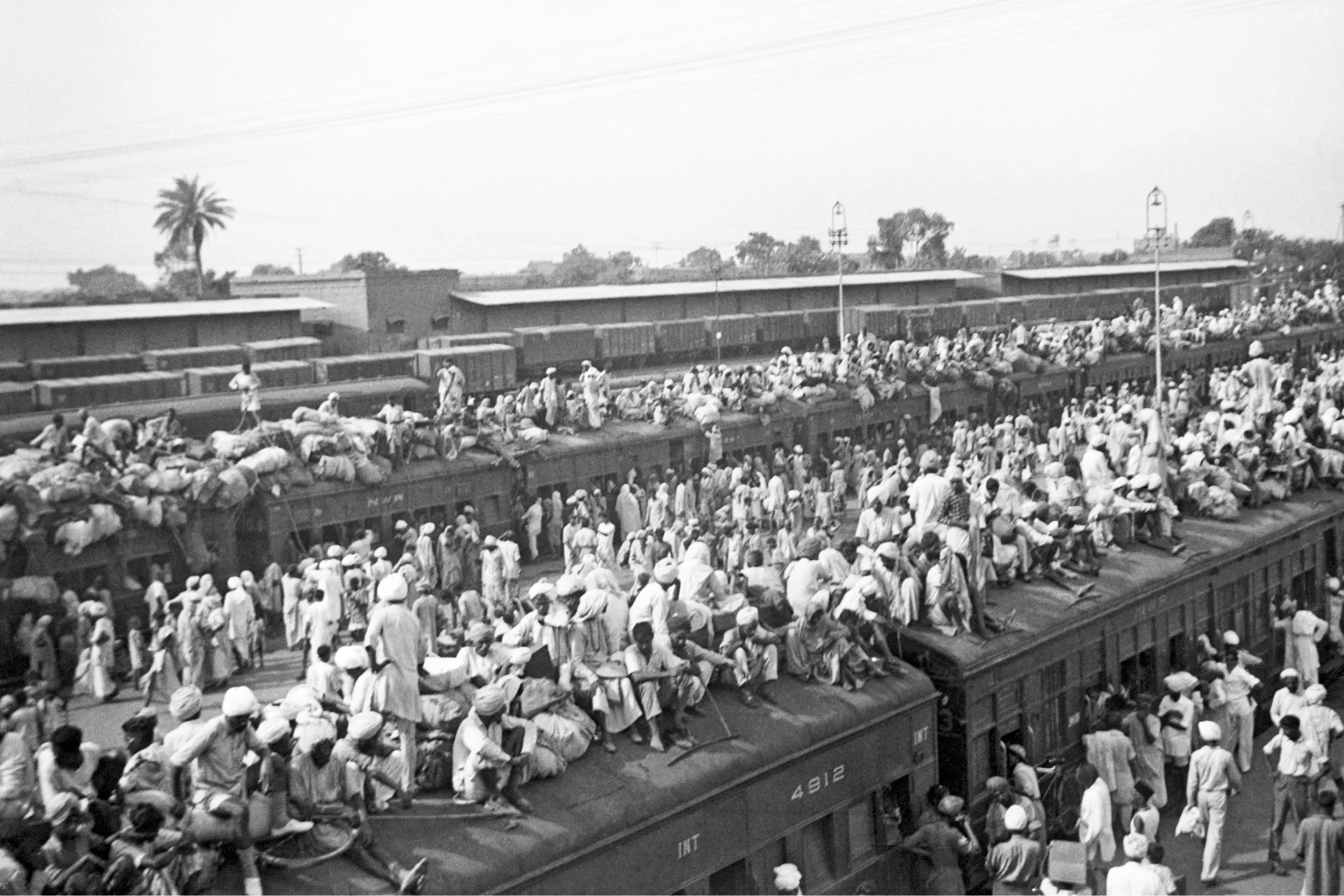
August 1947 saw the beginning of the Partition as well as a significant amount of Delhi’s unrest, which I still vividly recall. Along with other recollections of the turmoil, I recall seeing the refugee camps near Purana Quila and Humayun’s tomb in 1948–1949. I questioned if I was misremembering the dates and years associated with my experiences, but I knew I was not as my sister was unquestionably born in 1946. My recollection of 1946 didn’t come back to me until I learned that there had been a lot of bloodshed before the real Partition. As the notion of Partition and the political mobilization that preceded it had already been developed, there was bloodshed in Delhi even in 1946. This led to fatalities in Calcutta and Noakhali as well as in Delhi.
In many respects, the memories of the five and six-year-old me have remained with me and influenced how I see the horrific, unfathomable violence that Independence brought with it. When I was a kid, it was beyond my comprehension, and it’s still beyond my comprehension to some extent now.
Even though I was never in risk of being hurt or experiencing any direct trauma from the Partition, I think the feeling of a kid’s incapacity to comprehend the brutality is what inspired me to write about it through the eyes of a child or young survivor. Children are, in a sense, the sole keepers of the memory of the Partition today, decades after the Partition. They will soon be gone as well, and they won’t be able to share their accounts of the brutality during Partition and the extensive upheaval in the subcontinent.
We need to discover methods to simply honor the narrators’ unique experiences, tales, and perspectives on what the Partition meant to those who experienced it. The absolute least we can do is that.
***
The way that the young, teenage, and almost-adult men and women recalled events surrounding the Partition may have been influenced by their gender identities. This occurred in a variety of ways and went far beyond, though not entirely beyond, the concern for women’s safety in difficult situations and the violence that was unleashed by one community upon another through the kidnapping of women, which feminists highlighted for us some decades ago, almost making these kidnappings serve as synecdoches for the Partition itself.
Gender is somewhat inscribed into the narratives of both men and women in the interviews I/we have gathered, necessitating more investigation. For the time being, I’ll focus on a few stories that show how we might see the Partition as a profoundly gendered event in our recent history that has left a complicated legacy and haunts the subcontinent.
I’ll start with the narrative of the Partition told to us by a Hindu girl named Kanta Arora (name changed) in 1947 when she was about 15 years old. The family had estates in Bahawalpur state as well as Multan, where she resided with her widowed mother and siblings. Kanta resided in the hostel while attending an inter-college in Lahore in the summer of 1947. Prior to the conflict, there were no divisions between Hindus, Muslims, or Sikhs. However, around six months before the Partition, clique-like behaviors among the females started to emerge, and verbal altercations between them ensued. You could see them at the train station as refugees from the nearby villages began to flood Multan.
After significant violence broke out in Lahore in March, staying at the hostel was no longer secure. Kanta traveled by aircraft to Delhi in March, but she left after around 20 days when it seemed that things were calming down enough that she could sit for her examinations. The idea was to go to Delhi, pack, and then wait to find out which regions of the to-be-divided Punjab would fall on which side.
In preparation for potential assaults on her by unidentified individuals, Kanta and her family practiced rifle shooting and sword fighting while they waited. She worked really hard to prepare for her tests.
One day, Kanta’s mother approached her and inquired about her course of study. The mother answered with sharp political insight when she was informed that her daughter was studying English literature: “History padho! To what extent is Raj Badalta Hai? English nahi kaam karegi is time, which means that now is not the time to learn the language. To learn what occurs when power changes hands, read history instead.
The mother started preparing for difficult things on her end. She got back all the money she had given out, took all her jewelry and certificates out of the bank, and moved everything to the PNB in Dalhousie, where they were spending the summer. They departed for Dalhousie in the early summer of 1947, stating “who can take away the earth bound in chains”—possibly meaning that there was nothing they could do about the lands. Mother wanted to return to get her other belongings after Partition was declared, but she was discouraged from doing so. They eventually traveled to Amritsar and then to Delhi after a few months. Due to the many dead corpses on the track, the train had to stop often throughout its four-day journey to Delhi.
Muslim neighbors who were aware of the girls’ abduction intentions saved Kanta’s other relatives who were left on the opposite side. With the aid of their neighbors, they were given burqas to wear in order to conceal their true identity and fled the approaching danger.
They eventually traveled from Lyallpur to this side of the border by train and then by aircraft. Kanta’s family had traveled to Delhi, but because there had also been murders there, they left for Bombay. Kanta’s mother eventually traveled to Delhi to make claims against the property left behind after things had calmed down. Throughout her trip from Multan through Lahore to Dalhousie to Delhi and eventually to Bombay, she had kept all the paperwork secure. The storms sparked by the Partition were as effectively tamed as possible because of this lady who oversaw her home, carefully planned her actions, and had learned her history lessons.
I discovered an unexpected fact that was nearly mentioned in passing when compiling tales of the Partition. Parents occasionally had to leave very young children behind when they fled in order to save their own lives when faced with the knowledge that violent mobs were on the loose and aiming to murder everyone in sight. According to one story, a family considered leaving the youngest refugees behind, but the mother would not let it. The little youngster subsequently said the following:
“I rode the bus with my mother, father, and 13-day-old brother. We were instructed to load whatever items we had with us into a truck, and when it was all through, we had nothing left. When we got close to Lahore, we saw that many individuals had thrown their children into the river out of concern about their ability to care for them. My mother disagreed when my father proposed we do the same to my younger brother.
The forced decision they all had to make may have traumatized other moms who cooperated.
Other terrible incidents occurred when young children had to defend themselves after their younger brothers were slaughtered, as described in this testimony by Himmat Singh, then 7 years old, who recalled it in 2017: “All of a sudden we received the news that the Muslims were about to raid us. We took cover in a home. They started attacking us at twelve. Everyone became divided. My sister, who was three years old, was with me when she was abandoned and died. Without going back for her, I would have also been dead. Later, we gathered at a school and remained there for a week. We learned about the ongoing massacre and made the decision to leave. There was a chance that, after the tension subsided, we may return to our home in Pakistan.
Anis Kidwai’s eye witness account of the carnage that enveloped Delhi in 1947—violence that has remained slightly less than it could have been—in his book In Freedom’s Shade is one piece of literature that has appealed to youngsters. Anis was the one who described the misery that children, who were often left orphaned as a result of the murders, suffered in hospitals and refugee camps in Delhi. They sometimes wandered into the camps, although they may occasionally be located by their father or sibling and returned to them. They ended up in orphanages other times. Perhaps I can conclude this inevitably incomplete narrative with two passages from Anis’s book that provide us a little peek of what youngsters saw and described during these traumatic times:
Rasheeda, a girl whose arm had been amputated, was one of the kids who had nowhere to go. Now, she was most painfully lonely. One day, she gave Anis a grimy deck of cards and said, in a voice tinged with sadness and longing, “Can you give this to Rasheed for me?”
Anis remarks:
This small girl was showing her affection for her close buddy as two pure souls yearned for one other. Nobody except Rasheed and her used to play with the cards, so she has no idea where they came from. What purpose did she have for them now that Rasheed was gone? She now presented her companion with these sentimental presents, which were the only source of fun in her limited existence.
According to another story in Anis’ book, a young child rejected an identity that may have made her a target for one society or another. She would respond Haseena Sita when asked her name. Both her mother and father had names that were both Muslim and Hindu. Anis escorted the little girl to Bapu, stating, “Bapu she will cause a Hindu-Muslim riot,” since she was intrigued and perplexed. Bapu also inquired about her name. Haseena Sita, she repeated once again with amazing poise.
After residing with Anis for about a week, Sita Haseena moved to the Kasturba Gandhi School for Children in Mehrauli. Did little Sita Haseena find her own answer to the issue of intercommunal enmity in order to cope with the pain of seeing members of both groups being maimed, injured, or even killed? Sita Haseena had instinctively discovered another way of being since she was both a Hindu and a Muslim, serving as potentially a bridge to a time without hate or bloodshed.