

























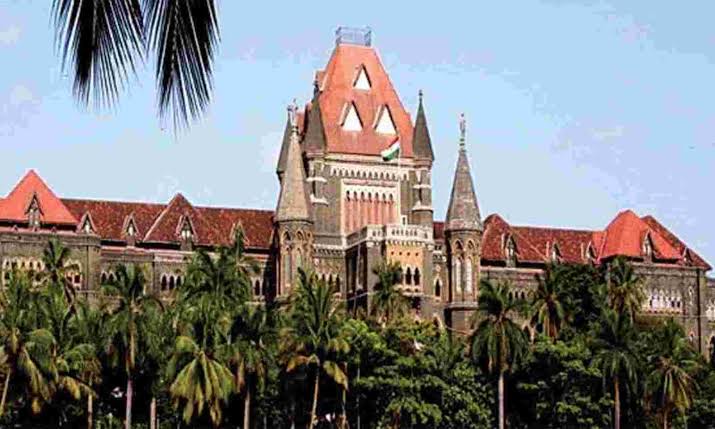
In Razi Ahmed Khan v. State of Maharashtra, the Bombay High Court on Tuesday denied bail to three men who are alleged members of the outlawed Popular Front of India (PFI), noting that there was evidence to suggest that they took actions to carry out a plot to turn India into an Islamic state by 2047.
Judges Ajay Gadkari and Shyam Chandak’s bench stated that there was proof the three defendants had engaged in a broad conspiracy to implement a document known as “Vision-2047.”
“Perusal of the Vision-2047 document indicates that it is a sinister plot and design to transform India into an Islamic state by adopting all possible methods mentioned in the document. It is a conspiracy to commit horrendous acts perpetrated by the Appellants pursuant to their conspiracy, amounts to conspire to overawe or to attempt to wage war against the Government of India,” the court’s order said.
As a result, the three decisions issued by the Special Anti Terrorism Squad (ATS) Court that denied the three accused individuals bail were upheld by the High Court.
The three accused men are allegedly involved in a covert meeting that took place in 2022 following the launching ceremony for a new PFI office in Malegaon.
It was purported that among the subjects discussed at this gathering were many atrocities against the Muslim community and the necessity for Muslim unity to wage war against the country.
The primary defendant in the case, who oversaw PFI’s Malegaon branch, is alleged to have encouraged others to inspire Muslims who share his views, improve communication with like-minded individuals, and foster an environment hostile to the Indian government.
The Court was informed that the principal defendant had additionally issued a “fatwa” directing adherents to execute those who dared to criticise Islam.
The prosecution claims that the plan was to draw young Muslims who had extreme ideologies, brainwash them to erase their Indian identity, and turn them into radical Muslims so that Sharia would eventually be imposed in India.
The three males were among several people detained on suspicion of attending many similar gatherings. These individuals were taken into custody about a September 2022 first information report (FIR). The Indian government also imposed a five-year ban on the PFI in the same month.
The Court determined on June 11 that the material in the file was more than adequate to support the accusations made against the three defendants.
“The evidence on record discloses that the appellants have participated in promoting hatred against the State, spreading anti-national agenda through various means of propaganda including use of electronic media by creating WhatsApp groups and circulating messages detrimental to the interest of the nation. It is also revealed that the accused circulated a document called as Vision-2047, which is basically propounded by the PFI … After considering the entire material on record, we are of the opinion that a strong primary facie case is made out to indict appellants in the present case. If they are released on bail, there is every possibility that they may tamper with the evidence at this crucial stage,” the Court said.
The court subsequently denied the three accused men’s bail applications.
Senior counsel Ashok Mundargi and Mihir Desai, as well as attorneys Pravada Raut, Hasnain Kazi, Shraddha Vavhal, Saipan Shaikh, Hafizuddin Kazi, Zeeshan Khan, Athar Qureshi, and Raeed Kazi, were representing the bail petitioners (accused).
The state was represented by Ashwini Takalkar, an additional public prosecutor.