










On Sunday, President Mohamed Muizzu of the Maldives requested that India remove all of its military forces stationed in the Indian Ocean archipelago by March 15. New Delhi responded by stating that additional talks would take place between the two countries over this issue.
As a high-level core group established by the two nations to handle the matter, Muizzu made the demand and had its inaugural meeting in Male. Abdulla Nazim Ibrahim, the Maldivian president’s senior secretary, told a media briefing in Male that Muizzu had advised the Maldivian team attending the meeting to notify Indian officials that the troops needed to be evacuated by mid-March.
The government wants to “move ahead with the withdrawal of Indian troops in a civilised and diplomatic manner without endangering the relationship between the two countries,” as Ibrahim was quoted by the local media. This is the 12th meeting to discuss the withdrawal of Indian troops.
“Indian military personnel cannot stay in the Maldives. “This is the administration’s and President Mohamed Muizzu’s policy,” Ibrahim declared. Both parties talked about finding a “mutually workable solution to enable continued operation of Indian aviation platforms that provide humanitarian and [medical evacuation] services to the people of the Maldives,” according to a statement released by the external affairs ministry.
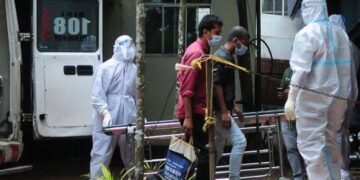
In order to run two helicopters and an aeroplane that has conducted hundreds of medical evacuations and humanitarian sorties, there are about 77 Indian military troops stationed in the Maldives.
In order to determine how to “enhance the partnership, including expediting the implementation of ongoing development cooperation projects,” the two sides also reviewed matters pertaining to bilateral cooperation, according to the statement. It further stated that the two parties decided to have the high-level core group’s next meeting in India at a time that works for both of them.
At a meeting on the fringes of COP28 in December, Muizzu and Prime Minister Narendra Modi decided to establish a high-level core group between India and the Maldives.
The meeting of the group took place against the backdrop of a sharp decline in bilateral relations following Muizzu’s election triumph last year. Muizzu has aimed to bring the Maldives closer to China. After his return from a trip to China, Muizzu unveiled a number of initiatives meant to reduce the Maldives’ reliance on India in vital areas, including food security and healthcare.
Other members of the Indian mission’s diplomatic and military attachés included Indian High Commissioner Munu Mahawar. Ali Naseer Mohamed, ambassador at large in the foreign ministry; Ibrahim Shaheeb, the Maldivian envoy to India; and Abdulla Fayyaz, chief of staff of the President’s Office and chief of defence forces, Maj Gen Abdul Raheem Latheef, represented the Maldives.
Muizzu, whose “India out” theme dominated last year’s presidential campaign, has frequently urged New Delhi to remove military troops stationed in the Maldives who are in charge of the helicopters and aeroplanes. After arriving back in Male from a nearly week-long trip to China, Muizzu made a number of statements and pronouncements during a press conference that were directed towards India.
Speaking largely in the indigenous Dhivehi language, Muizzu stated that relations between China and the Maldives were founded on the four pillars of mutual respect, sovereign equality, territorial integrity, and non-interference in domestic matters. He stated in English, “We may be small, but that doesn’t give you the licence to bully us,” without mentioning any particular nation.
Muizzu revealed the government’s universal healthcare insurance policy, which presently covers treatment in India and Sri Lanka, will be expanded to the United Arab Emirates (UAE) and Thailand. According to an official statement, Muizzu stated that this will “diminish reliance on confined medical facilities in a select group of countries.”.
According to him, the Chinese will help build a hospital with 100 beds, and their support will cover all necessary equipment for health centre laboratories located on 17 islands.
In recent years, hundreds of medical evacuations have been conducted by India’s helicopters and aircraft, which are today the primary destination for Maldivians seeking medical attention.
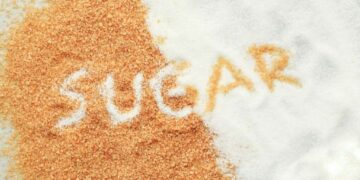
According to an official release, Muizzu declared that agreements had been reached with China to support the Maldives in expanding their agricultural growth in order to guarantee food security. He said his administration would “end its dependence on one country for imported staple foods such as rice, sugar, and flour,” without mentioning India.
In addition, a deal has been reached to import wheat, rice, and sugar from Turkiye, the location of Muizzu’s first overseas tour. According to him, pharmaceuticals will be imported from producers in the US and Europe.
Muizzu added that the Maldives are not in any nation’s backyard and that no nation owns the Indian Ocean, seemingly alluding to the tense relations with India. He claimed that agreements to construct 30,000 social housing units and a commercial zone in Hulhumalé were reached during his visit to China, and that China will provide the Maldives with 920 million yuan in “free aid.”
Following the posting of disparaging remarks about India and its leadership by three junior Maldivian ministers, the already shaky bilateral relations took a further nosedive. Following a loud complaint from India, the ministers were suspended; however, the controversy prompted a call on Indian social media for a boycott of the Maldives as a travel destination.