


























The Manipur high court appeared to agree with the suggestion by authorities to restart a severely constrained form of connectivity when it ordered the state government to conduct “physical trials” of partially restoring internet services in the state, where data services have been suspended since ethnic clashes broke out on May 3.
The high court directed the government to start restoring some connection as per the recommendations of a 12-member expert committee on Friday after hearing several petitions calling for connectivity to be restored.
The expert committee advised that wired internet connections, such as fibre broadband to homes and leased line to institutions and businesses, can be brought back online but with a limited speed of 10mbps and social media services being blocked. The specifics of the internet restoration trials were not immediately clear.
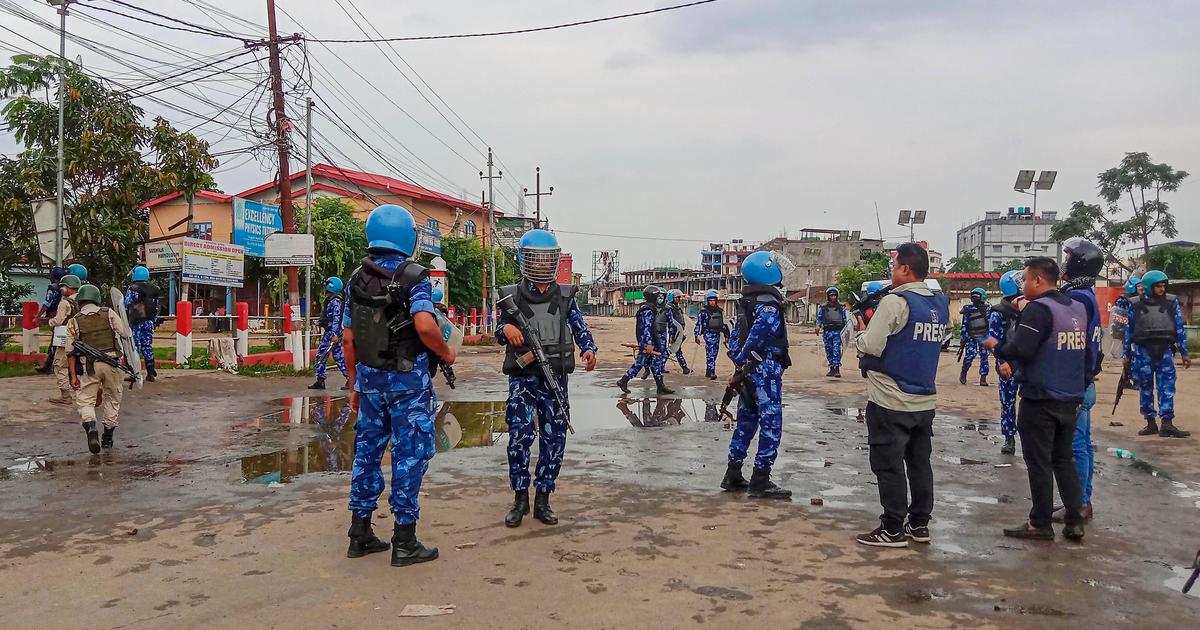
The choice was made as security personnel fought to control the scene. According to authorities cited by news agency PTI, a crowd of over 200 individuals tried to attack a police station on Saturday and steal guns, prompting the security personnel to open fire.
Late on Friday, two columns of personnel—one from the Army and the other from the Assam Rifles—were sent to Songdo Village, where they served as reinforcements for the event on Saturday at Kangla Fort. Locals in the market in Bishnupur, one of the most sensitive places, protested the deployment of more Border Security Forces.
According to PTI, there were sporadic reports of gunfire from numerous areas. According to police, fighting between two clans in the Kangvai region of the Bishnupur district resulted in the deaths of four individuals on Friday, including a Manipur Police commando and a youngster.
The government has imposed internet service restrictions in response to the current situation, which has resulted in at least 127 fatalities since conflicts initially started. This is done to prevent material from fueling the ethnic conflict.
Cutting down internet access is a harsh step. Due to the limitations, the majority of crucial digital services, particularly those that support learning and commerce, are unavailable. There is no question that the situation is terrible, but to restore connection safely, the government and security forces must cooperate.
The court has instructed the government to reinstate wired internet connections on a “case-to-case” basis after ensuring that the expert committee’s suggestions are taken into consideration. The suggestions also called for outlawing the use of virtual private network (VPN) software and wireless routers, which may be used to get around certain restrictions, such those on social media. The group also recommended giving static IP addresses to anyone who requested their internet be restored. This would make it simpler to track their activities and require them to sign agreements promising not to share any material that may worsen the law-and-order issue.
The recommendation stated: “In the event of any violation, he or she shall be subject to punishment in accordance with the provisions of applicable laws… and the subscriber shall be fixed personally responsible for any leakage/activities done by the secondary user of internet through WiFi or hotspot.”