



















Over the last 15 years, the contentious Maratha reservation issue has plagued every state administration in Maharashtra.
In a state that sends 48 lawmakers to the Lok Sabha, second only to Uttar Pradesh, and has produced more than half of the state’s Chief Ministers, the Marathas make up close to a third of the population. Governments headed by the Congress, the NCP, the united Shiv Sena, and even the BJP have all tried to find legislative answers in response to demonstrations, but they have all been overturned by the courts.
Additionally, various solutions have been challenging because of the Maratha demands’ absolutism.
For instance, the Eknath Shinde-led government hastily announced a “government resolution” that effectively means Marathas in Central Maharashtra will be included in OBC reservations if they can show that they were classified as Kunbis in “Nizam era documents,” a period prior to 1948 when the region was under the Hyderabad state, even as protests led by Maratha activist Manoj Jarange Patil raged in Jalna. The Kunbis are regarded by the state as another backward class. A five-person team led by retired judge Sandeep Shinde will decide on a standard operating procedure for this, according to Sinde’s statement from September 6. The state administration thought this would cool things down since it was concerned that the opposition may try to take advantage of the Maratha resentment before a vital parliamentary election in 2024.
However, the action incensed existing OBCs who had opposed Marathas obtaining a piece of the action. Additionally, Jarange himself was unsatisfied and said that he would end his protest only until all Marathas in Maharashtra had received their Kunbi certificates.
cutting of the pie
Currently, the state has a 52% quota based on caste, with 13% reserved for scheduled castes, 8% reserved for scheduled tribes, 19% reserved for OBCs, 2% reserved for special backward castes, another 2% reserved for vimukti jati or denotified tribes, and 8% reserved for diverse nomadic tribes. A 10% reserve is also made for the Economically Weaker Sections (EWS).
Prior to an assembly election later that year, the Congress-NCP government in the state promulgated an ordinance in July 2014 granting the Marathas 16% reservation in education and government jobs. This was done in response to their humiliation in the 2014 parliamentary election, where they won six of the 48 seats. However, the Bombay High Court granted a temporary injunction halting the ordinance’s execution after four months.
The Maharashtra State Backward Class Commission was established in January 2017 by the Fadnavis-led BJP-Shiv Sena government in an effort to redress the situation. The commission recommended 12% and 13% reservations for Marathas in public employment and educational institutions, respectively. According to the commission’s recommendations, Maharashtra approved the Socially and Educationally Backward Classes measure, 2018, however the Bombay High Court confirmed the measure’s constitutional legality in 2019. This act was also challenged. However, the statute was invalidated by the Supreme Court in May 2021, and the demand for a review petition was dismissed two months later.
The Patidars, Jats, and Marathas, once dominant land-owning agrarian communities, have lobbied for reservation in educational institutions and for government jobs, aware of how this has helped those from other backward classes and scheduled castes and tribes. This issue has played out across India and is at the heart of the Maratha demand.
More demonstrations are being held.
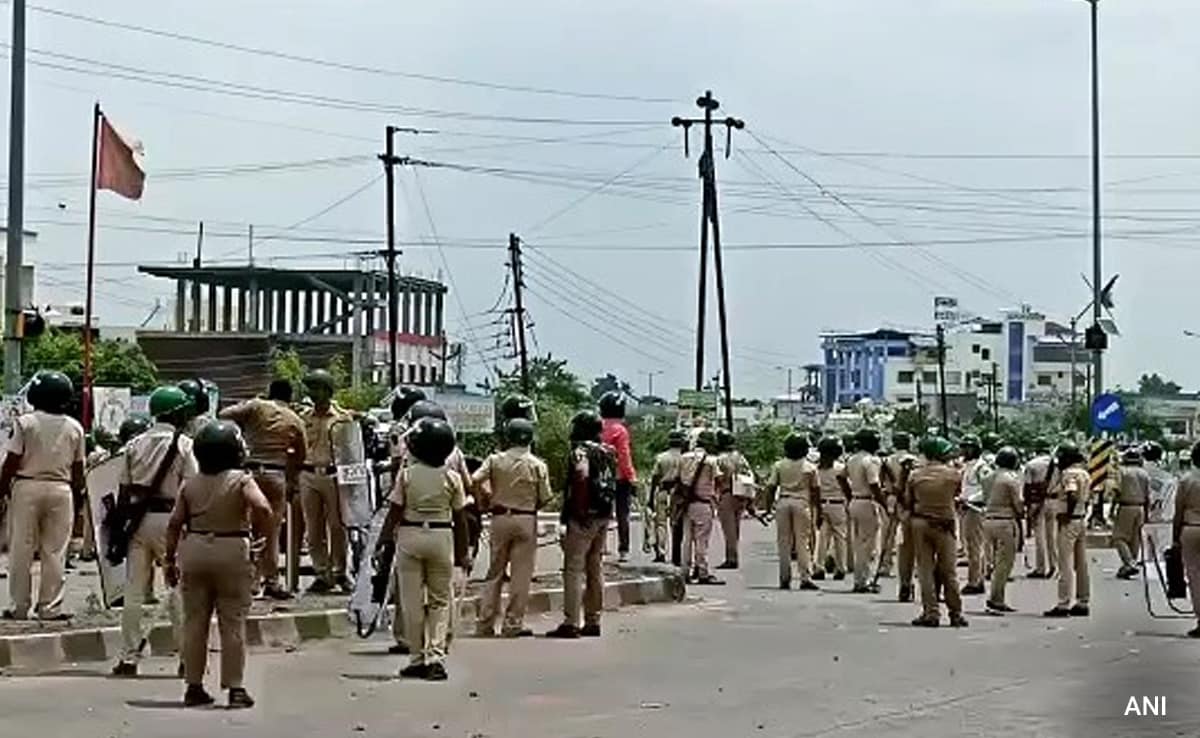
Members of the Maratha community in the Marathwada region went on a hunger strike in Antarwali Sarati hamlet in the last week of August 2023, under the leadership of Manoj Jarange Patil of the Maratha Kranti Sena. Twenty protestors and 37 police officers were hurt as the demonstration grew violent, and at least 15 cars were set on fire.
Deputy Chief Minister Fadnavis apologized for the police action as Sharad Pawar and other lawmakers went to Jalna to criticize the government’s handling of the matter. The violence sparked Maratha demonstrations across the state, which compelled Shinde to make the declaration on Kunbis on September 6.
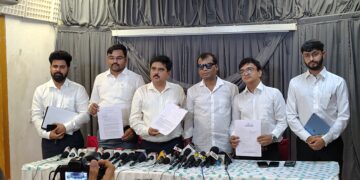
Late on Friday, Shinde met with a delegation sent by Jarange, but the latter has so far refused to end his hunger strike. Jarange said that the standoff is still present on Saturday in the presence of a government delegation. He said that the administration had also broken its promise to drop charges against demonstrators and take action against the police officers who used a lathi. “The government should first issue a government resolution, announcing blanket reservation to us as Kunbis…until then, I will not call off my indefinite strike,” Jarange stated. Jarange Patil said on Sunday that he would no longer drink water.
He also criticized the Maharashtra government for breaking its promise to drop charges against demonstrators and for doing nothing to discipline the officers involved in the lathi-charge on September 1.
But the administration is now also concerned about a nationwide uprising by other OBCs. In an interview with HT, OBC Janmorcha working president Chandrakant Bavkar said that they will fight “any move to share our reservation benefits with the Marathas.”
“A court of law cannot uphold the government resolution. Although we have nothing against the Maratha community, we will fight for our rights and against the government. The problem is more of a political than a social one, he said. A caste-based census, either on a national scale or similar to the one being carried out in Bihar, would be the best option, according to Bavkar, in order to provide the government quantitative and qualitative information on groups.
Caste census demands have grown over the last several years, especially among groups hostile to the Bharatiya Janata Party, who regard it as a viable counter to the present political hegemon’s welfarism-plus-Hindutva appeal.
The Kunbis in Maharashtra, meantime, are not pleased with the government’s action against the Marathas.
The head of the Kunbi Sena, Vishwanath Patil, said that while the community was not against giving Marathas a quota, they shouldn’t be handed Kunbi diplomas. “If the state government makes any such decision, we will vehemently disagree with it.”
These rumblings are noteworthy since the OBCs have historically been one of the BJP and the Shiv Sena’s main voter bases. The BJP really grew its support after putting into practice the “Madhavam” formula, which stands for Maratha, Dhangar, Vanjari, and Mali.
Additionally, it seems that the demonstrations have rekindled certain related demands. The Dhangars, for example, have recently reiterated their long-standing desire for scheduled tribal recognition. The group has long maintained that a clerical mistake from 1976 prevented them from being included on the scheduled tribes list.
President of the Maharashtra Congress Nana Patole said that the BJP was encouraging conflict between the OBC and Maratha populations. “The BJP opposes holding a caste-based census in order to provide reservations to Marathas. Presently, the topic of Marathas receiving OBC quota reservations is being discussed.
The decision to provide Kunbi caste certificates to Marathas in Marathwada, according to political analyst Abhay Deshpande, “opens a Pandora’s box.” “The OBCs are also concerned that once Marathas have certificates, their reservation in local self-government organizations may be lost. All of this may not pass legal examination and might have political ramifications.